Charles Clay and Sons

Charles Clay and Sons was established in 1861 by Charles Clay. An advertisement from the time records the company as inventors and patentees of the ‘low cost’ ribbon process which superseded the old method of weaving ribbons on a shuttle loom. The company had factories at Manchester, Cheapside, North Shields and Luton, where on leaving school in 1960, my dad had his first job as a trainee toolmaker.

By this time Charles Clay and Sons were now making more than ribbons. Situated on the ground floor and second floor, dad worked in the real leather department where banking items such as blotters, desk calendars and diaries were made, as well as plastic versions and other items such as tobacco stay fresh pouches, key rings and promotional gifts for companies such as BP and British Airways.

Dad with colleagues at Charles Clay and Sons.

Dad was tasked with making and repairing high frequency (HF tools), setting up and repairing the HF welding machine, showing staff how to make new products, training the operators in safe loading of welding machines so as to not get HF burns to fingers and hands, organising stock arriving from the cutting room such as plastic sheet and cardboard. During his time there he also learnt to gold block and silk screen all the goods.

The first floor of the factory was offices and an in house printing press department, while the top floor was a machine sewing department making children’s shirts and ladies clothing. A small part of the factory housed ‘English Ribbons.’ Dad recalls that one of the women who worked there had previously worked as a conductress (also known as ‘clippy‘ because she would have ‘clipped‘ used tickets to prevent them being re-used) on London buses. One of her drivers had been the singer Matt Munroe.
Further information

King’s Hill Modern

In 1960 my dad was a pupil at Stopsley High School in Luton. At the same time the BBC made a film titled ‘King’s Hill Modern’, a work of fiction which used Stopsley High school as the set.

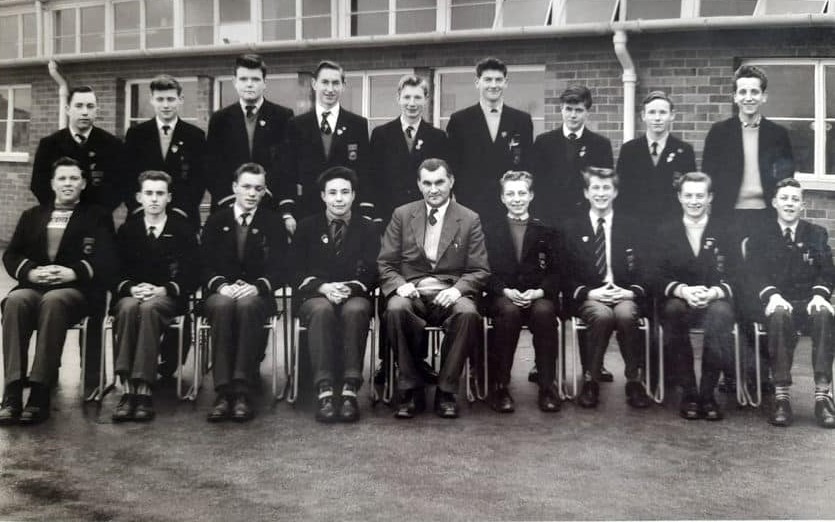
Michael Abram and fellow pupils at Stopsley High School.
Michael Abram (back left) and fellow pupils at Stopsley High School.

Details of the film can be found below.

My dad was involved in the making of the film while a pupil at the school, tasked by his headmaster Dr Walter Roy to look after the film crew during the filming, which took place within the girls school and the boys school and which the filming schedule shows took place 11 – 15 July 1960.

The schools dad told me were built as left and right twins but were kept separate, so he was the first boy allowed into the girls school with the BBC. The schools joined up later in 1960.

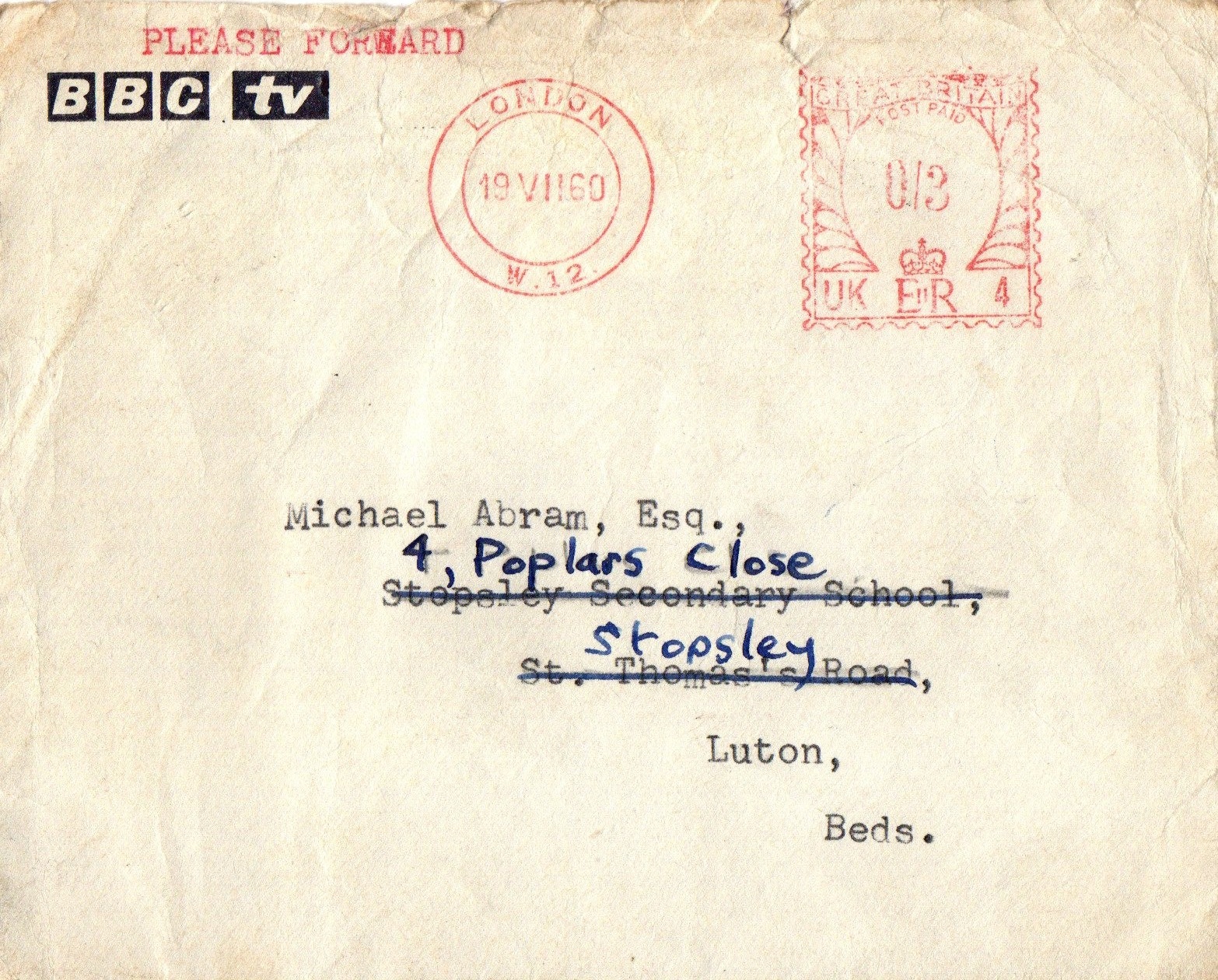
Below is the thank you letter dad received from the BBC.

Envelope addressed to Michael Abram at Stopsley. Luton. Bedfordshire.
Letter from Richard Francis at the BBC to Michael Abram.

Letter from Richard Francis at the BBC to Michael Abram.

There’s no place like home

Going through old family photos, I have come across photos of places my family have lived. Below is a brief history of some of the places my family have called home.

39 Woodbridge Close, Luton

My first home was 39 Leagrave Close, Luton and it was here that I was born. My mum had wanted to give birth to me in hospital as I was her first baby but the doctor felt she was young and healthy, so a home birth it was.

Woodbridge Close was my parents first home after they were married in March 1967 and I came along in May 1971. The house was a mid terrace in a block of three properties and a new build which cost £4,250. Dad told me the heating/hot water came from a coal fired back burner in living room. The house had three radiators, the coal fire had to be refilled two to three times a day and an ash box emptied each morning.


Langport Drive, Vicars Cross

When I was seven months old we moved to Chester. My parents bought a new three bedroom house on Langport Drive in Vicars Cross for just under £5,000, after the first buyers pulled out and we moved in on 9 December 1971.  At the time of purchase the house had just a gas fire in living room and my parents had to find a plumber to fit the central heating.

The houses were built by Thomas Warrington Homes Limited and are a mix of bungalows, detached and semi detached properties, most of which have very recogisable windows on the front of the property – one large window divided up into many smaller windows. The bedroom windows overlooking the road had two similar smaller windows, with wooden shutters and mock black iron hinges. Today the windows still remain but the shutters and black hinges have now mostly be taken down.

My friend Ian and his sister Helen lived a few doors up the road in a detached property – their house was the last house on the right of the street. I remember it had a larger back garden than the rest of the houses and to the side of their house, out the front, there was a piece of land on which the children from the street would often play. The land signalled the top of the cul-de-sac, behind which a hedge was planted to separate the road from the busy A41 which ran directly behind it.

The black and white photos below show Ian and me as bables outside of my parents house.  The colour photos show Ian and me with our sisters Helen and Rachel.


Poplars Close, Luton

Poplars Close was my grandparents house until I was about 11 when they moved to Chester. I remember visiting my grandparents and also, because it was so close, getting to visit London and go the theatre at the same time which was always a treat.

The property was a large two bedroom bungalow called ‘Robin Hill’. The property was a large two bedroom bungalow, with a large garden out the back. I remember a greenhouse where my grandfather grew tomatoes and looking at the the photos today, I am struck by the size of the garden and how pretty it was. My grandfather must have spent a lot of time out there and I wish I could have talked to him about it, as I have grown to love gardens too and I think he could have taught me a thing or two.
My great grandfathers Albert Edward William Clarke and my great grandfather Joseph Charles Abram lived about 100 yards away from one another on Earls Barton. More information about both men can be found on this website.

32 Mears Ashby Road, Earls Barton

Mears Ashby Road was the home of my great grandfather, Joseph Charles Abram. Named ‘Rockaway’, it was a three bedroom semi detached house and was one of two houses which we believe he built after he retired from the army.

My dad and granddad lived in this house for around  4 – 5 months in 1952 too because my grandmother was in hospital. Dad remembers the property had a large flower garden but also a large area for growing vegetables. He explained to me that gardens were much bigger than they are today and growing vegetables had been encouraged during the war years as part of the Grow for Victory campaign.

The Limes, Earls Barton

My great grandfather Albert Edward William Clarke lived at The Limes.  The house still stands today.  Photos of the property can be seen below.


The Rag Trade

My mum has always been good with a needle and thread and when she left school, her first jobs were in the textile industries.

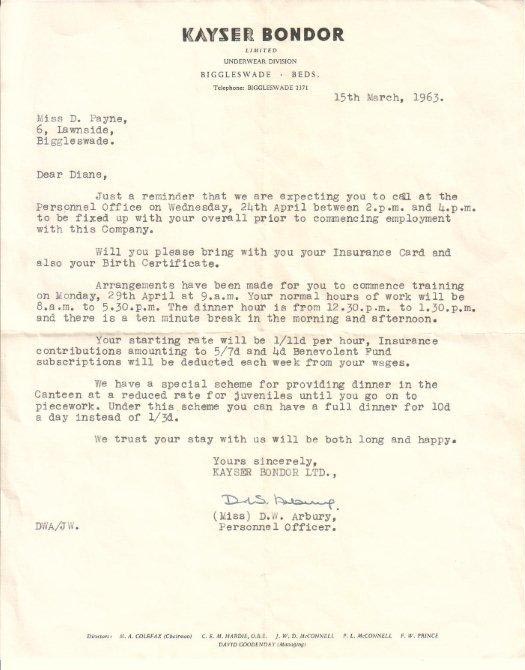
Mum first worked for a company called Kayser Bonder in Biggleswade.  The underwear made by the company, was known throughout the world during the 1950’s and 1960’s and Biggleswade was home to one of its factories for 53 years. The letter shown below was sent to my mum prior to her starting work at Kayser Bondor. She was fifteen years old at the time.

kayser-bonder
Mum also worked as a sewing machinist for Skirtex undertaking piece work (a type of work which pays a fixed rate for each unit produced or action performed regardless of time) and at Electrolux as an armature winder, both in Luton.

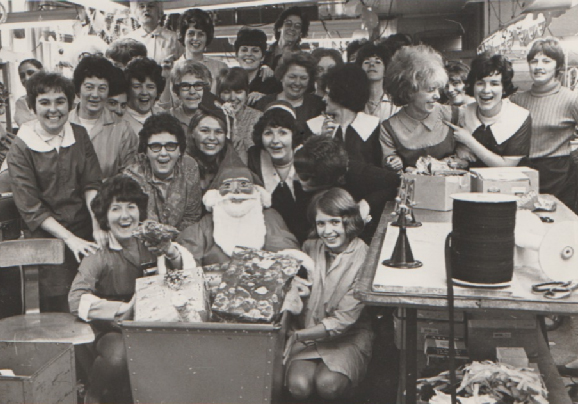
The photo below was taken at Skirtex. Mum is stood directly behind Father Christmas, to the right of a woman wearing glasses, who I know was called Connie, because I met her once.  Mum tells me the women had a radio and would sing while they worked and I can imagine them singing along loudly and giving hell to any man who walked across their factory floor.

mum-skirtex

Later, mum made clothes for my sister and I and also for my dolls – I still have a bag full of them, seemingly unable to throw them away, even though I am now much too old for such things.

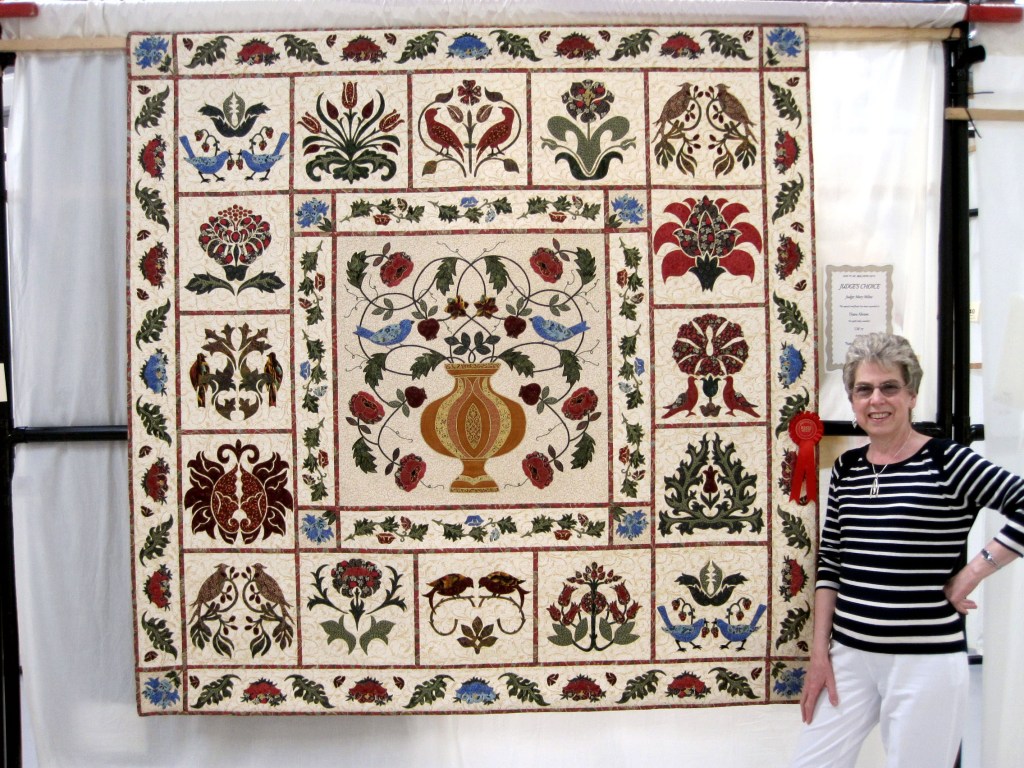
Then, almost forty years after mum began work with Kayser Bondor, she took early retirement and began making quilts. Turns out she is pretty amazing at it too and has won awards for her work. Mum’s quilts are displayed on her website below.

natures_treasures

Up in the air

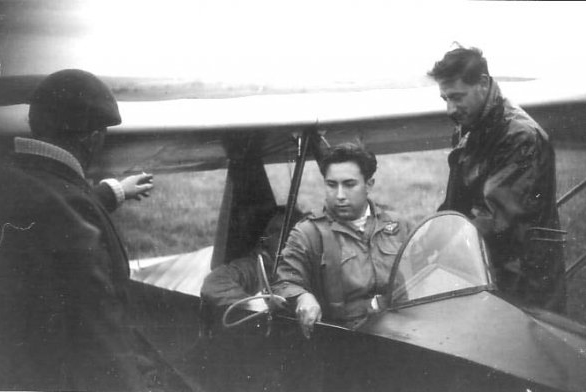
When he was young dad was a member of the  London Gliding Club on Dunstable Downs. Bedfordshire. He trained as a glider pilot and was ready to go solo but never saw the training through as he needed the money to buy a home. The photo below was taken at the Scottish Gliding Centre in 1962. The plane is a Slingby T31 trainer.

scottish-gliding-centre-1

However, he retained an interest in flying over the years and for four years in the mid 1960s he worked at Luton airport as a duty crewman in the airport fire service which he described as fire, security and any jobs the airport commandant requested  to maintain smooth running of the airport.

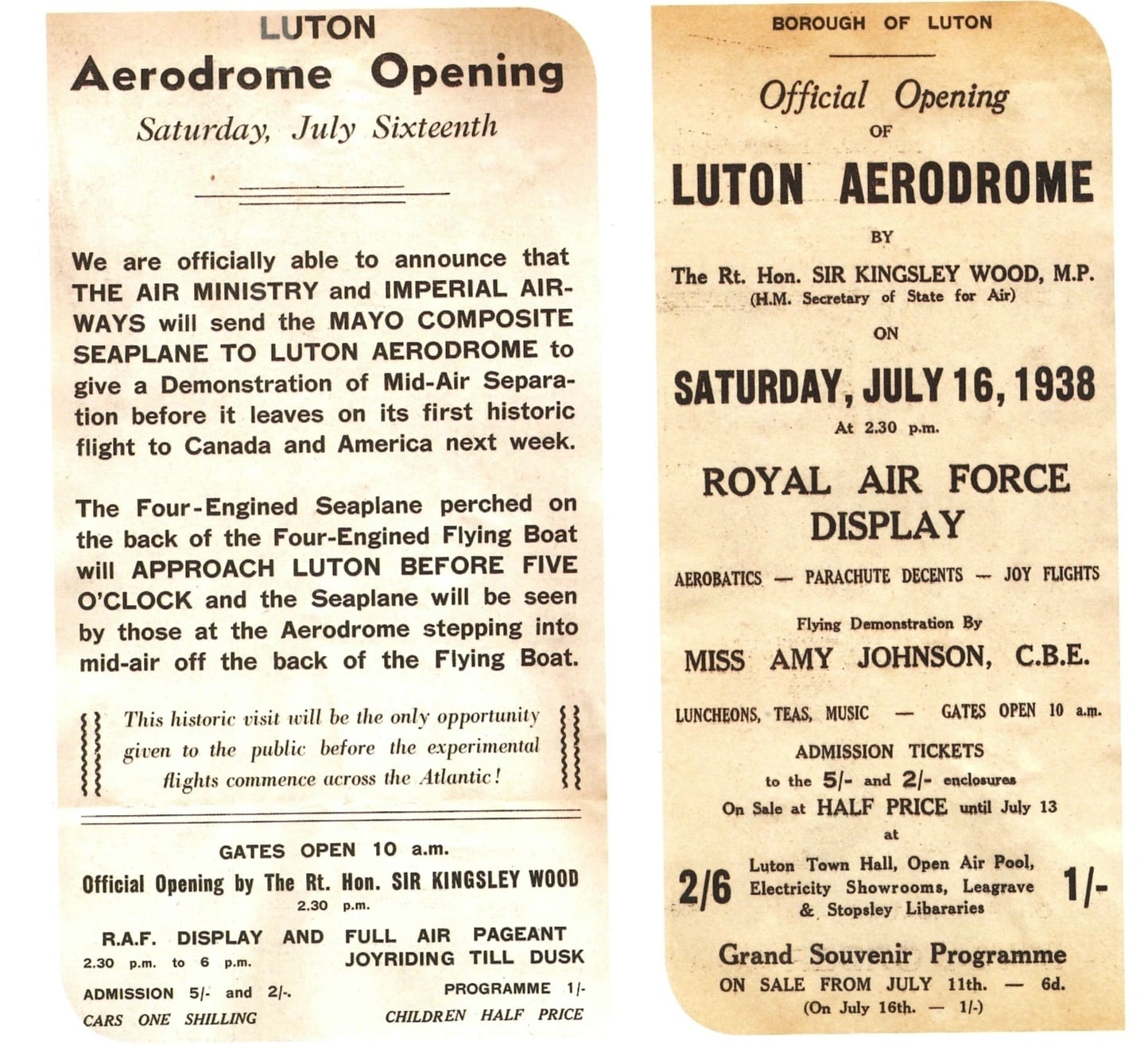
The airport was opened in 1938 by Sir Kingsley Wood, MP, the Secretary For Air, at which time it was known as the the Luton Aerodome and featured a flying demonstration by Amy Johnson, the first woman to fly solo from England to Australia in 1930 and who set a string of other records throughout her career.

Newspaper articles from the opening of Luton Aerodrome.