Joseph and Ann

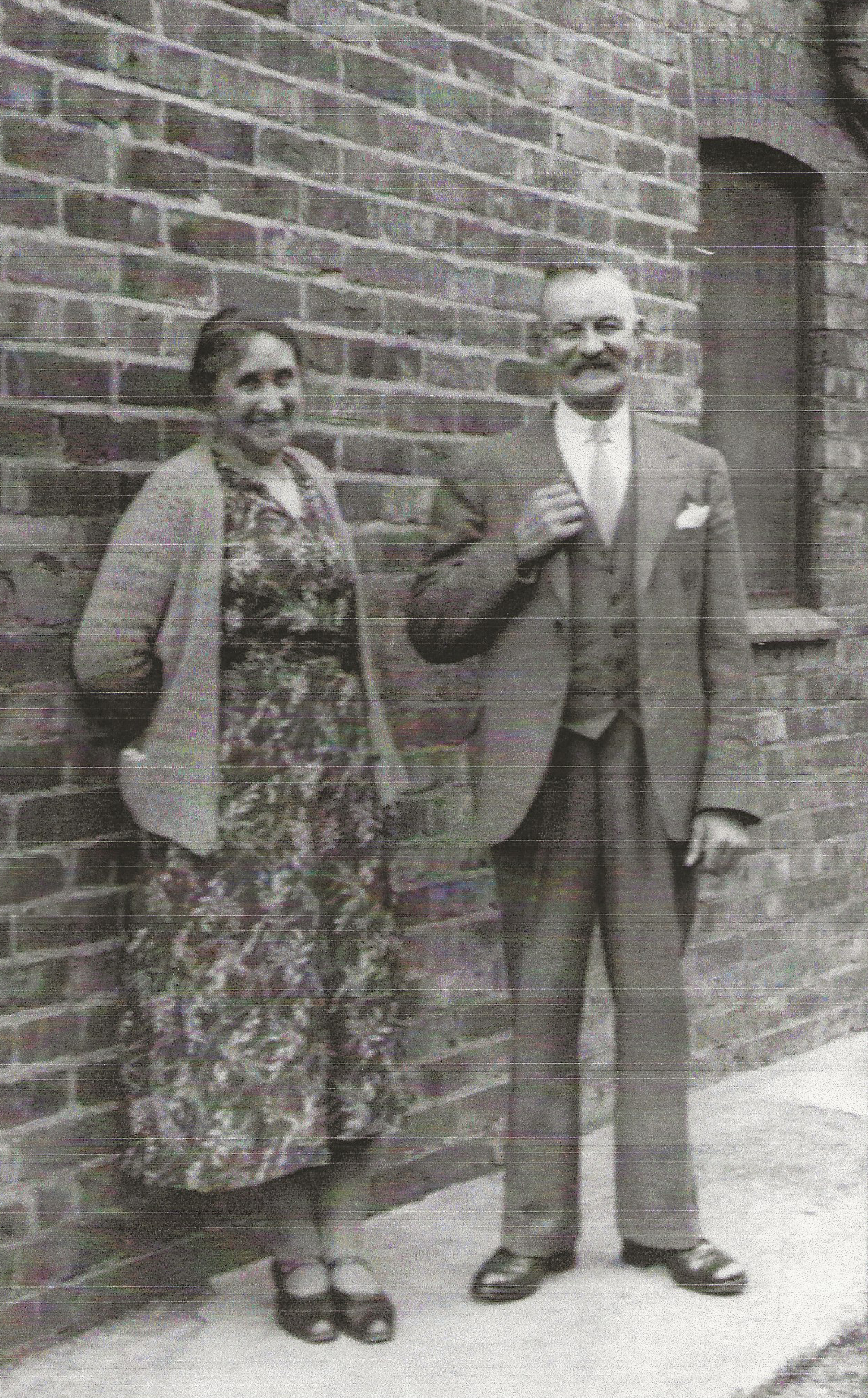
Joseph and Ann Abram (nee Cox) were my great great great grandparents. I have been able to locate the couple on the 1861 census, where Joseph, a shoemaker aged 23 and Ann aged 21 were living at 4 Lower River Terrace, St Sepulchre in Northamptonshire with three children, Emma, Charles (my great great grandfather aged 1) and Harriett.

I believe Joseph was the son of James and Rebecca and I have located him on the 1841 census aged 3 and the 1851 census aged 12. Sadly, it appears that Joseph died aged just 28.  The death certificate shows he had been suffering from Phthisis Pulmonalis (Tuberculosis) for 13 months.

Ann appears to have married William Maloney in 1869 to and her story continues on the 1871 census, where, aged 31, she is living at St George Square in Northampton but now with William Maloney of Ireland, Charles (aged 11 and recorded as Charles Abram Maloney) and three other children, George, Emma and John W Maloney.

In 1881 William and Ann can be found living at 12 Alpha Street, Northampton, with four children, Jeremiah (aged 9)*, Eugene, William and John Maloney.  Finally, in 1891, Ann can be found at 50 Adelaide Street, Northampton.  She is a widow and working as a laundress. Eugene, William and John are still living with her.

* Jeremiah Maloney does not appear on the 1891 census with his mother and siblings but I believe I have located him, aged 19, living as a boarder at Luther Street, Leceister in the home of William and Sarah Abrams (both recorded as being born in Northamptonshire) and their children Herbert and Amy, along with two other boarders,  Ellen Maloney aged 24 and and Eva M aged 1.  (I believe that Jeremiah Maloney married Ellen Frost in 1889).

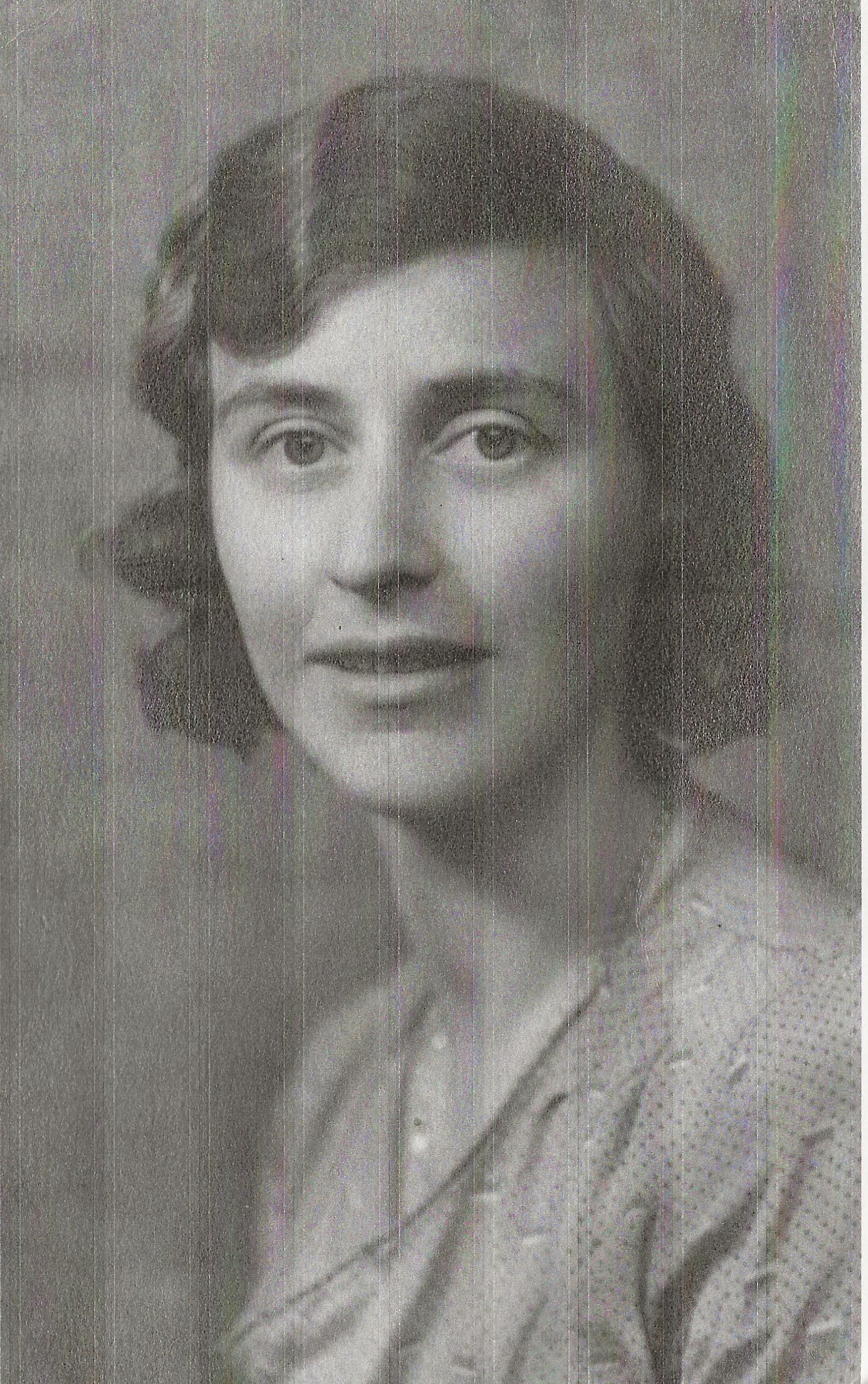
Orphan photos

The purpose of the Family Album pages is to try and document my family – to ensure my family stories live on and the people are not forgotten.  Sadly though, I do have photos that I know nothing about and these are displayed here, in the the hope that maybe someone will recognise the people in them be able to tell me something about them.

The people shown are likely from Bedfordshire and Northamptonshire as this is where my ancestors were from.

Orphan photo

More orphan photos

See also:

Shortland shoemakers

In papers given to me by my great aunt Dorothy, she noted that John Shortland (the brother of my great great grandfather William Shortland) had started a shoe firm in Irthinglingborough, Northamptonshire, so I set out to investigate.

I had always known that Northamptonshire was famous for making shoes and boots and that it was likely my ancestors had been involved but I never expected to find them involved to the extent I did.

Information about the firm Dorothy referred to was initially located on The Rushden Heritage website which indicated the firm was actually started by John’s father, also called William.

In 1875 the late Mr. William Shortland left his native Harrowden to seek work in the trade at Irthling-borough where he soon established himself and was one of the first to install a sewing and stitching machine. In 1891 he built the Tower factory where he and his sons, John and James, made shoes for the wholesale market. Eventually, John Shortland started business on his own account and in 1899 founded the Express Works, which during the past 59 years have been extended many times. On his death in 1934 the management passed into the hands of his son, Mr. Hugh Shortland. The development of the well-known “Wearra” fitting system, covering slim, medium and broad fittings in men’s, women’s and youths’, started in 1936.

Information about John Shortland Ltd was located on the National Archives website and about information about William and John Shortland on the Grace’s guide website where I discovered a large selection of adverts for William Shortland, John Shortland and Wearra Shoes.

I subsequently contacted the Irthlingborough History Society and Roy York and Philip Watts told me about Wearra shoes and the Express Works factory where the shoes were made.

The Shortland family I was told were ‘very important in the town employing many local people and Hugh Shortland’s name appears on the foundation stone of the local Methodist church. The hall, coincidentally, is where the history society holds it’s meetings. A reproduction of the giant plaque, on the now demolished Express Shoe factory, is being placed on the buildings of the new development being built at the moment on the large site in the centre of the town next to St. Peter’s church.’

The society also kindly sent me the photos that appear below which show William and John, photo three is believed to be James (John’s brother) and Hugh Shortland.

They also told me about a book titled ‘Clicking to Closing’ which contains information and memories about the work of my ancestors and it was lovely to read about the contribution they had made to the town and also to read they didn’t just run a successful business but appeared to care about the welfare of their staff too, boasting the axiom ‘The best use you can make of surplus profits is to invest them in the welfare of your employees’. In a strange coincidence, the book was printed and bound in the premises formally occupied by John Shortland Ltd – The Express Works in Church Street.

Sadly, the firm, which had become known as David Scott Shoes and was one of Irthlingborough’s largest employers, closed in 1982 with the loss of 320 jobs and today not one shoe manufacturer remains in Irthlingborough – in October 2002 R Griggs Ltd announced that production of Dr Martens in the town would cease, bringing to end, an industry with which the town had been associated for many hundreds of years. I feel incredibly fortunate however to have discovered such a wealth of information about my ancestors and the work they did and to be have been able to gather it here for my family and others to learn about them too.

More photos

Richard Shortland

I learned about Richard and his wife Eliza after reading through papers given to me by my great aunt Dorothy. Richard it seemed was born in Northamptonshire around 1824 and Dorothy had noted that he had traveled to Australia with the 51st regiment of the British army around 1841, living there until he died in Sydney in 1887.  Further information about the regiment can be found below.

I wanted to learn about Richard and Eliza as it seemed learning about them, may lead me to learn more about the story I have been told, that my family is descended from Lieutenant John Shortland. I have now amassed quite a bit of information which is published here, however, to date, I have only found contrary reports about Richard’s relationship to Lieutenant John.

Dorothy’s papers seem to indicate that Richard was the brother of my great great great grandfather John Shortland, along with three other brothers, named Thomas, William and Henry.  The papers included a birth certificate from 1858 for Richard’s son Joseph (on this Richard is shown to be a Dray Proprietor) and a note, handwritten by Dorothy, which detailed a memorial, showing that Richard died aged 64 in 1887 leaving a wife and 12 children:

  • William Henry
    (born Armidale, New South Wales 1849, married in Camden 17/9/1872 at St. Johns Church, occupation  – Writing Clerk
  • Mary A. (1850)
  • Richard (1852)
  • John (1854)
  • Eliza (1855)
  • Joseph B (1858)
  • George T (1860)
  • Robert A. (1862)
  • Alice (1864)
  • Arthur (1867)
  • Emily (1869)
  • Martha L. (1873)

I believe that prior to marrying Eliza, Richard was married to Anne. A search of the Find My Past website has found that Richard Shortland married Anne Keenan on 2 September 1844 in Sydney, Australia.

Searching for further information, I found the hand written note matched an entry on the Ancestry UK website and this enabled me to locate both the death index, (which names Richard’s parents as Richard and Mary) and details of the grave in Rookwood Cemetery, New South Wales.

Grant Skinner at the cemetery kindly sent me the photos that appear here – these not only showed the grave that Dorothy wrote about but also that other family members were buried in the same place.

Grant advised ‘The rear of the memorial (photo 0348) is all blank with the three x other faces having multiple inscriptions and the plots appear to be over four or five sites wide. It appears that a wrought iron fence of some description has been removed from the kerb set of the memorial some time ago based on the patches in the sandstone, but the memorial itself is in rather good condition given its age with a bit of the kerb set sunk into a slight depression towards the front of the site, but nothing of any great concern’. Death notices for Richard can be found below.
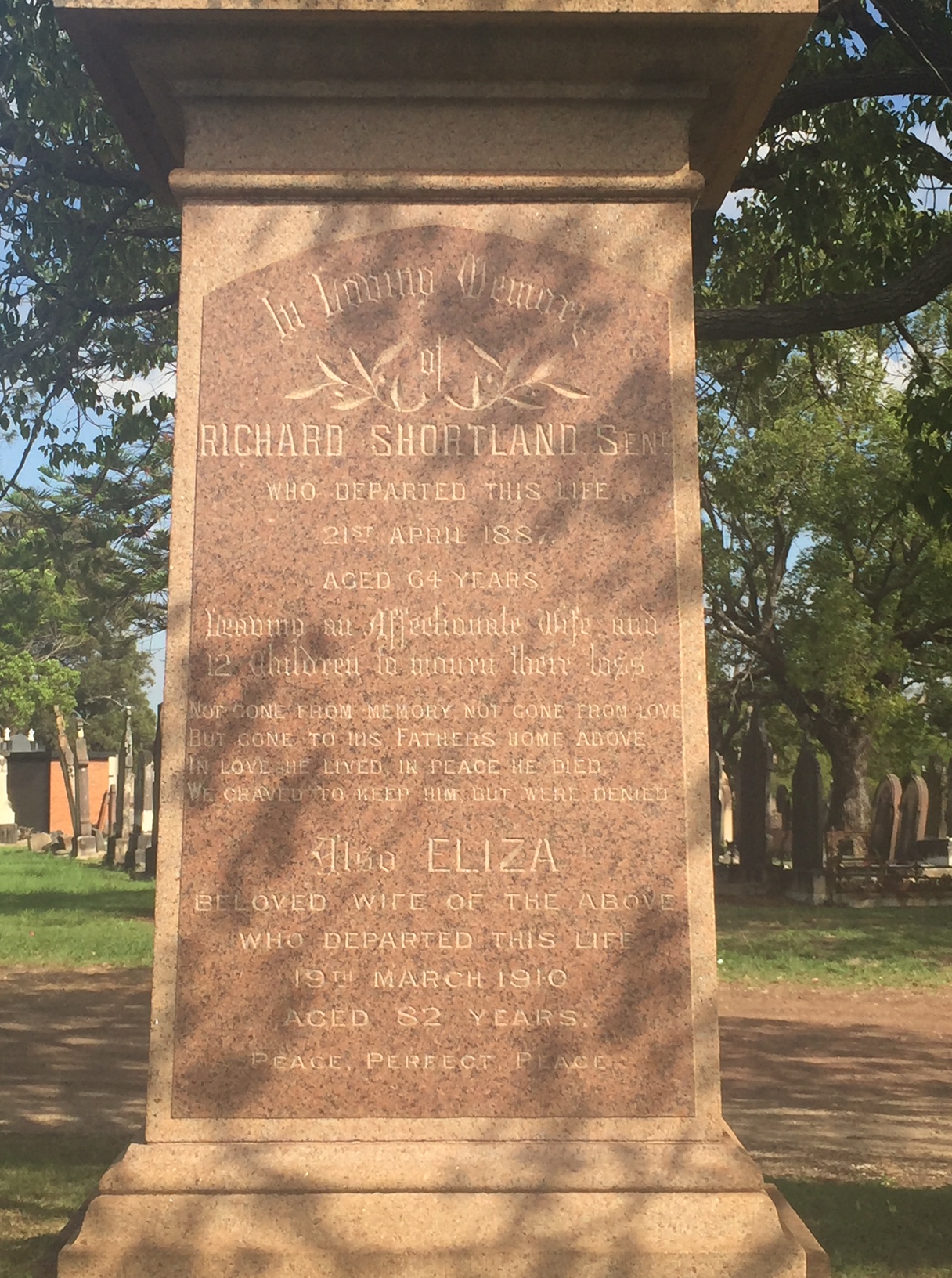
Grave of Richard and Eliza Shortland

However, on studying the photos, I noted that another Richard is recorded. The younger Richard died 24 April 1933 aged 80 years.

I searched the National Library of Australia website and have I believe found newspaper articles relating to the latter and his wife. The articles about Richard state he was a descendant of Lieutenant Shortland and a grand or great grand nephew of Rear-Admiral Shortland, of the Imperial Navy.  The articles also provide detail of the work he did, stating ‘He was principal of the firm of Shortland and Sons who, in the early days of Sydney, were contract carriers for most of the city firms; he retired from business at the outbreak of war in 1914.’

Richard

Martha

However, I am also in possession of a document, re-produced below,  which states the  relationship to Lieutenant John has been proved to be untrue and that Eliza invented the story.  Could Eliza have made the story up? I am keeping an open mind but for my money, in light of the newspaper articles, I would like to know how the story has been disproved before reaching my conclusion.
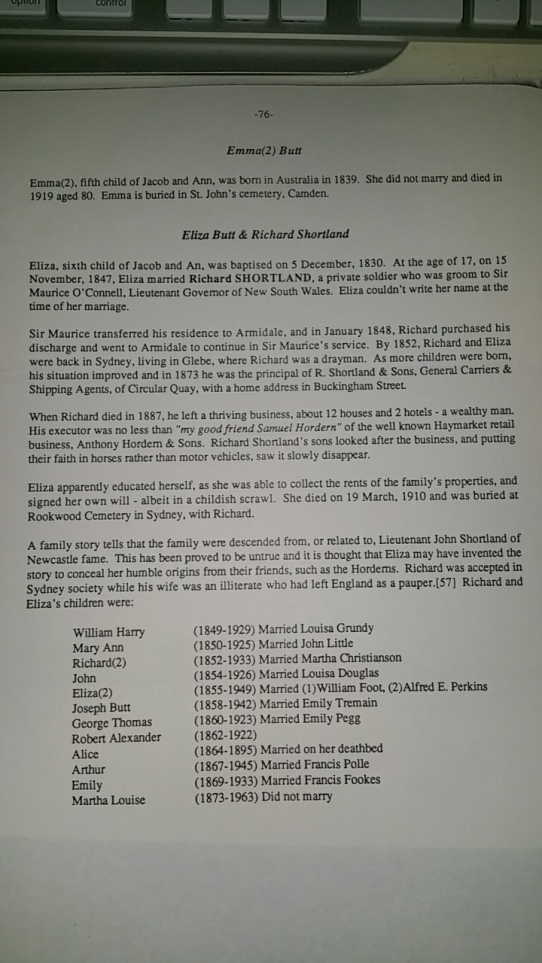
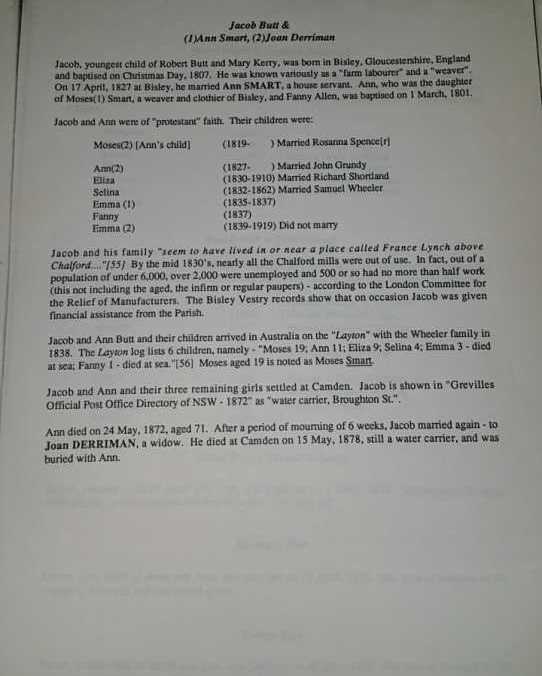
The Wheelers of Camden (page one)

The Wheelers of Camden (page two)

More photos

Shoemaker or veteran

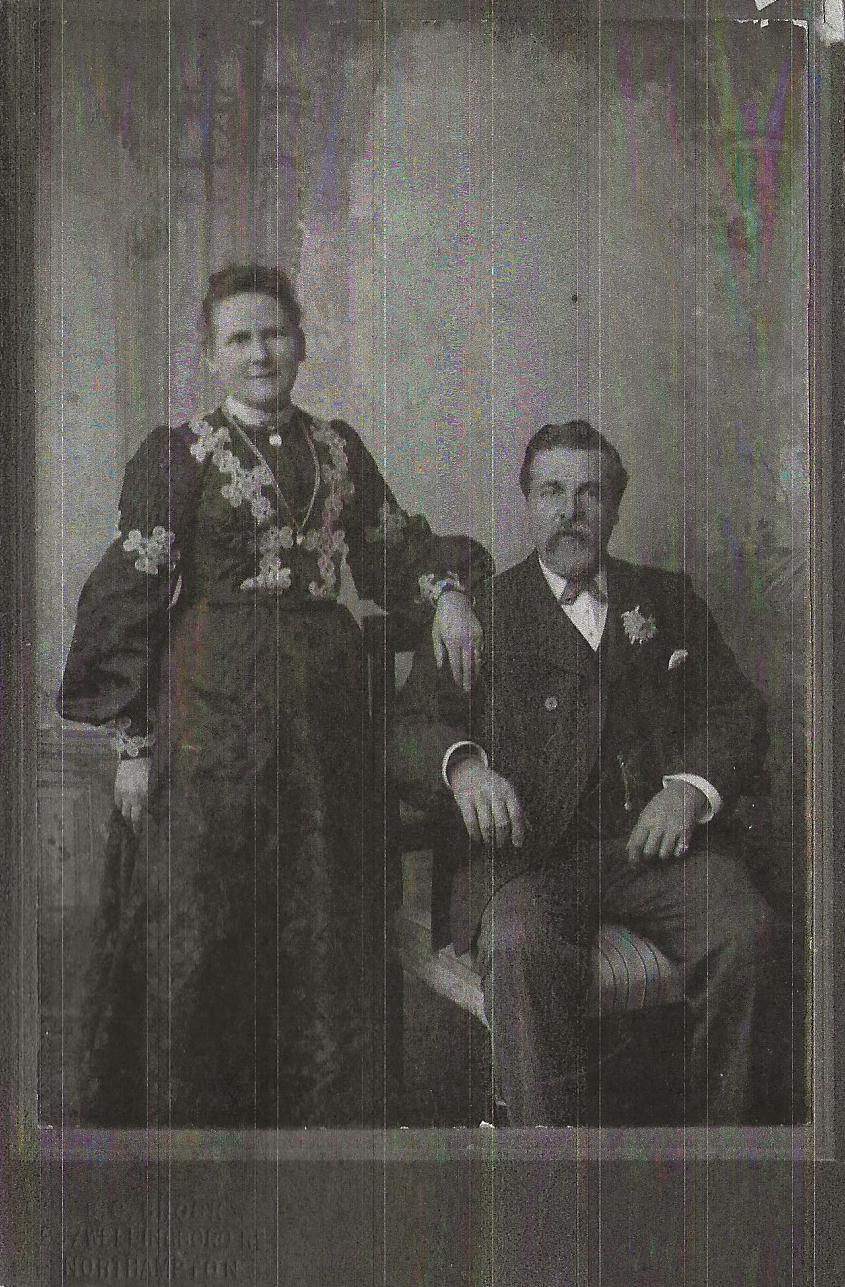
The photo on this page was given to me by my relative Keith Shortland. The man and woman make a striking couple but neither of us know who they are, the only clue is the name and address of the photographer which appears in the bottom right of the photo – B G Brock, 23 Wellingboro Road, Northampton.

The sheriff of Northampton

Northampton is known for shoe making and I know some of my ancestors were shoe makers in Northamptonshire (one is recorded as being a journeyman shoemaker meaning he traveled around the country to work).

A search of the National Archives has found two entries which reference the photographer.

In February 2018, Paul Boniface who was researching Victorian and Edwardian photographers in Northamptonshire got in touch and advised:

Benjamin George Brock ran a studio at 237 Wellingborough Road, Northampton between 1903 and 1907. In 1901 the census shows him as a lodger at 235 Wellingborough Road – occupation photographer and on 1 March 1903 he married Ida Blanche Allen. The 1911 census shows him living at 25 Beaconsfield Terrace, Northampton – occupation Foreign Correspondent.

The photo is a studio photo and the style of dress is in keeping with early Edwardian attire. Paul thought the emblem on the gentleman’s jacket was a flower (maybe a dahlia) and advised that a journeyman is the stage after an apprenticeship –  there was five to seven years worked as an apprentice and then three years as a journeyman.

If you check the size of the photo it will also give you an indication of the date. 2.5″ x 4″ (CdV) would point to the early years of Benjamin and 4″ x 6.5″ would be the latter say 1905-7.

Shoemaker or veteran, I don’t have the answers right now – whether I can learn more about the people on the photograph remains to be seen but I intend to try.

He rode to war on a penny farthing

Ernest Henry Shortland was the brother of my great grandmother Louisa Jane. Born in Weedon, Northamptonshire in 1876, for most of his life he worked as a wheelwright.

Ernest and wife Laura outside the house Ernest built at Braefield

As a young man, Ernest joined the local section of the First Battalion, the Northamptonshire Volunteers and would travel with his colleagues on Penny Farthing bicycles to Daventry weekly, to take part in combined company drill and exercises. On arriving in Daventry, the cycling soldiers were greeted with shouts of ‘here come the mounted infantry’.

At the outbreak of war, Ernest volunteered for service but because of his age was advised to join the County Police and this is how he came to Braefield. As a war time police officer, he had many experiences, including chasing German prisoners of war who had escaped Pattishall Camp. who were located hiding in a a wood and escorted back to Northampton.

Ernest died in Braefield aged 91 and at that time was the villages oldest man.

More photos

There’s no place like home

Going through old family photos, I have come across photos of places my family have lived. Below is a brief history of some of the places my family have called home.

39 Woodbridge Close, Luton

My first home was 39 Leagrave Close, Luton and it was here that I was born. My mum had wanted to give birth to me in hospital as I was her first baby but the doctor felt she was young and healthy, so a home birth it was.

Woodbridge Close was my parents first home after they were married in March 1967 and I came along in May 1971. The house was a mid terrace in a block of three properties and a new build which cost £4,250. Dad told me the heating/hot water came from a coal fired back burner in living room. The house had three radiators, the coal fire had to be refilled two to three times a day and an ash box emptied each morning.


Langport Drive, Vicars Cross

When I was seven months old we moved to Chester. My parents bought a new three bedroom house on Langport Drive in Vicars Cross for just under £5,000, after the first buyers pulled out and we moved in on 9 December 1971.  At the time of purchase the house had just a gas fire in living room and my parents had to find a plumber to fit the central heating.

The houses were built by Thomas Warrington Homes Limited and are a mix of bungalows, detached and semi detached properties, most of which have very recogisable windows on the front of the property – one large window divided up into many smaller windows. The bedroom windows overlooking the road had two similar smaller windows, with wooden shutters and mock black iron hinges. Today the windows still remain but the shutters and black hinges have now mostly be taken down.

My friend Ian and his sister Helen lived a few doors up the road in a detached property – their house was the last house on the right of the street. I remember it had a larger back garden than the rest of the houses and to the side of their house, out the front, there was a piece of land on which the children from the street would often play. The land signalled the top of the cul-de-sac, behind which a hedge was planted to separate the road from the busy A41 which ran directly behind it.

The black and white photos below show Ian and me as bables outside of my parents house.  The colour photos show Ian and me with our sisters Helen and Rachel.


Poplars Close, Luton

Poplars Close was my grandparents house until I was about 11 when they moved to Chester. I remember visiting my grandparents and also, because it was so close, getting to visit London and go the theatre at the same time which was always a treat.

The property was a large two bedroom bungalow called ‘Robin Hill’. The property was a large two bedroom bungalow, with a large garden out the back. I remember a greenhouse where my grandfather grew tomatoes and looking at the the photos today, I am struck by the size of the garden and how pretty it was. My grandfather must have spent a lot of time out there and I wish I could have talked to him about it, as I have grown to love gardens too and I think he could have taught me a thing or two.
My great grandfathers Albert Edward William Clarke and my great grandfather Joseph Charles Abram lived about 100 yards away from one another on Earls Barton. More information about both men can be found on this website.

32 Mears Ashby Road, Earls Barton

Mears Ashby Road was the home of my great grandfather, Joseph Charles Abram. Named ‘Rockaway’, it was a three bedroom semi detached house and was one of two houses which we believe he built after he retired from the army.

My dad and granddad lived in this house for around  4 – 5 months in 1952 too because my grandmother was in hospital. Dad remembers the property had a large flower garden but also a large area for growing vegetables. He explained to me that gardens were much bigger than they are today and growing vegetables had been encouraged during the war years as part of the Grow for Victory campaign.

The Limes, Earls Barton

My great grandfather Albert Edward William Clarke lived at The Limes.  The house still stands today.  Photos of the property can be seen below.


Margaret and my Australian family

Putting together these pages, I have felt incredibly fortunate to know so much and have so many photos of my family and I am indebted to Margaret Creighton (nee Abram) for sharing so much of the Abram family history with me.

Margaret is my dads second cousin once removed and the daughter of Reginald Abram, one of the many children of my great great grandparents Charles and Emily. After the first world war ended, Charles and Emily stayed in England and Charlie and Millicent (my great grandparents) settled in England too but many of the family emigrated to Australia, with Reg going in approximately 1922 – 1923.

Below are some photos of my Australian family.

Photo one: Margaret with husband Graham, mother Connie (wife of Reginald Abram, one of the children of my great grandparents Charles and Emily) and sister Joan, 20 March 1093
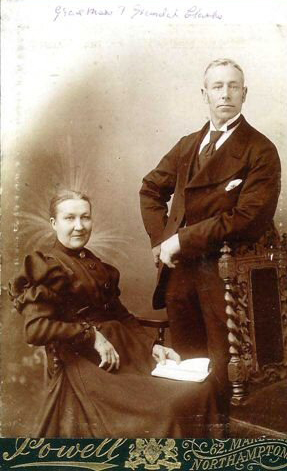
Photo two: Margaret and Graham with Connie aged 90 1/2 years holding her great grandson Robert, also Robert’s mother Teenga
Photo three: Margaret’s eldest child Rodney with wife Jenny
Photo four: Margaret’s middle child, Greg
Photo five: Margaret’s youngest child Andrea

Stephen and Mary

I know very little about this photo but on the top, in writing that looks like my grandmothers, it appears to say grandmother and grandad Clarke.

My grandmothers grandparents were Stephen Clarke born in Welton in 1840 and Mary Ann Wright from Watford. The couple married in Watford on 15 January 1864 and had a number of children, including by great grandfather Albert Edward William Clarke.

stephen-and-mary-clarke

The Shortland family

Further information

Information about the name Shortland can be found on the Find My Past website below.

Dad’s 70th

Dad celebrated his 70th birthday in 2014. To mark the occasion, me and the Little Sis got him a bottle of sparkling wine from New Lodge Vineyard in Earls Barton, Northamptonshire where some of our ancestors lived which we gave to him in a wine box personalised with his name and date of both.

We also gave him an armed forces bear from Great British Teddies in RAF gear, like his father might have worn when he served.  The bears are dressed at the Poppy factory in the UK by wounded ex-military personnel, that Great British Teddies employ to get wounded, sick and injured ex-armed forces men and women back to work.

dad-70-19

More photos