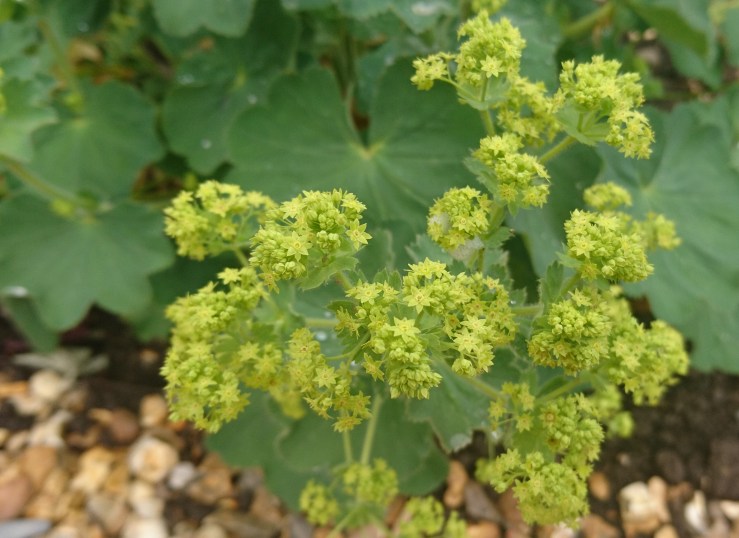
Euphorbia

A couple of years ago I bought some euphorbia seeds. They didn’t germinate on my first attempt but I had another go and I am now a proud mum to several euphorbia plants which I have planted down the path to my front door and at the front of garden borders.

All photos by Toni Abram.
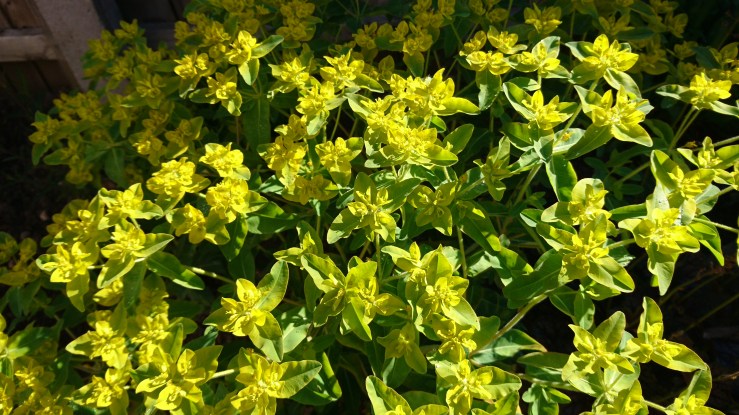
Euphorbia oblongata.

The variety I have is euphorbia oblongata but the euphorbia family contains around 2,000 species and I recently learned the Christmas poinsettia is a euphorbia plant too.

Euphorbias are sun lovers and mine are planted in full sun. However, there are varieties that will tolerate shade. In the UK we grow perennial and shrubby types, known as spurges. Euphorbia foilage and flowers are zingy green, acid yellow, chautreuse green and bright orange. They make a dramatic backdrop for other plants and flowers – I have red poppies, blue cornflowers and purple alliums planted with mine and the colour combinations are striking. Euphorbias make a lovely cut flower too and will last in a vase for 7 – 10 days.
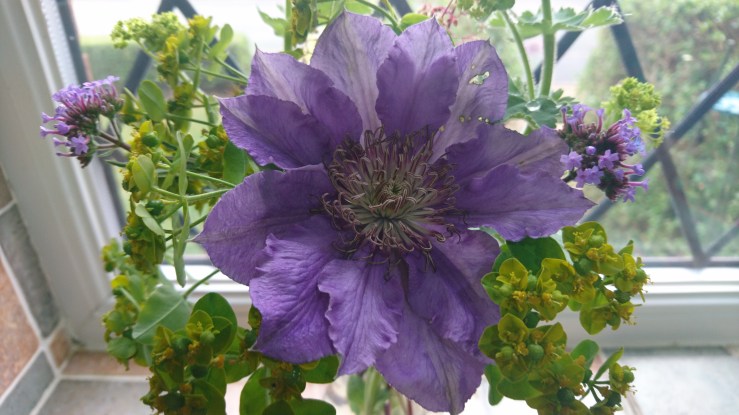
Euphorbia oblongata as a cut flower.

The flowers are actually bracts, a modified leaf or scale, typically small, with a flower or flower cluster in its axil. Bracts are sometimes larger and more brightly coloured than the true flower, as with poinsettias.
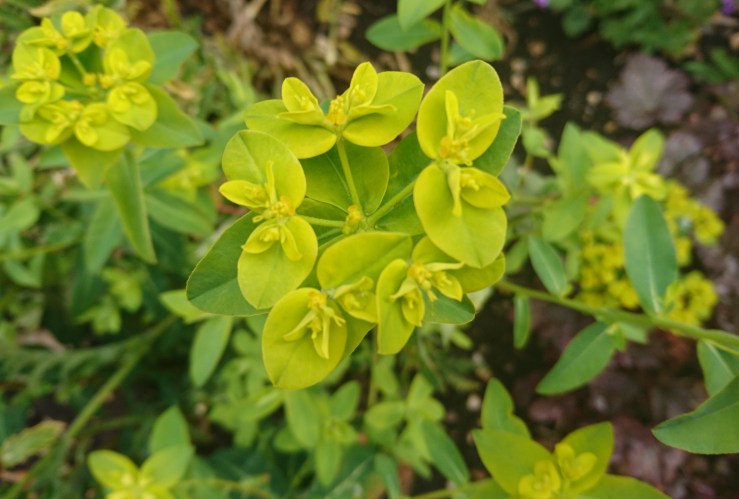
Euphorbia oblongata.

Euphorbias flower nine months of the year from May – December. When the stems turn brown, cut them back to allow for new growth but be careful when doing this, as they have a milky sap which is a nasty skin irritant.
Dahlias

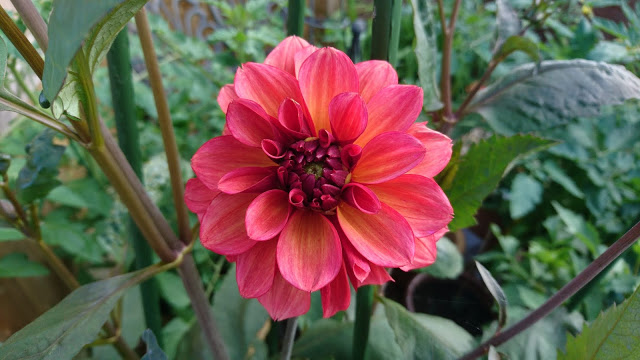
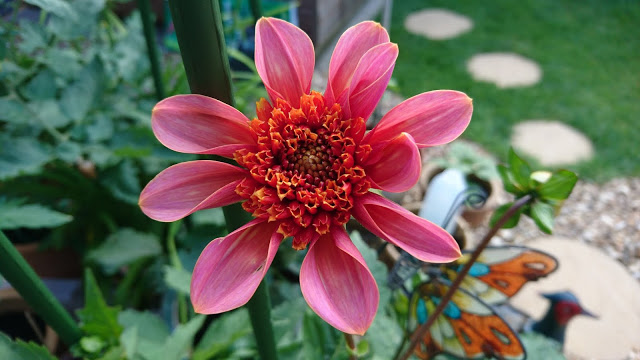
A few years ago I bought a dahlia tuber collection called the William Morris collection from Sarah Raven. The collection contains three types of dahlia called ‘Barcardi‘, ‘Labyrinth‘ and ‘Totally Tangerine‘ which is my favourite.

All photos by Toni Abram.

Dahlia Totally Tangerine.

Dahlias start growing in late spring and grow rapidly, flowering from July – November. They come in many colours or sizes and can be grown in pots or in a garden border. They were discovered by 16th century Spanish botanists who noted dahlias growing wild on the hillsides of Mexico. You can read more about dahlias below.

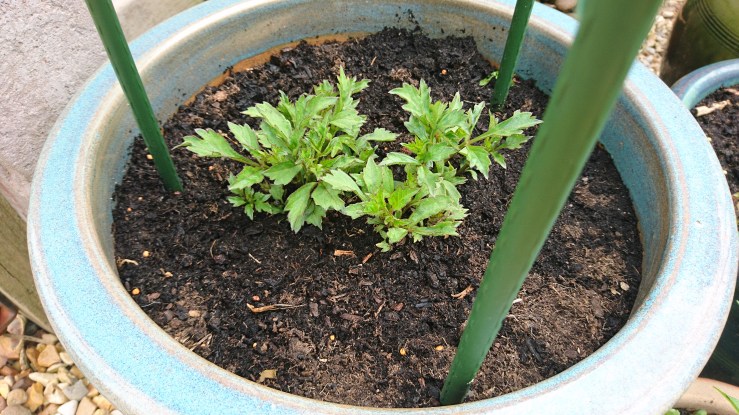
Dahlia (mid May).

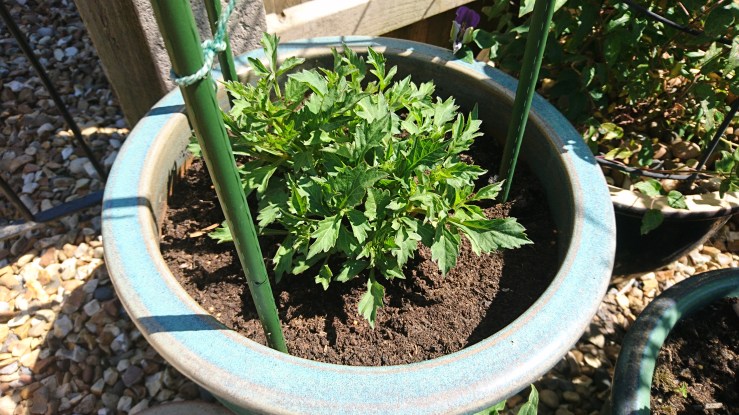
Dahlia (late May).

Dahlia (early June).

The first year, I planted the tubers in medium sized pots with multi purpose potting compost and popped them in the shed where there was some light but where they could also stay warm and dry. I didn’t start watering my dahlias until they began to shoot and once this began to happen I transferred the plants into large deep pots.

My dahlias grow 3 – 4 foot so I use plant supports, which I create cheaply with garden canes to form a wigwam structure and cane grips which you can buy at garden centres, on eBay or Amazon.

dahlias-3

I have never experienced any problems growing dahlias. Mine always have many flowers and so I have them as cut flowers in the house too. However, I have read they are prone to attack from earwigs, which eat the leaves, buds and flowers. If this is a problem for you, you can create earwig taps by pushing a garden cane into the soil and placing an upturned garden pot stuffed with straw on top of it. During the day the earwigs will retreat to the pot and you can then dispose of them.

I understand that proper gardeners dig the tubers up at the end of summer, clean them up and put them in a warm dry place over the winter.  Being a lazy gardener, I don’t do this, leaving them in the pots over the winter and hoping for the best. I have had the same dahlias in my garden for a number of years now and being a lazy gardener has served me fine so far.

Dahlia Barcardi.
Dahlia Labyrinth.

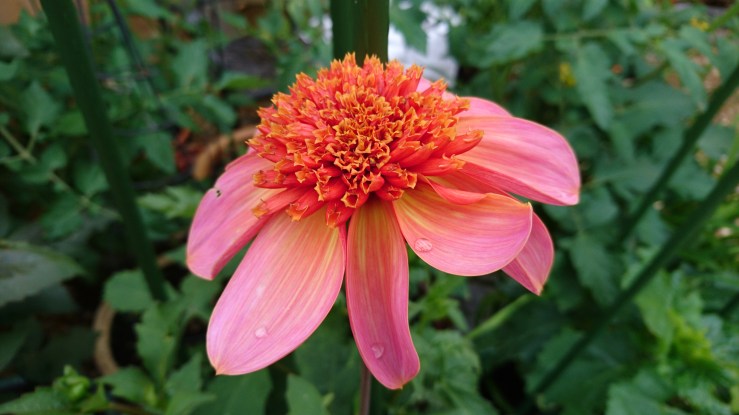
Dahlia Totally Tangerine.

Crocosmia

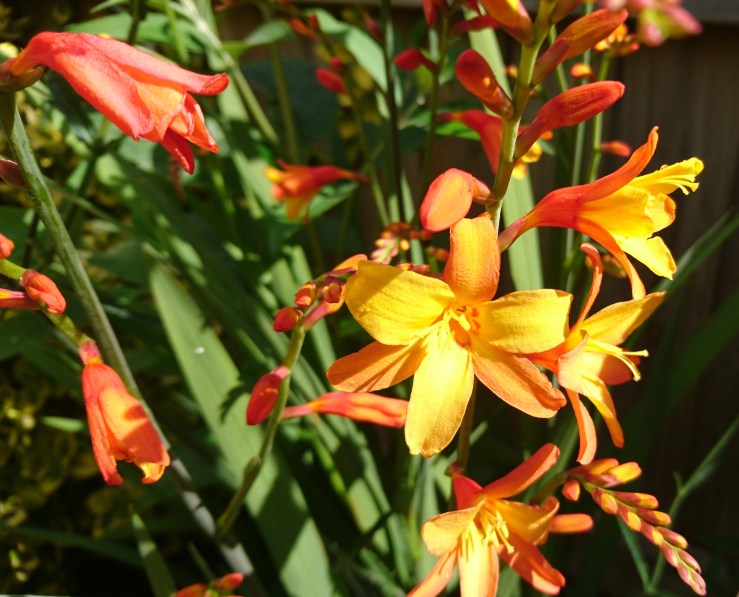
Crocosmias are a fabulous plant for a burst of colour in late summer, flowering from July to October. There are hundreds of red, orange and yellow varieties to choose from, with  sword shaped leaves that look like grass and rustle in the wind. South African in origin, they are showy but elegant at the same time, standing tall and proud wherever they are planted.

All photos by Toni Abram.

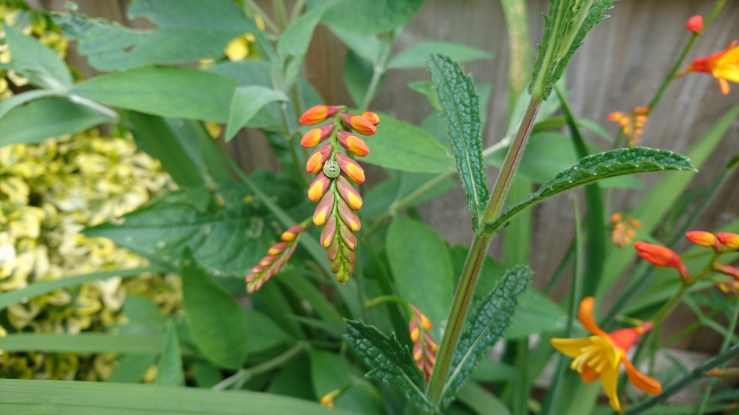
Crocosmia.

Crocosmia need to be grown in moist but well drained soil in full sun or partial shade and should be divided every few years to encourage better flowering. (In colder regions you may need to mulch the corms to protect them from frost.)

Crocosmia flower before it fully blooms.

Prior to opening fully, the flowers are flat and floppy but then it is almost as if someone breathes air into them, they sit up straight and the flowers appear along the stem.

Crocosmia flower.

Crocosmias are herbaceous plants, which die back over the winter before re-growing in the spring. They grow from corms and can be planted in the same way you would plant bulbs. The corms multiply forming new corms which grow on top of each other in a ‘conjoined string’, hence the reason for dividing and re-planting, however it is really easy to dig the plants up and pull the corms apart.

Crocosmia flower.

Overall, a lovely easy to grow plant which looks amazing grown in large blocks and good for filling gaps in garden borders when other plants have stopped flowering.


Cornflowers

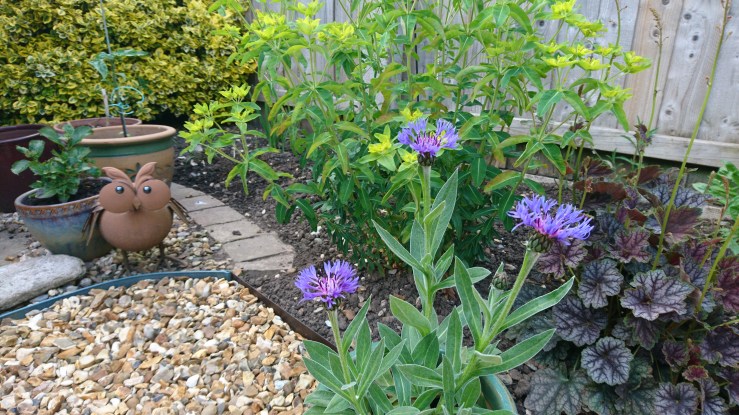
I have grown cornflowers in my garden for a number of years now. Cuttings were gifted to me and I believe that the variety I have is Centaurea montana ‘Amethyst Dream’. I now have cornflowers growing in pots and also in my garden borders, which I have propagated from the original planst I was given.

All photos by Toni Abram. 

Cornflowers in bloom.

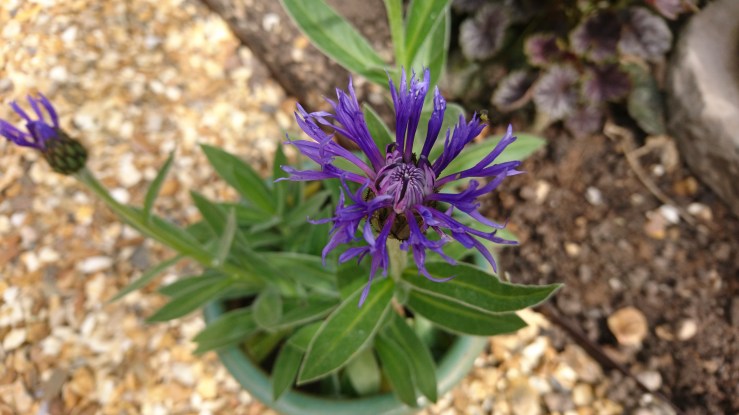
The plant has a beautiful inky blue/purple flower, the buds have an interesting cross hatch design that reminds me of thistles and if you are looking for a plant to attract bees to your garden, this is a plant they love.


Cornflowers.

Cornflowers need very little attention. If they look untidy, simply cut the plant back to promote new  growth. Sections of the plant can be dug up or even pulled out of the ground for planting somewhere else in the garden or sharing with someone. With regular deadheading my cornflowers have flowered well into the autumn in past years.

cornflowers-2


Clematis

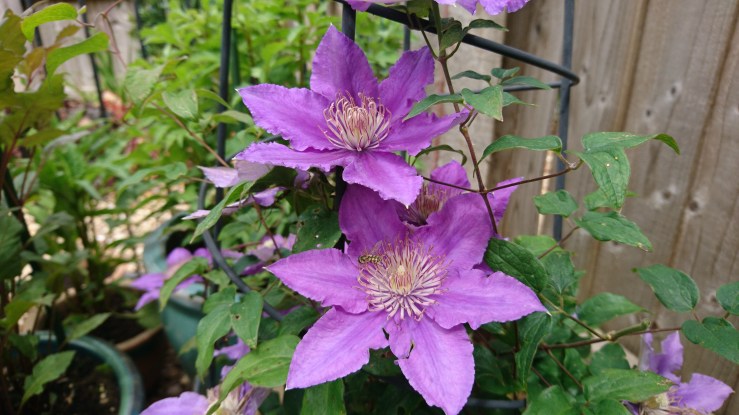
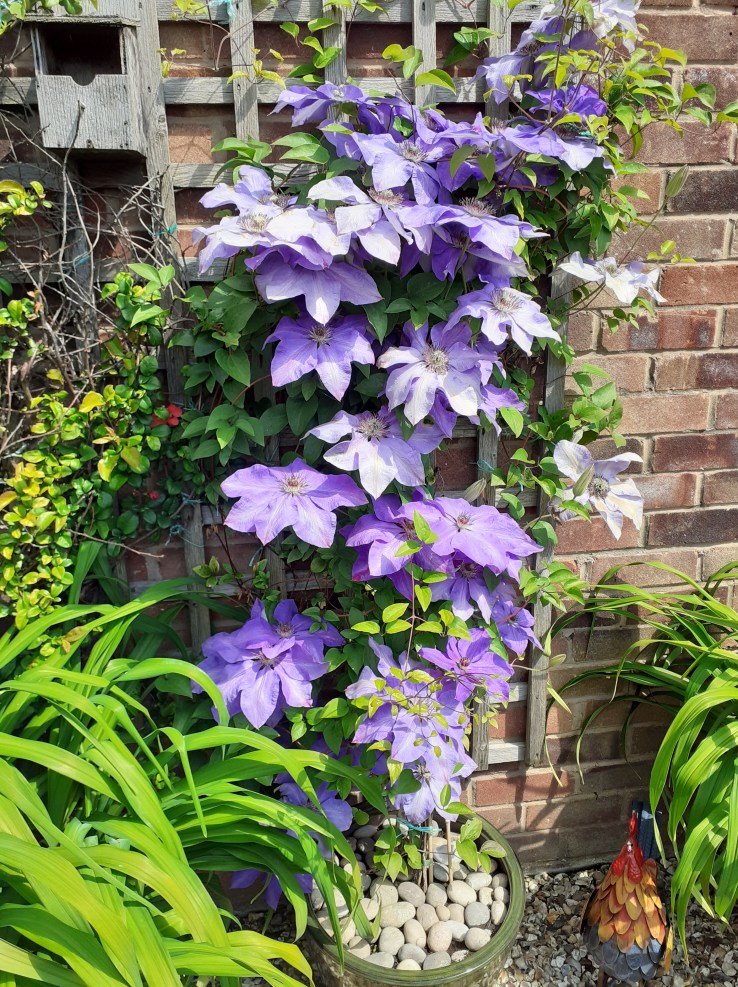
Clematis are climbing plants that provide height and colour to a garden throughout the summer. There are a huge variety of plants to choose from, in many colours and with flowers ranging in size from small bell size to large dinner plate size. Covering  walls, fences and trellis with leaves and flowers, they are also good for wildlife, providing shelter for insects and sometimes birds.

All photos by Toni and Diane Abram.

Lilac coloured clematis.

Most clematis require moisture retentive soil and full sun (think roots in the shade, top growth in the sun), so need watering regularly, particularly in dry weather. They’re hungry feeders, so need a high potash fertiliser such as tomato feed in the summer. This is particularly important when growing clematis in pots – clematis are suited to a range of planting locations, however as a general rule, do better in garden soil than in containers. Feeding your clematis should encourage a healthy crop of flowers.

How to plant clematis

Clematis should be planted in spring or autumn. Dig a hole twice the width and depth of the root ball and part fill it with well rotted organic matter and some bone meal or other fertiliser. A clematis will benefit from being planted around 5 cm deeper than it was in the original pot, as this can prevent the fungal infection known as clematis wilt.

Remove the plant from its pot, place the root ball in the hole and back fill with soil, firming in well and watering thoroughly. Continue to water the clematis every week or so until it starts to show healthy signs of growth.

Lilac coloured clematis.

How to prune clematis 

While all clematis have roughly the same planting needs, they need pruning according to their pruning group.

  • Group one 
    Flowers on wood created the previous year, so doesn’t require any pruning at all.
  • Group two
    Also flowers on the previous year’s growth and should be lightly pruned in February, removing damaged or weak stems to make way for fresh growth, then trimming other stems to just above the strongest and highest pair of buds.
  • Note: If cut back too hard, you’ll lose a year of flowers
  • Group three
    Flowers on the current season’s growth. Prune plants hard in early spring, before growth begins. Cut back plants to just above a healthy bud about 30cm from the soil.
    Note: If you don’t prune group three clematis, you’ll end up with a tangled mass of stems with flower growing only at the very top of the plant
If this all seems a bit much to remember, try leaving the prior year’s growth in place until mid spring and begin pruning only when you can see which vines are dead and which ones are beginning to show new growth.
Clematis viennetta.

How to take clematis cuttings

The best way to take clematis cuttings is to take softwood cuttings in April or May. The short film below shows how to do this.

Common problems

  • Wilted shoots
    Clematis wilt is a fungal disease which can cause clematis to die suddenly without apparent reason. Larger flowered types are the most likely to be affected. If affected, all stems should be pruned and burned.
  • Earwigs
    Clematis are also prone to attacks from earwigs. The damage is only cosmetic and doesn’t harm the plant but you can create earwig traps by pushing a 1m long cane into the ground next to the clematis, stuffing a plastic plant pot with straw and placing this upturned on the top of the cane. Earwigs will use this as shelter during the day, giving you the opportunity to catch and re-home them.
  • Rabbits, mice, slugs and snails
    Rabbits, mice, slugs and snails like to eat clematis, so protect young plants to give them a good start.

Further information

For further information about growing clematis, visit the websites below.


Alchemilla mollis

I have grown alchemilla mollis (also known as lady’s mantle) in my garden for many years now. I have heard it described by others as a weed but although it might grow like one, this description does it a big disservice.

All photos by Toni Abram.

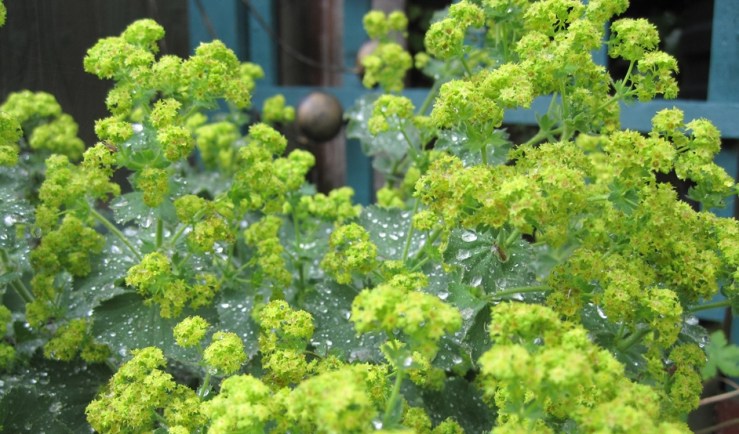
Alchemilla mollis.

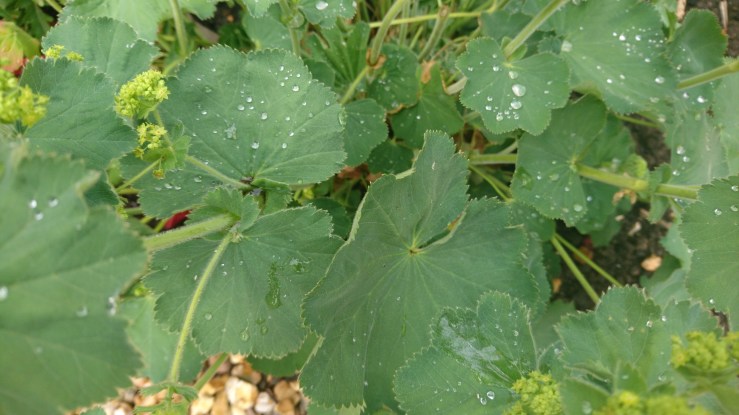
The plant has large apple green fan shaped leaves and masses of lime yellow flowers which up close look like tiny stars. Alchemilla mollis is great for ground cover, makes a beautiful back drop for other flowers, can be used as a front of border plant or used to under plant other plants. And when it rains, the leaves hold the droplets and they sparkle as if in a fairy wonderland.

Alchemilla mollis leaves.

Originally from Caucasus, the name alchemilla is related to the word alchemy. In the past the plant was believed to be magical plant – the water droplets that formed on the leaves were thought to be the purest form of water and that they might turn base metals into gold.

Herbalists prescribe it for a variety of conditions. Anti inflammatory and astringent, it has properties that are good for regulating menstruation and it is often used in late pregnancy to help strengthen the uterus, when it is usually prescribed as a tea made from the flowers.

Alchemilla flowers.

Alchemilla mollis, thrives in sun or part shade, so it’s very versatile and useful around the garden.

For best results, grow in moist but well drained soil. Cut back hard after flowering and it should produce a second flush of flowers in late summer.

And one final word for anyone who still thinks this plant is a weed. The Royal Horticultural Society has given it the prestigious Award of Garden Merit (AGM). Given to help gardeners choose the best plants for their garden – it is their seal of of approval that a plant will perform reliably in your garden.