Dwarf lilies

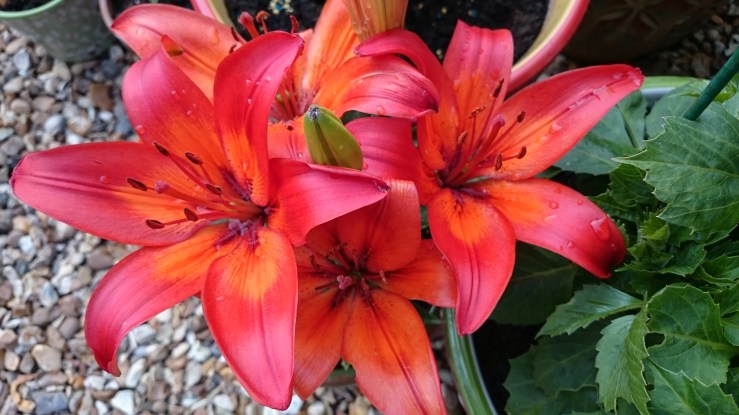
I found my dwarf lilly on a early year visit to a garden centre. I hadn’t gone out with the intention of returning home with one but it was love at first sight.  The variety I have is a dwarf lily matrix and it usually flowers between June and July.

All photos by Toni Abram.

Dwarf lily.

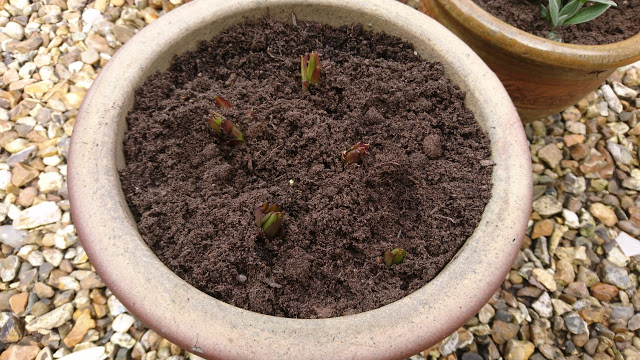
Dwarf lilies die right back over the winter months but each spring when the plant begins to grow back again, it is possible to see there are individual plants and these can be dug up and planted elsewhere in your garden or given away.

Lily sprouts.

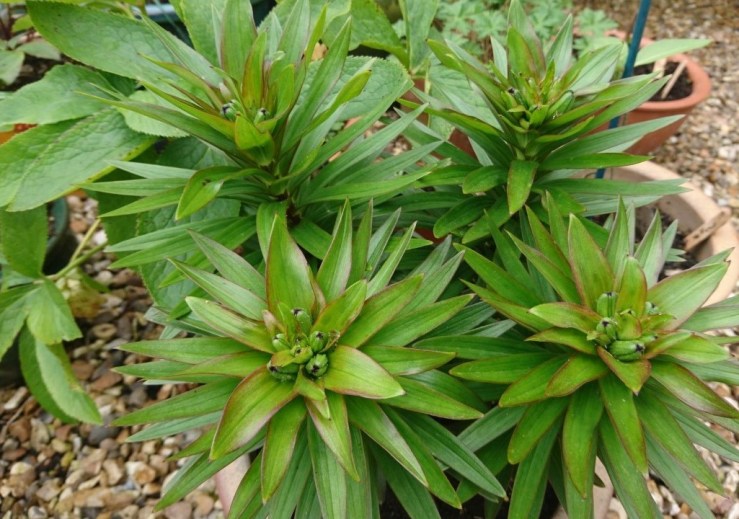
Dwarf lily sprouts.

They grow rapidly and can go from sprouting to good sized plants with flower buds in a month.

Dwarf lilies in bud.

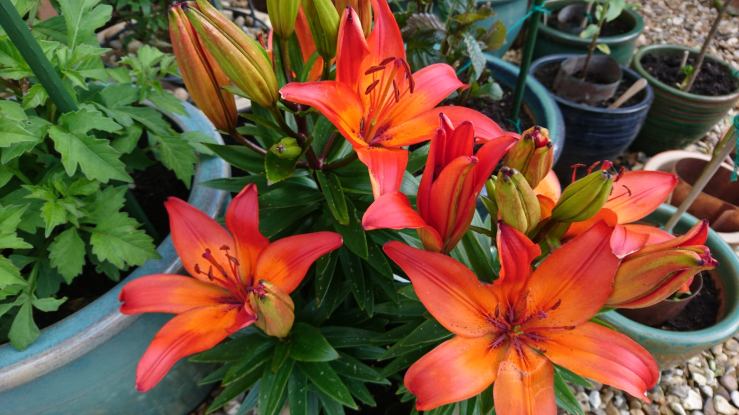
Dwarf lilies are a very easy plant to grow, just look out for lily beetles which have a fondness for the leaves and which tend to hang out on the underside of these. Lily beetles have a bright red shell so are easy to spot but don’t be fooled by their prettiness – they can really do some damage, so plants need to be checked for these daily.

Dwarf lilies.

Heleniums

Heleniums have daisy like flowers which bloom in mid to late summer. They have velvety textured petals and soft, fat, squeezable middles (known as a ‘cone’), which are made up of hundreds of individual florets. 

All photos by Toni Abram.

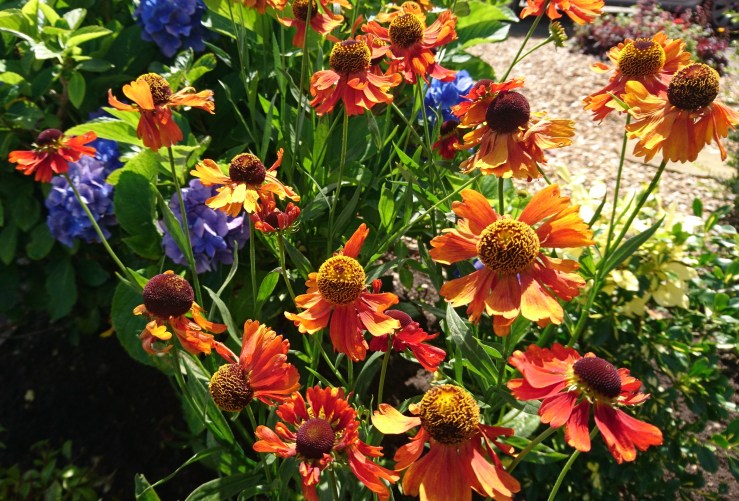
Orange heleniums planted with blue hydrangea.

In my garden I grow orange and yellow heleniums and the hot colours look good planted in mixed borders of purple verbena bonariensis, yellow euphorbia, orange crocosmia and blue hydrangea. Hardy across Britain, they are good for attracting bees and other pollinators and make lovely cut flowers too.

Orange heleniums planted with blue hydrangea.

Best planted in an open sunny position for a good show of flowers, deadheading heleniums throughout their flowering period will encourage more flowers. I have mine planted at the back of borders, to camouflage the ragged leaves which can often appear.

Yellow heleniums.

Heleniums will not grow in waterlogged conditions but soil shouldn’t be allowed to dry out either, otherwise the flowers and foliage will flag. Consider staking your plants to give them some support if you don’t like the messy look – heleniums are tall flowers and can get battered by wind and rain.

It is recommended that heleniums are divided every few years so that clumps don’t get too congested. Heleniums die back over the winter and it is recommended divisions should be done in spring just as they start growing again, by digging up a large established clump and splitting it with a spade, before replanting with plenty of new compost. You can also take basal cuttings (cuttings from the new growth that shoots up at the plants edges) but do not divide your plants in the autumn because winter wet can kill the divisions.

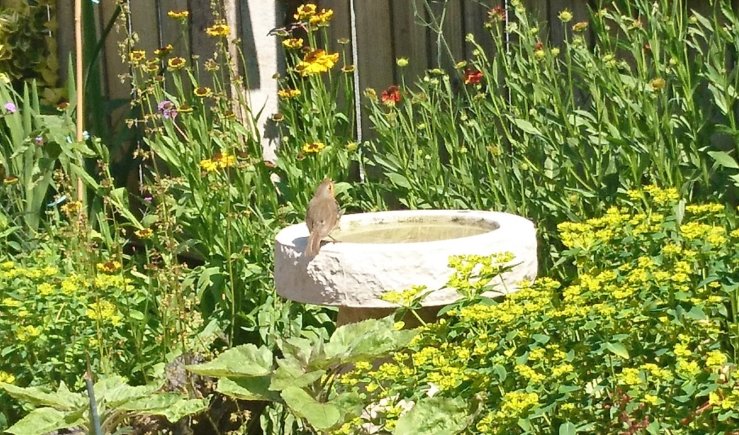
Yellow and orange heleniums in a border of mixed plants.

Further information

Euphorbia

A couple of years ago I bought some euphorbia seeds. They didn’t germinate on my first attempt but I had another go and I am now a proud mum to several euphorbia plants which I have planted down the path to my front door and at the front of garden borders.

All photos by Toni Abram.

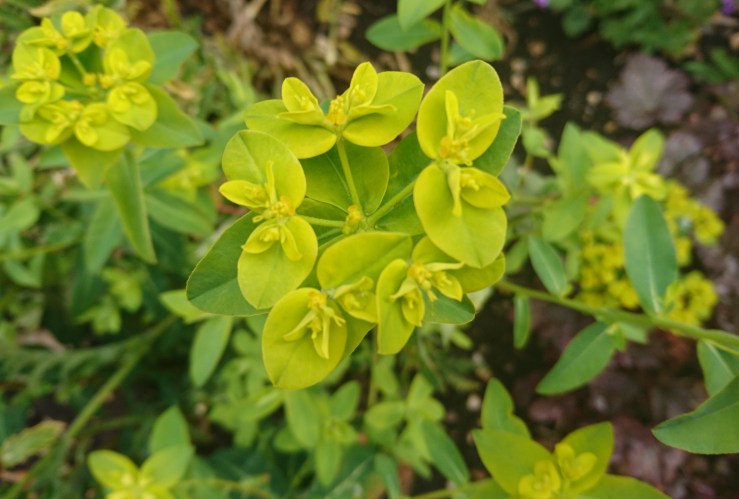
Euphorbia oblongata.

The variety I have is euphorbia oblongata but the euphorbia family contains around 2,000 species and I recently learned the Christmas poinsettia is a euphorbia plant too.

Euphorbias are sun lovers and mine are planted in full sun. However, there are varieties that will tolerate shade. In the UK we grow perennial and shrubby types, known as spurges. Euphorbia foilage and flowers are zingy green, acid yellow, chautreuse green and bright orange. They make a dramatic backdrop for other plants and flowers – I have red poppies, blue cornflowers and purple alliums planted with mine and the colour combinations are striking. Euphorbias make a lovely cut flower too and will last in a vase for 7 – 10 days.

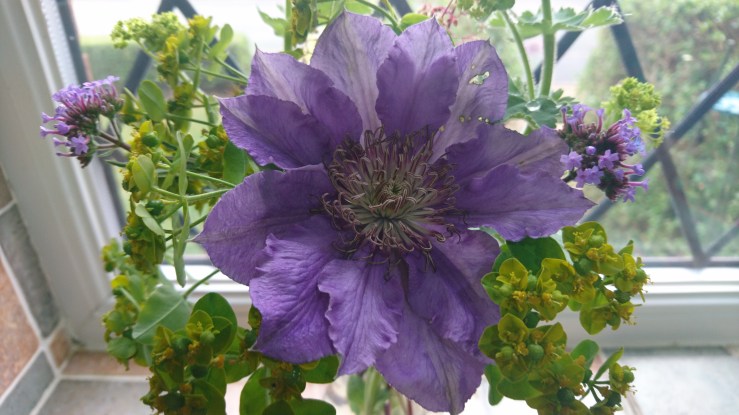
Euphorbia oblongata as a cut flower.

The flowers are actually bracts, a modified leaf or scale, typically small, with a flower or flower cluster in its axil. Bracts are sometimes larger and more brightly coloured than the true flower, as with poinsettias.

Euphorbia oblongata.

Euphorbias flower nine months of the year from May – December. When the stems turn brown, cut them back to allow for new growth but be careful when doing this, as they have a milky sap which is a nasty skin irritant.

Dahlias

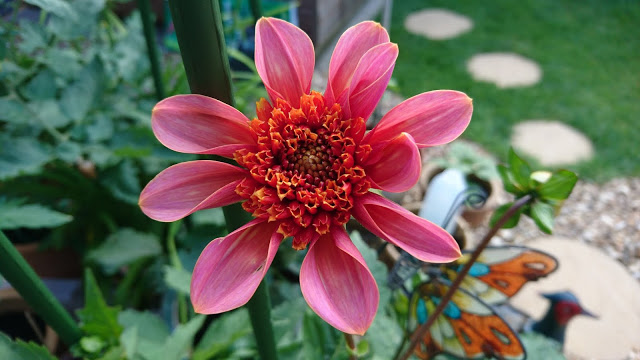
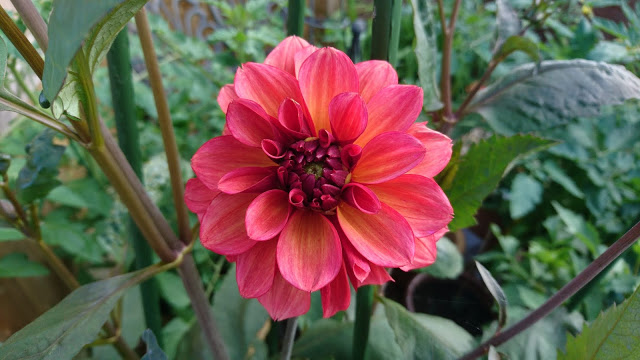
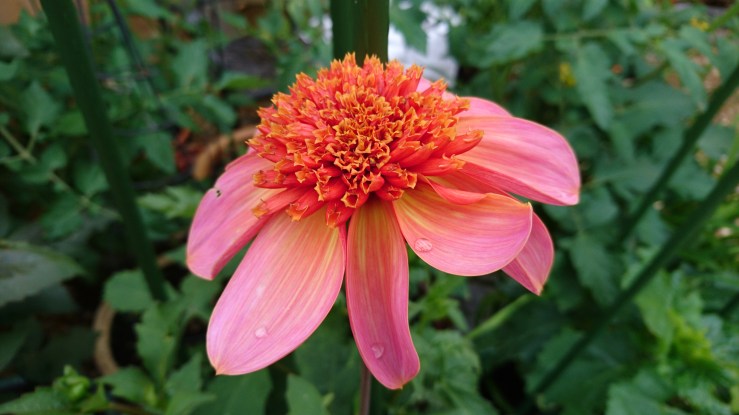
A few years ago I bought a dahlia tuber collection called the William Morris collection from Sarah Raven. The collection contains three types of dahlia called ‘Barcardi‘, ‘Labyrinth‘ and ‘Totally Tangerine‘ which is my favourite.

All photos by Toni Abram.

Dahlia Totally Tangerine.

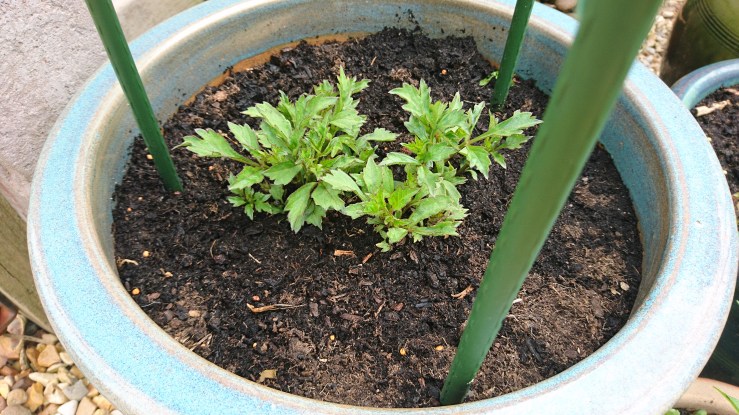
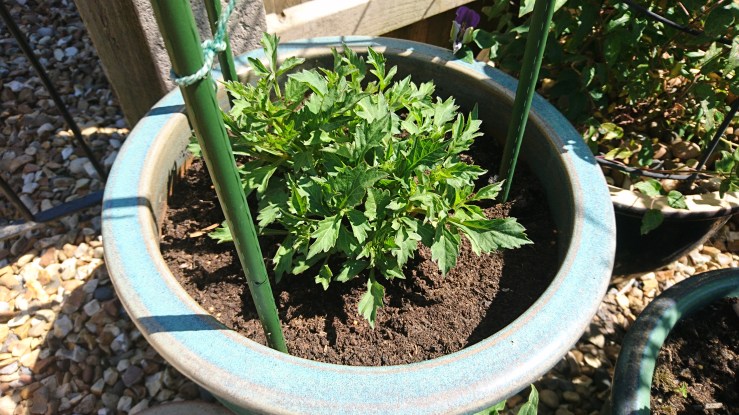
Dahlias start growing in late spring and grow rapidly, flowering from July – November. They come in many colours or sizes and can be grown in pots or in a garden border. They were discovered by 16th century Spanish botanists who noted dahlias growing wild on the hillsides of Mexico. You can read more about dahlias below.

Dahlia (mid May).

Dahlia (late May).

Dahlia (early June).

The first year, I planted the tubers in medium sized pots with multi purpose potting compost and popped them in the shed where there was some light but where they could also stay warm and dry. I didn’t start watering my dahlias until they began to shoot and once this began to happen I transferred the plants into large deep pots.

My dahlias grow 3 – 4 foot so I use plant supports, which I create cheaply with garden canes to form a wigwam structure and cane grips which you can buy at garden centres, on eBay or Amazon.

dahlias-3

I have never experienced any problems growing dahlias. Mine always have many flowers and so I have them as cut flowers in the house too. However, I have read they are prone to attack from earwigs, which eat the leaves, buds and flowers. If this is a problem for you, you can create earwig taps by pushing a garden cane into the soil and placing an upturned garden pot stuffed with straw on top of it. During the day the earwigs will retreat to the pot and you can then dispose of them.

I understand that proper gardeners dig the tubers up at the end of summer, clean them up and put them in a warm dry place over the winter.  Being a lazy gardener, I don’t do this, leaving them in the pots over the winter and hoping for the best. I have had the same dahlias in my garden for a number of years now and being a lazy gardener has served me fine so far.

Dahlia Barcardi.
Dahlia Labyrinth.

Dahlia Totally Tangerine.

Crocosmia

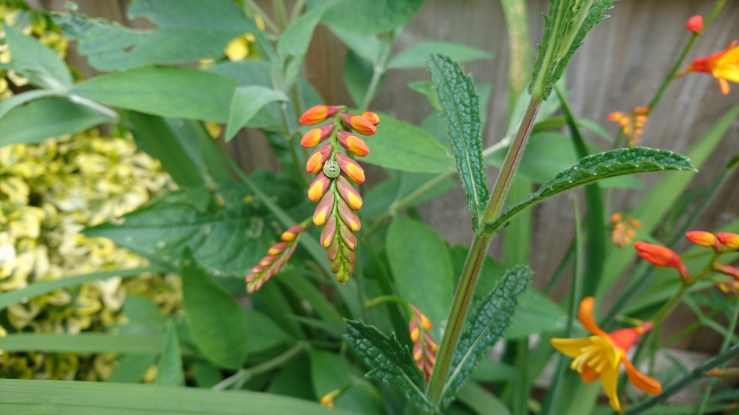
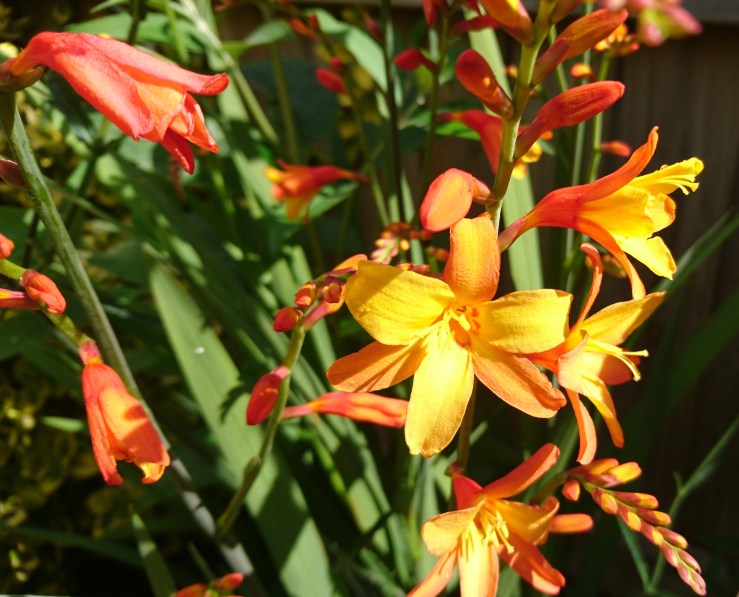
Crocosmias are a fabulous plant for a burst of colour in late summer, flowering from July to October. There are hundreds of red, orange and yellow varieties to choose from, with  sword shaped leaves that look like grass and rustle in the wind. South African in origin, they are showy but elegant at the same time, standing tall and proud wherever they are planted.

All photos by Toni Abram.

Crocosmia.

Crocosmia need to be grown in moist but well drained soil in full sun or partial shade and should be divided every few years to encourage better flowering. (In colder regions you may need to mulch the corms to protect them from frost.)

Crocosmia flower before it fully blooms.

Prior to opening fully, the flowers are flat and floppy but then it is almost as if someone breathes air into them, they sit up straight and the flowers appear along the stem.

Crocosmia flower.

Crocosmias are herbaceous plants, which die back over the winter before re-growing in the spring. They grow from corms and can be planted in the same way you would plant bulbs. The corms multiply forming new corms which grow on top of each other in a ‘conjoined string’, hence the reason for dividing and re-planting, however it is really easy to dig the plants up and pull the corms apart.

Crocosmia flower.

Overall, a lovely easy to grow plant which looks amazing grown in large blocks and good for filling gaps in garden borders when other plants have stopped flowering.


Cornflowers

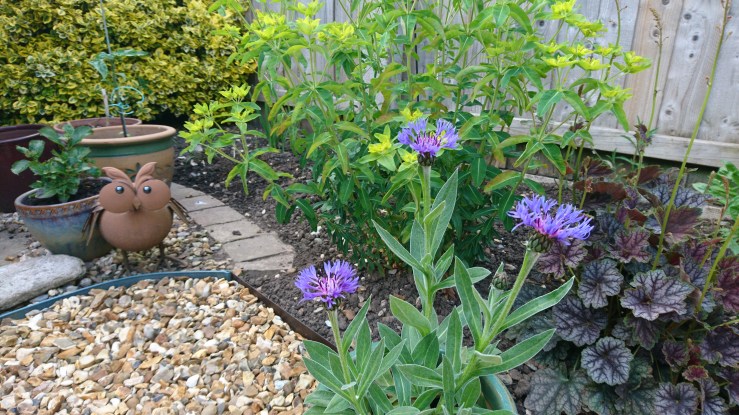
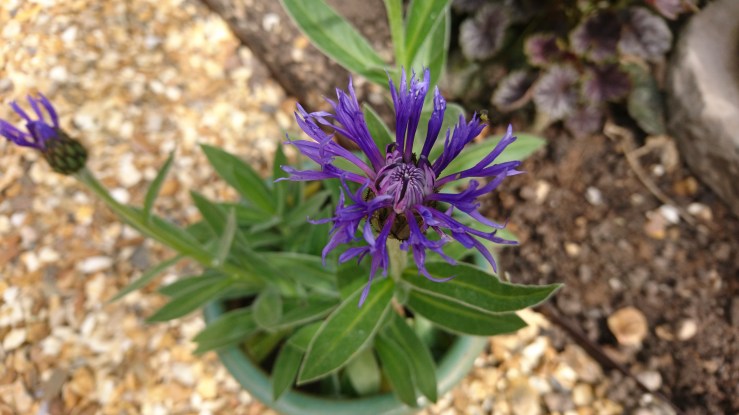
I have grown cornflowers in my garden for a number of years now. Cuttings were gifted to me and I believe that the variety I have is Centaurea montana ‘Amethyst Dream’. I now have cornflowers growing in pots and also in my garden borders, which I have propagated from the original planst I was given.

All photos by Toni Abram. 

Cornflowers in bloom.

The plant has a beautiful inky blue/purple flower, the buds have an interesting cross hatch design that reminds me of thistles and if you are looking for a plant to attract bees to your garden, this is a plant they love.


Cornflowers.

Cornflowers need very little attention. If they look untidy, simply cut the plant back to promote new  growth. Sections of the plant can be dug up or even pulled out of the ground for planting somewhere else in the garden or sharing with someone. With regular deadheading my cornflowers have flowered well into the autumn in past years.

cornflowers-2


Clematis

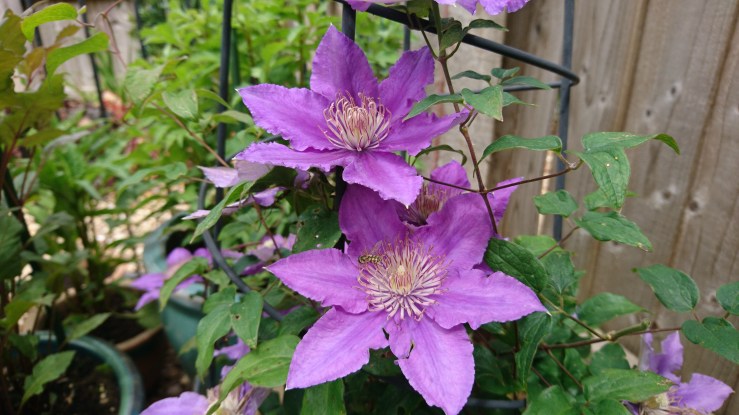
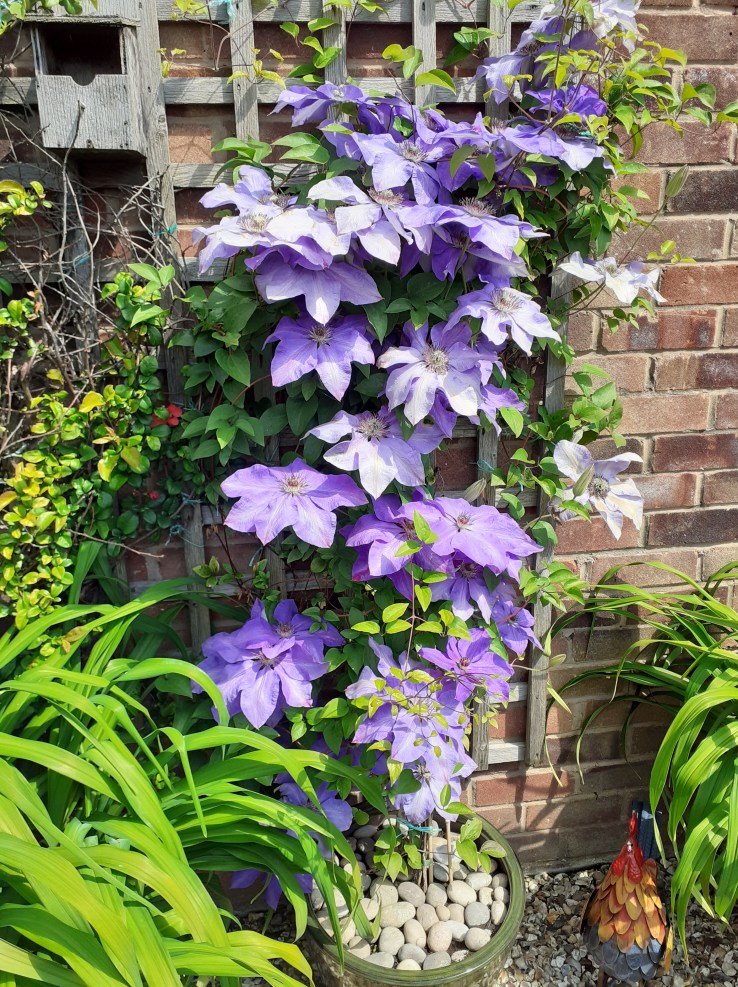
Clematis are climbing plants that provide height and colour to a garden throughout the summer. There are a huge variety of plants to choose from, in many colours and with flowers ranging in size from small bell size to large dinner plate size. Covering  walls, fences and trellis with leaves and flowers, they are also good for wildlife, providing shelter for insects and sometimes birds.

All photos by Toni and Diane Abram.

Lilac coloured clematis.

Most clematis require moisture retentive soil and full sun (think roots in the shade, top growth in the sun), so need watering regularly, particularly in dry weather. They’re hungry feeders, so need a high potash fertiliser such as tomato feed in the summer. This is particularly important when growing clematis in pots – clematis are suited to a range of planting locations, however as a general rule, do better in garden soil than in containers. Feeding your clematis should encourage a healthy crop of flowers.

How to plant clematis

Clematis should be planted in spring or autumn. Dig a hole twice the width and depth of the root ball and part fill it with well rotted organic matter and some bone meal or other fertiliser. A clematis will benefit from being planted around 5 cm deeper than it was in the original pot, as this can prevent the fungal infection known as clematis wilt.

Remove the plant from its pot, place the root ball in the hole and back fill with soil, firming in well and watering thoroughly. Continue to water the clematis every week or so until it starts to show healthy signs of growth.

Lilac coloured clematis.

How to prune clematis 

While all clematis have roughly the same planting needs, they need pruning according to their pruning group.

  • Group one 
    Flowers on wood created the previous year, so doesn’t require any pruning at all.
  • Group two
    Also flowers on the previous year’s growth and should be lightly pruned in February, removing damaged or weak stems to make way for fresh growth, then trimming other stems to just above the strongest and highest pair of buds.
  • Note: If cut back too hard, you’ll lose a year of flowers
  • Group three
    Flowers on the current season’s growth. Prune plants hard in early spring, before growth begins. Cut back plants to just above a healthy bud about 30cm from the soil.
    Note: If you don’t prune group three clematis, you’ll end up with a tangled mass of stems with flower growing only at the very top of the plant
If this all seems a bit much to remember, try leaving the prior year’s growth in place until mid spring and begin pruning only when you can see which vines are dead and which ones are beginning to show new growth.
Clematis viennetta.

How to take clematis cuttings

The best way to take clematis cuttings is to take softwood cuttings in April or May. The short film below shows how to do this.

Common problems

  • Wilted shoots
    Clematis wilt is a fungal disease which can cause clematis to die suddenly without apparent reason. Larger flowered types are the most likely to be affected. If affected, all stems should be pruned and burned.
  • Earwigs
    Clematis are also prone to attacks from earwigs. The damage is only cosmetic and doesn’t harm the plant but you can create earwig traps by pushing a 1m long cane into the ground next to the clematis, stuffing a plastic plant pot with straw and placing this upturned on the top of the cane. Earwigs will use this as shelter during the day, giving you the opportunity to catch and re-home them.
  • Rabbits, mice, slugs and snails
    Rabbits, mice, slugs and snails like to eat clematis, so protect young plants to give them a good start.

Further information

For further information about growing clematis, visit the websites below.


Alchemilla mollis

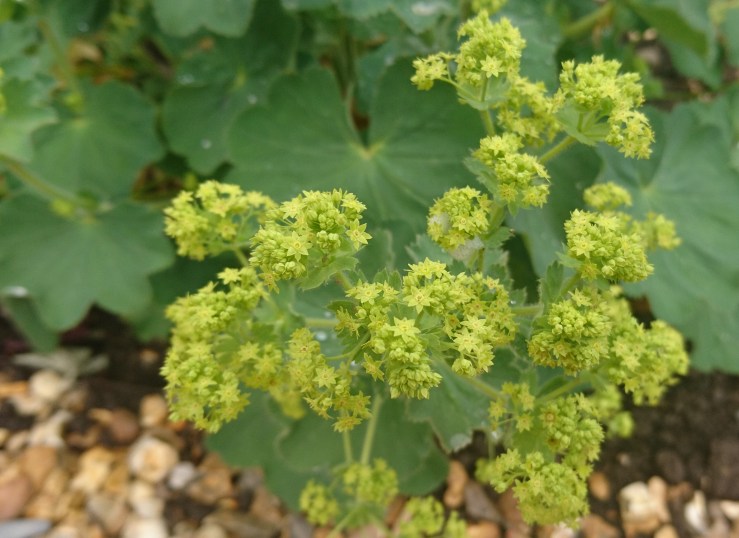
I have grown alchemilla mollis (also known as lady’s mantle) in my garden for many years now. I have heard it described by others as a weed but although it might grow like one, this description does it a big disservice.

All photos by Toni Abram.

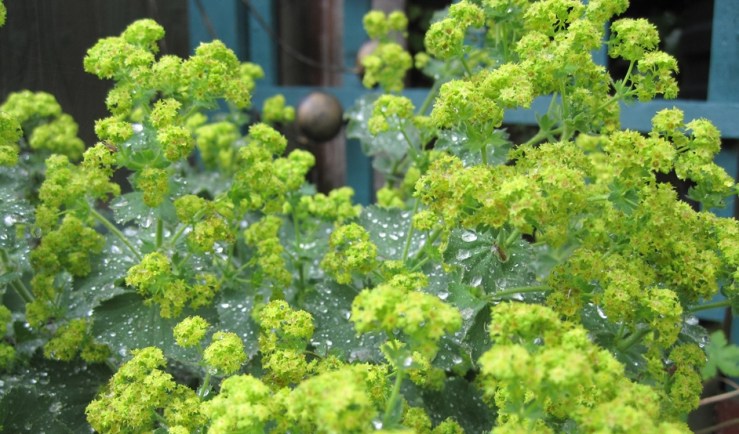
Alchemilla mollis.

The plant has large apple green fan shaped leaves and masses of lime yellow flowers which up close look like tiny stars. Alchemilla mollis is great for ground cover, makes a beautiful back drop for other flowers, can be used as a front of border plant or used to under plant other plants. And when it rains, the leaves hold the droplets and they sparkle as if in a fairy wonderland.

Alchemilla mollis leaves.

Originally from Caucasus, the name alchemilla is related to the word alchemy. In the past the plant was believed to be magical plant – the water droplets that formed on the leaves were thought to be the purest form of water and that they might turn base metals into gold.

Herbalists prescribe it for a variety of conditions. Anti inflammatory and astringent, it has properties that are good for regulating menstruation and it is often used in late pregnancy to help strengthen the uterus, when it is usually prescribed as a tea made from the flowers.

Alchemilla flowers.

Alchemilla mollis, thrives in sun or part shade, so it’s very versatile and useful around the garden.

For best results, grow in moist but well drained soil. Cut back hard after flowering and it should produce a second flush of flowers in late summer.

And one final word for anyone who still thinks this plant is a weed. The Royal Horticultural Society has given it the prestigious Award of Garden Merit (AGM). Given to help gardeners choose the best plants for their garden – it is their seal of of approval that a plant will perform reliably in your garden.

Do the right thing

I have thought about writing this post for a long time now but coming across a tweet by Sophie Morgan on Twitter, in January 2019,  has  finally got me around to writing it, in the hope that I can raise some awareness and understanding.

Accessibility is a topic I feel passionately about. 20 years ago I was diagnosed, along with my father, with a neuromuscular condition called centronuclear myopathy. The condition is slowly progressive and 20 years on, I can still stand and walk and manage stairs (albeit in my own sweet way) however for 20 years the disease has been slowly chipping away at my ability to do things.

There are days when my legs feel like lead, I am constantly tired, I experience severe back pain when I stand for any length of time without support and stairs are really not my friend. Standing at the bottom of a flight of stairs, feels like standing at the foot of a very large mountain. A stair rail (combined with a lot of will power) means currently I am able to put my weight through my arms, rather than through my legs when I ascend but even so, sometimes I simply lose momentum, getting stranded midway and land up dragging myself up the remaining steps. At home, I could get a second hand rail or a stair lift but I am conscious when out and about, these are not things I would have access too and I am scared that I will come to rely on them and make matters worse for myself.

So, being ambulatory, I have questioned for a long time whether I should should write about building accessibility, after all, I do not use a wheelchair but inaccessible buildings affect me hugely and I know from first hand experience that ramps, stair rails, lifts and escalators can be the difference between me being independent or not.

When I talk about building accessibility, first and foremost,  I am referring to whether someone in a wheelchair or with a level of impaired mobility, is able to access a  public building, whether that be a shop, office, restaurant or entertainment venue, because that is how I experience accessibility or the lack of it. However, there are a wide variety of disabilities that must be considered when addressing access for all, including sensory impairments (e.g. visual and/or hearing), mental illnesses (e.g depression, stress, anxiety, phobias, bipolar disorder, schizophrenia), learning disabilities (e.g. autistic impairments, dyslexia, down syndrome), mobility and dexterity impairments, communication impairments, physical coordination impairments and memory/concentration impairments. There is not a one size fits all accessibility solution.

In order for me to access a building that is situated either up or down stairs, I only need there to be a stair rail but for someone in a wheelchair, steps are a total barrier. For the building to be accessible to us both, I would expect there to be a ramp, or a working lift. The word ‘working’ is key, because having a working lift going up but a broken lift or no lift going down doesn’t count and if like me, you are able to use an escalator, the same goes for these too – it is only common sense that if someone needs to use an escalator to go up, then they will need an escalator to go down too. I would expect this help to be found at the main entrance too, not out of sight, so the  building has to be accessed in some obscure manner.  Having a lift or the ‘accessible entrance’ hidden away at the back of a store doesn’t count either.

The law states that buildings should be accessible. The Equality Act, which was passed in 2010, is structured around nine ‘protected characteristics’, one of which is disability, and it prohibits discrimination, harassment and victimisation against all those who fall within these groups. The Act defines a disabled person as ‘Someone who has a physical or mental impairment which has a substantial and long term adverse effect on their ability to carry out normal day to day activities.’

Whilst the accessible design of buildings is regulated by Building Regulations law, The Equality Act requires ‘reasonable adjustments’ to be made when providing access to goods, facilities, services and premises.  (Ref: Designing Buildings)

Reasonable adjustments might include changing a physical feature of a building,  providing an extra aid or service, or widening aisles so a wheelchair can get through. (Ref: Citizens Advice Bureau)  Reasonable adjustments, in my opinion, are not having a member of staff bring products out of the shop for a customer to view, nor does it mean a member of staff shopping for the customer or that the customer is manhandled on and off the premises … and doing absolutely nothing at all, is absolutely not a reasonable adjustment either. Making a building accessible, means that as far as is reasonably possible, the ‘disabled’ customer has the same experience as any other customer, allowing them to retain their dignity and independence.

Let me give you some examples of situations I have experienced. On picking up a prescription for my dad from the local chemist one time, I was asked by the woman behind the counter how my dad was. I explained that he was sat outside because he was no longer able to manage the large step and the heavy door. ‘Awww’ came the response.  My dad did not need sympathy, what he needed was for the owner of the property to stop breaking the law and make reasonable adjustments to their property, so that my dad could retain his independence and continue getting his own prescriptions for as long as possible.

My home is the city of Chester – built by the Romans, the city boasts the most complete city walls, Tudor style buildings, the oldest racecourse, the largest Roman Amphitheatre in Britain, a one thousand year old Cathedral and the Rows galleries, 700 year old two tiered shopping galleries, providing two high streets in one, meaning their are many steps. The city is charming but while it is possible to cite examples of accessible practice, it most certainly is not accessible (the chemist referred to above it should be noted is not situated in the old part of the city) and I feel for those who are tasked with making it so but worry that the owners of buildings in the city, think because of its heritage, they do not even have to try to make reasonable adjustments. For example, how difficult would it be to extend an existing handrail on steps leading down into a major department store, so it is alongside the first step, or to place a hand rail on the steps at the entrance leading up into a women’s clothing chain store.

Recently a new sandwich shop opened in the city. As a new business at street level which opened in 2018, I would have expected the building to be accessible. I thought I would pop in for a sandwich but on getting to the door, I found there were a number of steps that led down into the shop and no handrail. I stood outside looking in but didn’t trust my legs to support me down the steps, so I walked away. The shop lost my trade and possibly a regular customer.

Again, in Chester, a hairdresser I had been going to had a large number of steps to be navigated. Steps led up into the building from street level but in the time I went to the hairdresser, the hand rail was never screwed tightly to the wall and shook as I held onto it, so I never felt safe. Once inside the building, it was necessary to navigate a grand staircase with a wide wooden bannister on one side which I struggled to get my hand around and a dado rail on the other – stairs led to a half landing and then there were further stairs. I persevered for some time, not wanting to choose my hairdresser on the basis of whether or not there were stairs to negotiate but eventually I gave up.

I attended a building on the opposite site of the road for a job interview and phoned ahead, advising I had mobility issues and that a stair rail was crucial if I needed to go up and down stairs. Oh yes, I was told, there was a handrail on either side of the staircase but on getting to the interview, I was confronted again with a wide wooden bannister and a dado rail. Dado rails really don’t count as stair rails but are better than no rail at all I suppose, which was the experience I encountered at a recruitment agency in the city, where I struggled up and down the steep staircase trying to hold onto the wall, while the recruiter watched.

Concert, cinema  and theatre venues can be a nightmare too. And whilst I have sympathy with old theatres, there really isn’t any excuse for the stairs it is necessary to navigate at modern concert venues in our big cities, which are quite terrifying. Credit where credit is due, the Storyhouse theatre in Chester, situated in an art decco building dating back to 1936, is a very good example of what can be achieved, The recently refurbished Vue cinema in Ellesmere Port nearly left me speechless (although it still needs work for disabled users who might not want to sit right up next tot the screen) and the O2 in London was an excellent experience too – here I was whisked away to my seat, meaning I didn’t have to queue, by a member of staff who didn’t make me feel in the least uncomfortable or like I was being a nuisance.  However, having to trek half way around a concert venue to get to your seat or being told at the end of the show that you have to wait for everyone else to leave before you can, was not a good experience.

My worst experience was at an arena in Liverpool. On arriving, I advised that I would prefer not to use the stairs to my seat.  I presented at the arena as an ambulatory person with a walking stick and with the Equality Act having been in force since 2010, expected to be advised there was a lift. The woman I spoke with asked for help from a man and I also advised him that, I was trying to get to my seat without using the stairs. Absolutely, he said, there was help available and I would only need to use a couple of steps. Fabulous I thought … and then the situation snowballed. Firstly, the man called for First Aid (sadly my condition cannot be cured with first aid). Then he requested a wheelchair for me (my worst nightmare – I am living with a progressive muscle condition and fighting every day to stay out of a wheelchair). “‘Oh no” I said, “I don’t need a wheelchair”. “It’s too late” came the dismissive response, “it’s on its way now, don’t move from that spot”. At that point, if I could have done a runner, I would have done so but the wheelchair and two first aiders turned up. Once again I advised I don’t need a wheelchair. “It’s okay” came the chirpy reply but for me, it was anything but okay and in order not to cause a scene, I seated myself in the wheelchair and allowed myself to be pushed half way around the arena, telling myself that the ordeal would be over in a few minutes and that I would be delivered within a couple of steps of my seat.

And then we arrived at our ‘accessible drop off point’ … the top of the large flight of stairs I had specifically said I did not want to deal with, so not only had I been pushed around the arena in a wheelchair, something that I absolutely did not want, I still had to manage the stairs. “This is the nearest we can get you”, I was advised. At this point my mum asked about the lift to the ground floor. She was advised, there was no lift to the ground floor and knowing that I would not want a fuss, she let it go. Subsequently, I had to manage the entire staircase from top to bottom (worrying each time I reached a break in the handrail that I was going to fall), with one of the first aiders walking backwards down the stairs in front of me. Interestingly, having created such a drama getting me to my seat, none of the people involved, asked if I needed help getting back up the stairs. I was left to struggle back up those on my own, dragging myself up each step using the hand rail, feeling as if I was making a complete show of myself.

I later complained to the arena  and was advised “The venue has multiple areas where there is lift access, and the stewards are all aware of these locations. On Tuesday evening, our team could have directed you to the lifts to gain easier access to your seat, and so I can only conclude that the staff who were trying to assist you failed to consider this as an option.”

Writing from a personal experience, since the Equality Act came into force, I have seen  little in the way of change and that makes me very sad, but why would a business go the the expense of making costly changes if the law  does not get enforced and businesses are not fined? Businesses have had since 2010 to make changes and have not done so. If real change is to take place and the law is to be more than just lip service, this needs to change.

For the record, when you get diagnosed with a medical condition that leaves you with legs that can sometimes be a little wobbly and unreliable or altogether no use whatsoever, you don’t suddenly stop enjoying doing all the things you have enjoyed up to that point. If you enjoyed shopping, eating out, going to concerts, theatre and the cinema and getting your hair done prior to your diagnosis,  you still going to want to do those things after it. Why should you not be able too? And even if the law did not state that buildings should be accessible, isn’t it simply the right thing to do?

Further reading

The above is very much a personal perspective and only scratches the surface of the accessibility issue.  Further selected related reading can be found below.  If you have this far, please take the time to learn more and help spread the word.
Love is…

The Love is… illustrations were created by New Zealand cartoonist Kim Casali (née Grove) in the 1960s. Originally private drawings that Kim gave to her future husband, they were subsequently published in booklets which Kim sold for $1 each, before being published in newspapers.

In the UK the cartoons appeared in the Daily Mail. Sometimes my dad would come home from work with a copy of the newspaper and I would pounce on it and cut the cartoon out to keep.  The small collection now lives in a drawer in my home.

love-is-1.jpeglove-is-2

Further information

To learn more about Love is… visit the official Love is… website.

The Knife Angel

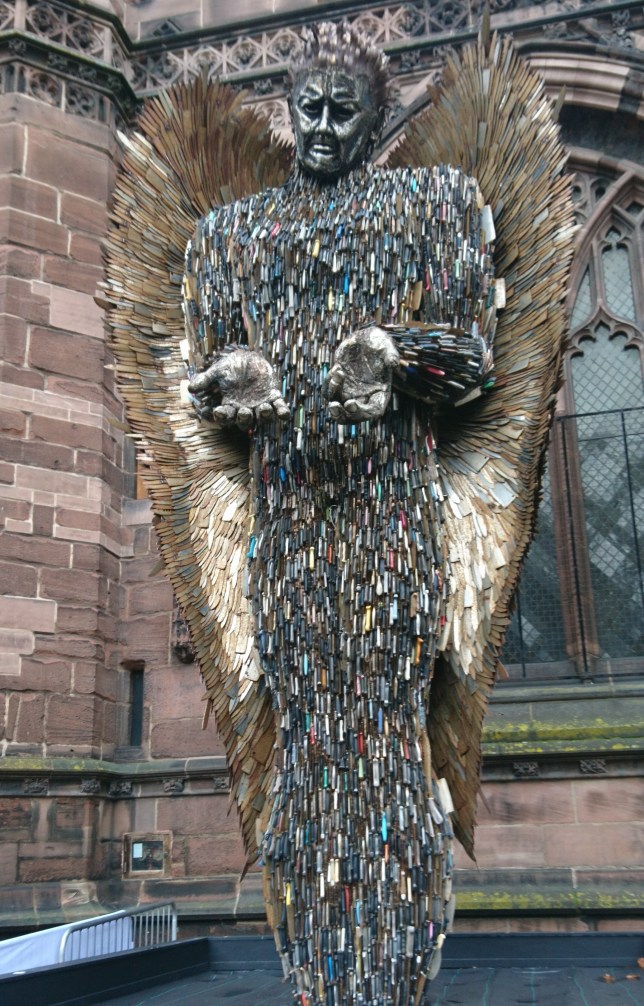
The Knife Angel is a sculpture designed to show how bad knife crime and violence is within the UK. Standing 20 feet tall and made with 100,000 knives surrendered in the UK, it is the work of artist Alfie Bradley and took four years to create.  The sculpture aims to show how bad knife crime is in the UK and also hopes to bring about the introduction of new knife amnesties.

The Knife Angel
The Knife Angel, outside of Chester Cathedral, November 2019.

With permission of the  Home Office, surrendered knives and weapons were collected from all 43 police forces across the UK. The project also involved anti knife crime charities, action groups, ex-gang members and families that have been directly affected by knife crime.

The focal point of the sculpture is the angels wings. In order to create theses, each blade’s handle was removed to give a feather like appearance. Some of the blades are inscribed with the names of the lost loved ones of the 80 or so families who have supported the project, some with messages of disbelief at how bad knife crime is in the UK, others with messages of forgiveness and messages of regret from ex-offenders who now strive to work against knife crime.

The Knife Angel on tour

In 2019 the Knife Angel visited the City of Chester, where it stood outside of Chester Cathedral for the full month of November. Chester was the eighth city to host the Angel since its UK tour began in December 2018.

The Angel was greeted and blessed by the Bishop of Chester, Peter Foster, followed by a number of civic speeches conducted by members of the group who helped get the monument to the city. Also present were a number of families who have been affected by knife crime.

Whilst in Chester, it was hoped the Angel would act as a catalyst for educational workshops to be conducted for  regional youth, focusing on the negative effects of violent and aggressive behaviour.

Further information

Arthur Shortland and Frances Milbah Polle

Arthur Shortland was one of 12 children born to Richard and Eliza Shortland.  Further information about Richard and Eliza can be found below.
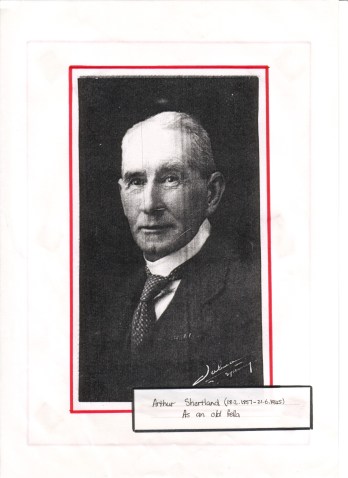
The information below was give to me by Linden Kilby who is the great great grandson of Arthur Shortland and Frances Polle.

Arthur Shortland  Frances Shortland.

Linden told me:

The details you have provided about Richard Shortland pretty much match with the details of what I know about him. He was in the army and stayed on in Australia. He ran a successful freight operation in Sydney, his company would transport goods by dray from the ships in Circular Quay to the warehouses in the city from what I know.

Eventually, as the younger generations took over, the business was forced to fold. However, the children didn’t do too badly either. I believe one was a judge and another owned a music shop.

My great great grandfather was Arthur Shortland. He was born in Sydney on 10 February 1867 and he was married to Frances Polle who was born on 29 February 1868 in Redfern. They married on 23 April 1900 at St. James Church, Sydney. Arthur died in Turramurra on 21 June 1945 and Frances in Hornsby on 30 August 1955.

The Shortlands were not a close family, so not all that much is known about them. For Frances this would have been a big difference, because the Polles were a very close family. It is known that Arthur was a quiet man whose occupation was a draftsman – he was listed as a Government Official on the Electoral Rolls..

Arthur and Frances had three children, Milbah born in 1901, Arthur born in 1902  and Elma born in 1909. Milbah was the family member who everyone admired, for she won honours at Sydney Girls’ High and completed two University degrees. She matriculated with honours, graduated BA, Dip. Ed. from Sydney University and entered teaching at Cootamundra. Stan and Milbah had five children. In order of birth they were Helen, born 1927, Ruth, born 1928, Stanislaus, born 1930, Patricia, born 1931 and Denis, born 1936.

Arthur and  Frances were reasonably wealthy and when Stan Riley married Milbah, the wedding was held in St. Mary’s Cathedral, Sydney.  Milbah was forced to resign from teaching at this time as married women were not employed  in those days. However, during world war two, with most men at the war, women were re-employed. She became a French teacher at Cooks Hill High School (Newcastle), then Wollongong.

At age 80, Milbah became interested in music and because she couldn’t understand the names or lyrics of German Classical songs, learnt German and in one year was conversing and corresponding fluently with German nationals.

At age 82, Milbah was diagnosed with stomach cancer and rather than die a slow, painful death, she starved herself to death. She died peacefully at home with all her children in attendance.

A brilliant woman, who due to the customs of her time who never reached her full potential.