Lucy Thompson was the first wife of my great grandfather Joseph Charles Abram, a Corporal in the Army Service Corps. Married on 16 April 1906 in Northampton, at the time of her wedding, Lucy was living at 35 Burns Street, Northampton and the witnesses were Lucy’s sister Alice Thompson and Joseph’s brother Frederick George Abram.
Born in Northampton in 1880, Lucy was the daughter of William and Harriett. On the 1881 census, Lucy can be found aged one, living with her parents and sisters Emily, Annie and Alice. Living in the same house is Lucy Munns (described as mother in law).* In 1891, Lucy, aged 11, can again be found living with her parents and sisters at Great Russell Street. Her father William is now recorded as working as a Gentleman’s Gardener. Finally, in 1901, Lucy, aged 21, is no longer at home with her parents but is working as a servant for a widow, Elizabeth Peach, at 25 Margaret Street, Northampton.
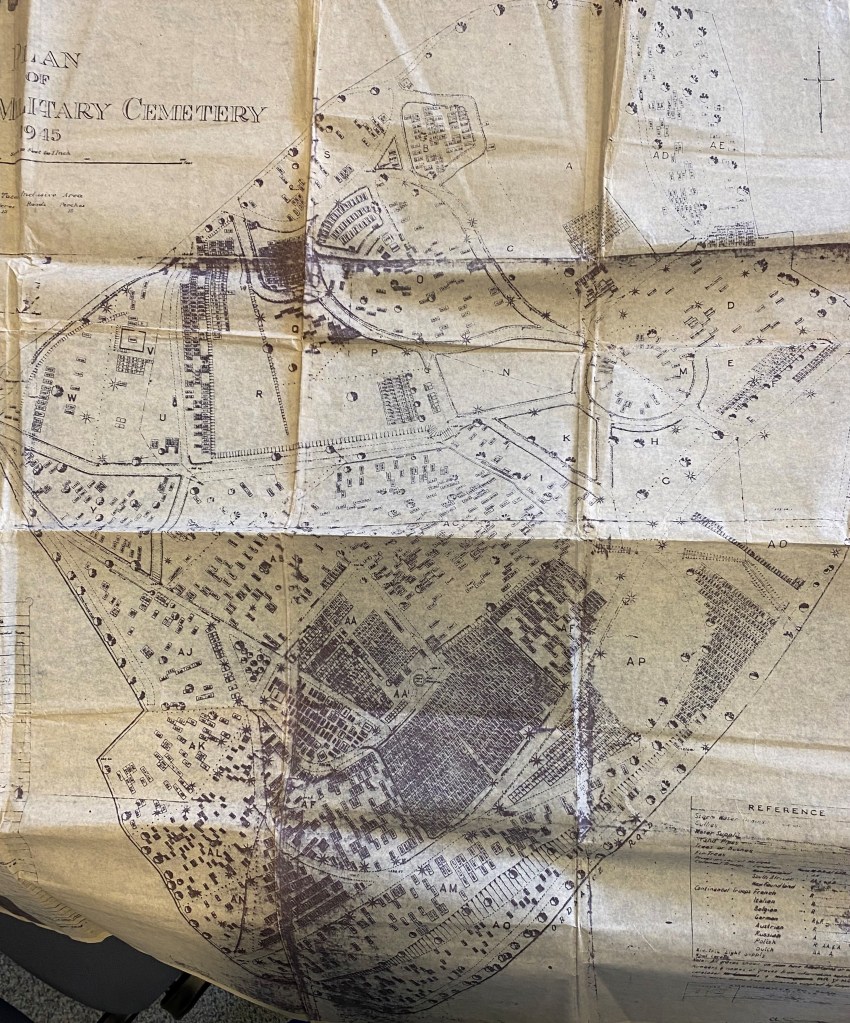
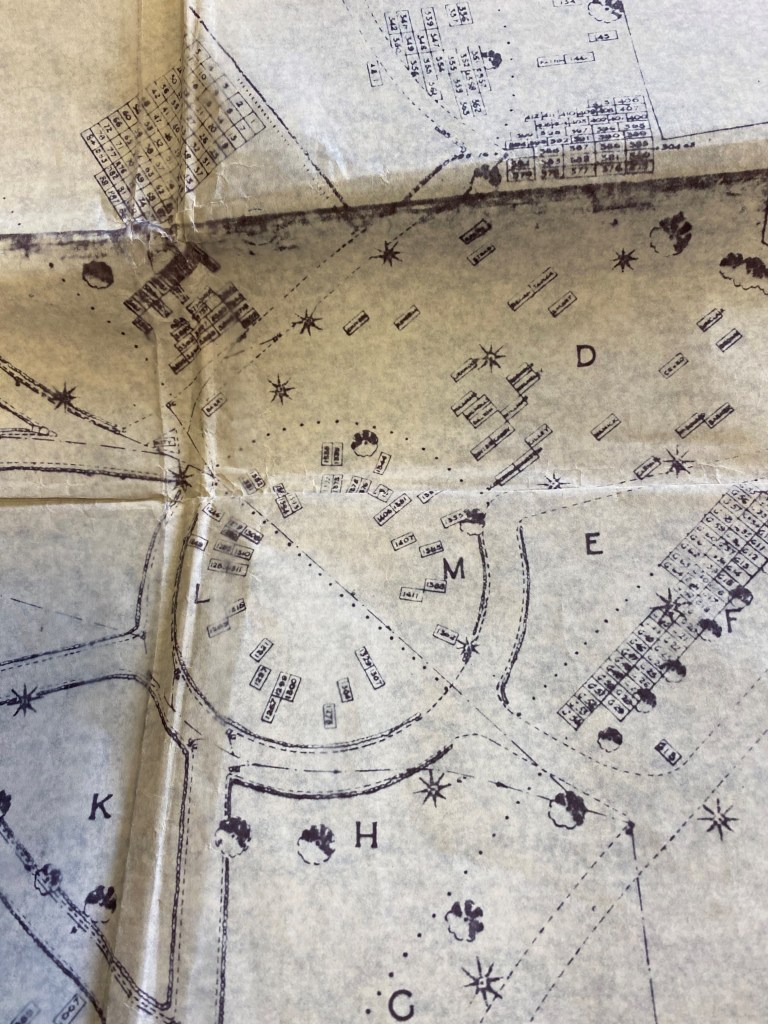
Lucy died aged 26, at 4 Ferndale Villas, Holly Road, Aldershot on 12 October in 1907 with the reason for death being instrumental labour and pulmonary embolism. The death was registered by Joseph Charles and Lucy was buried four days later on 16 October 1907 at the Aldershot Military Burial Ground, Hampshire. John Greenfield at the Aldershot Garrison has kindly helped me identify Lucy’s burial place in the cemetery, as plot number 1406, in site M. Sadly there doesn’t appear to be a record of a burial for Joseph and Lucy’s child.
I am interested to learn more about Lucy and her family, as she has been described to me as ‘a dark skinned lady’ and I have discovered that Northamptonshire has a significant black history, with people of Asian, African and Caribbean origin, residing in the county over many centuries.
* I have located a Lucy Munns on the 1851 and 1861 census returns. She is recorded as having been born in Riseley in Bedfordshire and is married to George Munns. The couple have a daughter called Harriett.
Joseph Charles Abram was my great grandfather. Married to Millicent May Bowers, the couple had three children – my grandfather Louis Bowers Abram, Betty and Joseph Bowers Abram, their first son, born in Tempe, Pretoria, South Africa, in 1913, where Joseph Charles was stationed on army service. The child lived for two short months – he died of enteritis and heart failure and is buried in South Africa.
Joseph served in the army from January 1901 to March 1922, receiving the 1914 Star, the British War Medal 1914 – 1918 and the Victory Medal 1914 – 1918 as well as being mentioned in Despatches on 30 December 1918.
On discharge, Joseph Charles Abram was involved in a number of projects. He is believed to have run two pubs – the Red Lion in Stambourne, Essex (around 1924 when his daughter Betty May Abram was born) and the Kings Arms in Woodbridge, Suffolk.
He built two houses at Mears Ashby Road in Earls Barton. Choosing to live in one of these, the second property he sold. Newspaper articles from local newspapers in 1939 advertised a semi detached house with six rooms (three being bedrooms), central heating, bath, electricity, gas and main water. The houses still stand today.
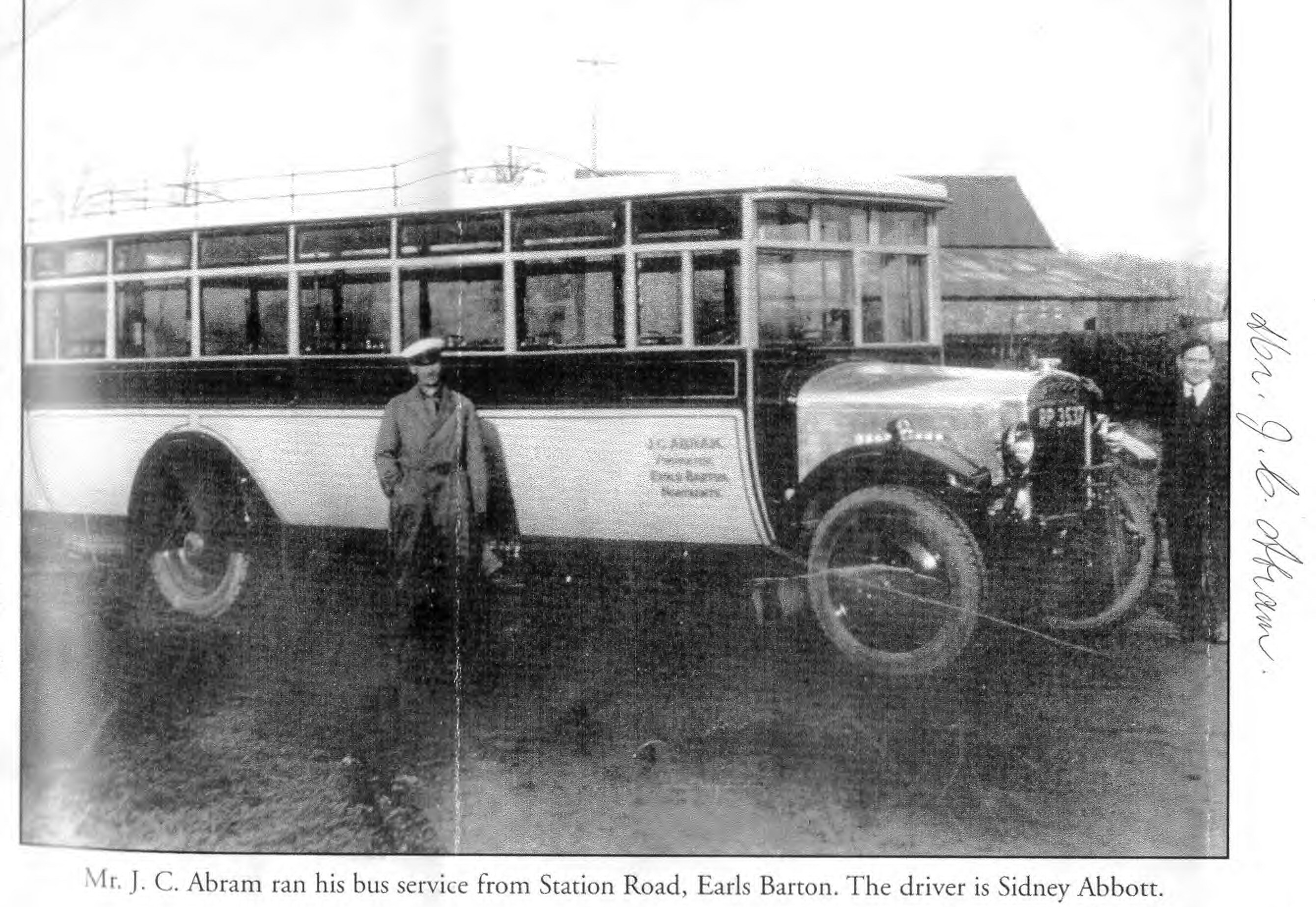
He also ran Earls Barton Motors (known locally as Abram’s garage), from which he sold vehicles and ran a bus service in the early 1930’s. operating a small local service with trips to Wellingborough and back at weekends costing four pennies return. During the war the garage was used for repairing aircraft parts for Sywell aerodrome and in March 1943 the garage sustained a broken window when two Air Force Bombers collided and crashed.
Millicent May Bowers was my great grandmother. Married to Joseph Charles Abram, they had three children, my grandfather Louis Bowers Abram, Betty and Joseph Bowers Abram, their first son, born in Tempe, Pretoria, South Africa, in 1913, when Joseph Charles was stationed there on army service.
Born in Bury St Edmunds, the 1901 census shows Milly, aged 17, living with her parents Henry and Eliza and working as a dressmaker. In 1911 she can be found working at the Kings Arms in Woodbridge, with her sister Kate Eliza Whitehead, a widower and Licenced Victualler, where Kate appears to have been the landlord for over 30 years. Also living at the pub is Arthur John Bunn, a Ostler (a man employed to look after the horses of people staying at an inn), who appears to have become the landlord in 1937. The pub is now closed and the building used for mixed retail use.
Louisa Jane Shortland was my great grandmother on my fathers side of the family. She was the wife of Albert Edward William Clarke who served with the Northamptonshire Constabulary, the daughter of William Thomas Shortland and Elizabeth Jelley and she had one brother, Ernest Henry. Albert and Louisa had five children – Dorothy Margaret, Edward Alexander, Cicely Mary (known as Molly), Kitty Alexandra and my grandmother Delia Eileen.
I have been able to trace Louisa through census returns. The 1881 census shows her living in Weedon, aged three, with her father William (a widower) and his sister Emily, also Louisa’s brother Ernest and their grandparents. The 1891 census shows Louisa is still at home with William in Weedon but he is now married to Alis and there is is a daughter Bessie.
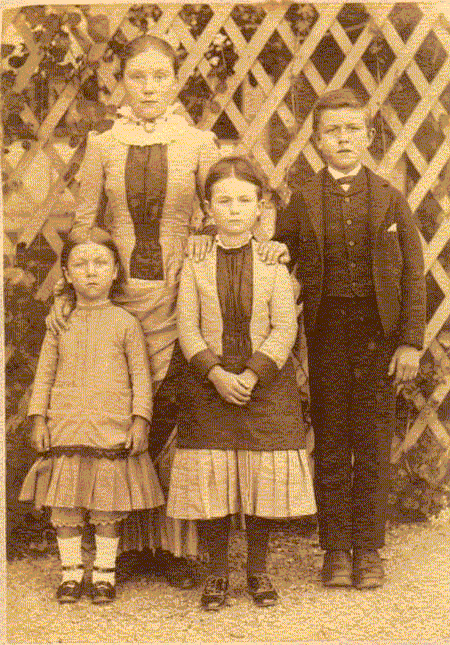
In 1901, Louisa is still in Weedon but now working as a parlour maid. When William’s first wife Elizabeth died, William re-married Alis, who had a daughter called Maud. William and Alis, later had a child together called Bess. The photos below show the four children (Ernest is pictured at the back, with his hand on Louisa’s shoulder) and William and Alis. Ernest lived to be 91 and Bess died, unmarried, leaving thousands of pounds for charities in Northamptonshire.
By 1911, Louisa has married my great grandfather Albert Edward William Clarke, a police sergeant and they are living together at Factory Row Police Station, Pottersbury. Their two eldest children, Dorothy and Edward who died aged four in October 1911, are also shown, together with a visitor, Cecilia E Glenn, a certified midwife. The 1911 census doesn’t appear to coincide with the births of any of Louisa’s children that I can see but my father believes Louisa had a number of miscarriages, so that could be the reason.
In 1939 register records Louisa Jane as a widow living her daughters Molly and Kitty at The Limes, Wellingboro.
It has also been possible to keep track of Louisa’s father William. In 1861 he is aged seven, living in Weedon with his parents John and Jane and siblings, Henry (recorded as an invalid), Richard, Sarah and Emily. In 1871 he is aged 17 and still living with his parents and sister Emily and but in 1881, William is recorded as a widower, living with his parents and sister, and his children Louisa and Ernest. He remains a resident of Weedon on both the 1891 and 1901 censuses.
The census returns also show my great great grandfather John Shortland – aged 36 in 1851, he is married to Jane and living with children John, Richard, Sarah and Mary. In 1861 William and another daughter, named Emily appear and Louisa Jane and her brother Ernest show on the 1881 census too.
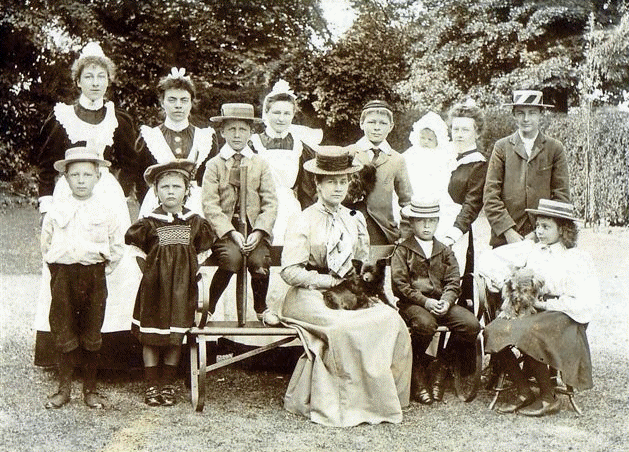
Prior to marrying Albert, Louisa was in service. She can be found on the 1901 census, residing with a family called Liddell in Wandsworth. The photo below includes Louisa and was taken by J. Seckington photograper, of Willoughby, Rugby.
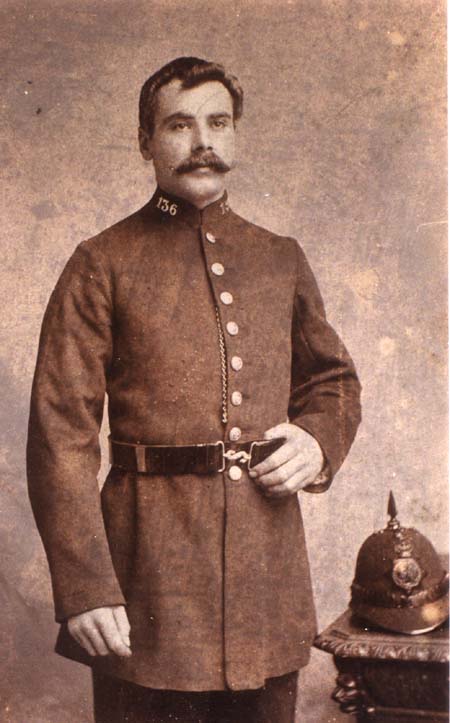
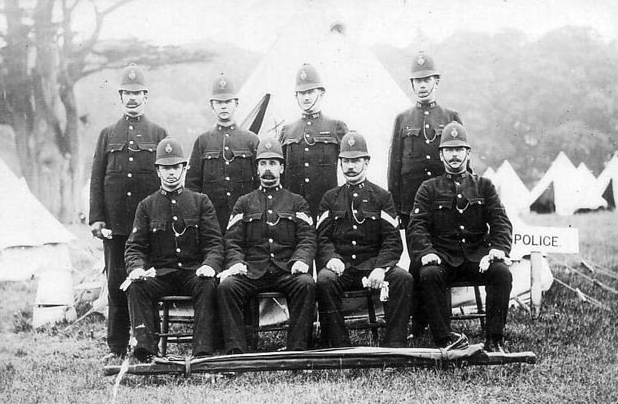
Albert Edward William Clarke was my great grandfather on my fathers side of the family. He served with the Northamptonshire Constabulary from 1 December 1899 until he retired on 6 October 1931.
On joining the force he was described as a native of Welton, Northamptonshire and during his service he served at Kettering, Oundle, Paulerspury, Daventry, East Haddon, Northampton, Pottersbury and Naseby. On retirement he held the rank of Sergeant and was described as having an exemplary character.
The 1901 census shows Albert, aged 24, living alone at Police Station House, London Road, Kettering. His occupation is shown as Police Constable. The 1911 census shows Albert living with Louisa at Factory Road, Potterspury, Paulerspury. His occupation is given as Sergeant of Police.
The photo above is a postcard sent by Albert on 7 June 1911 to Mrs A E Clarke (my great grandmother), Police Station, Pottersbury, Stony, Stratford, Bucks. On the back it reads: ‘Dear Lou Hope you are all well pleased to say I am alright, not quite as busy as on Monday. I do not know yet if it will be Sunday or Monday we shall leave here with love to you all. Ted’.
I also have a book of common payer given to Albert by Louisa. At approximately 5cm by 9cm I can barely read the writing but on the inside front cover it says ‘From Lou, to Albert, Xmas 1889. In loving memory of the past’.
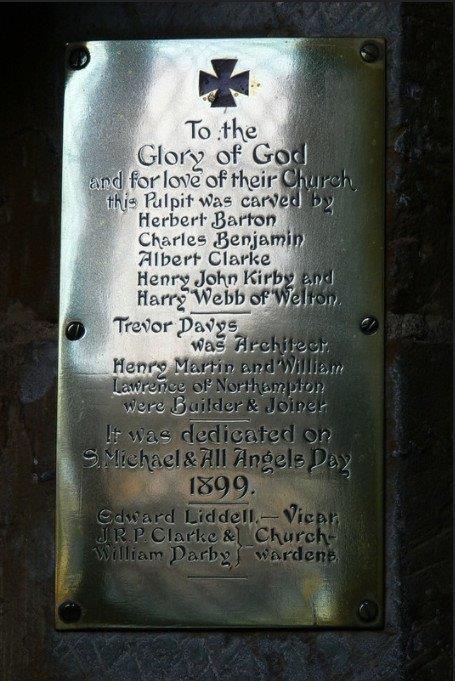
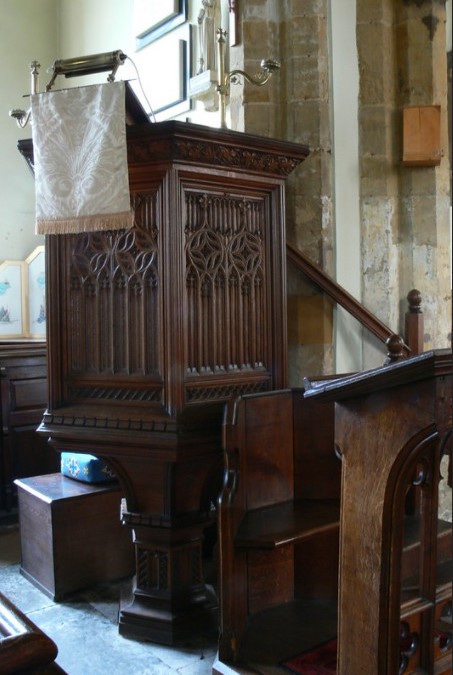
Albert is remembered at St Martins Church, Welton by a plaque that records that he and a number of other local men carved the pulpit.
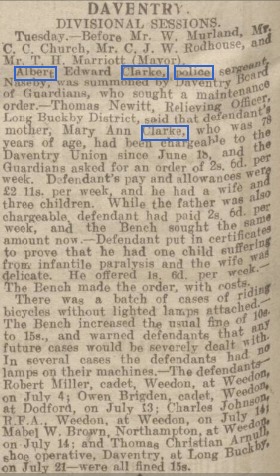
The newspaper article below appeared in the Northampton Mercury on 2 August 1918. It records Albert Edward William Clarke as a Sergeant in Naseby. He had been summoned by the Daventry Board of Guardians who sought a maintenance order for his mother Mary Ann Clarke.
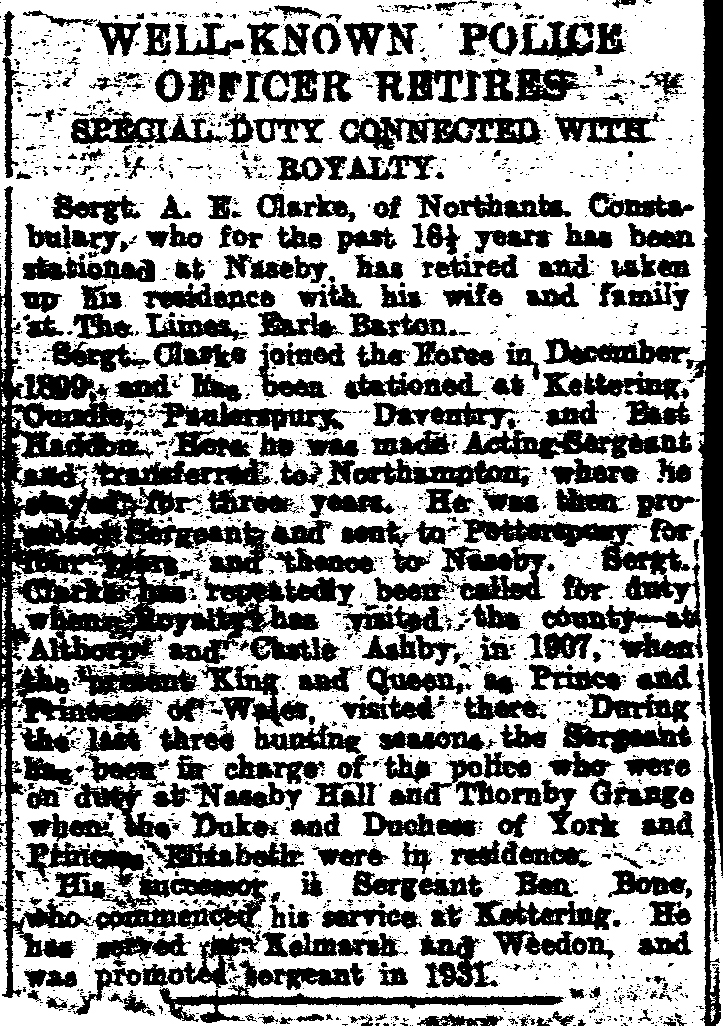
Albert’s retirement was reported in local newspapers and stated he had ‘repeatedly been called for duty when royalty had visited the county at Althorpe and Castle Ashby in 1907 when the present King and Queen, Prince and Princess of Wales, visited there. During the last three hunting seasons the Sergeant has been in charge of the police who were on duty at Naseby Hall and Thornby Grange when the Duke and Duchess of York and Princess Elizabeth were in residence.’
At the time of his death it was reported that he ‘knew personally both the present King and Queen and the late King George and Queen Mary, for during his police service he was called upon to undertake the duty of guarding their Majesties. This was when King George and Queen Mary stayed at Althorpe several years ago and when the present King and Queen were at Naseby Hall and Thornby Hall as Duke and Duchess of York.’
In 2019 I contacted the College of Arms to see what I could learn about the Faber family. I had been told that the Faber family appeared in Burke’s peerage, my dad recalled that in the dining room at his aunt Dorothy’s home there was a full set of dining table china with the Faber coat ofarms on each item and I had also found images online relating to a sword belonging to a Henry Grey Faber which I wanted to learn more about.
The College of Arms
The College of Arms is the official heraldic authority for England, Wales, Northern Ireland and much of the Commonwealth including Australia and New Zealand. As well as being responsible for the granting of new coats of arms, the College maintains registers of arms, pedigrees, genealogies, Royal Licences, changes of name, and flags. The heralds, besides having ceremonial duties, advise on all matters relating to the peerage and baronetage, precedence, honours and ceremonial as well as national and community symbols including flags. Christopher Vane, Chester Herald at the College of Arms, explained as follows.
Arms belong to lines of descent and not surnames. Two branches of the same family may have quite different arms while others branches may not be entitled to arms at all. At all times significant numbers of people have just assumed “arms” irregularly and without lawful authority. This may be a matter of regret to the heralds but it is a fact of life. The heralds have always had difficulty controlling the irregular use of arms. Such irregular use of arms is often of historical interest. In practice where “arms” are just assumed it is not uncommon for a family to assume “arms” which are similar or even identical to the arms of another family with the same or a similar surname.
We have at the College of Arms an extensive pedigree for the Faber family which was recorded in 1902 by Hamilton S Faber, the man whom you mentioned in your email of 28th February. He was the first cousin of Henry Grey Faber’s father.
There were two branches of the Faber family with different coats of arms and crests. The arms to which Henry Grey Faber was entitled were granted in 1928. They were granted on the application of Hamilton S Faber’s widowed mother to the descendants of her late husband’s father, Thomas Henry Faber. Henry Grey Faber was the grandson of Thomas Henry Faber and thus he became entitled to the arms by descent.
The arms were thus granted sometime after the sword was manufactured. The crest could have been engraved on the sword at a later date. Alternatively it may be that the relevant branch of the Faber family had been using the arms informally prior to the grant in 1928: see paragraph 2 above.
The arms and crest so granted in 1928 can be blazoned as follows: coat of arms Or a Rose Gules barbed and seeded proper on a Chief Azure two Mullets Argent and crest Issuant out of a Coronet composed of three Roses Or a dexter Cubit Arm in armour the hand proper grasping a Rose Gules barbed seeded and slipped and encircling the wrist a Wreath of Oak also proper fructed Gold.
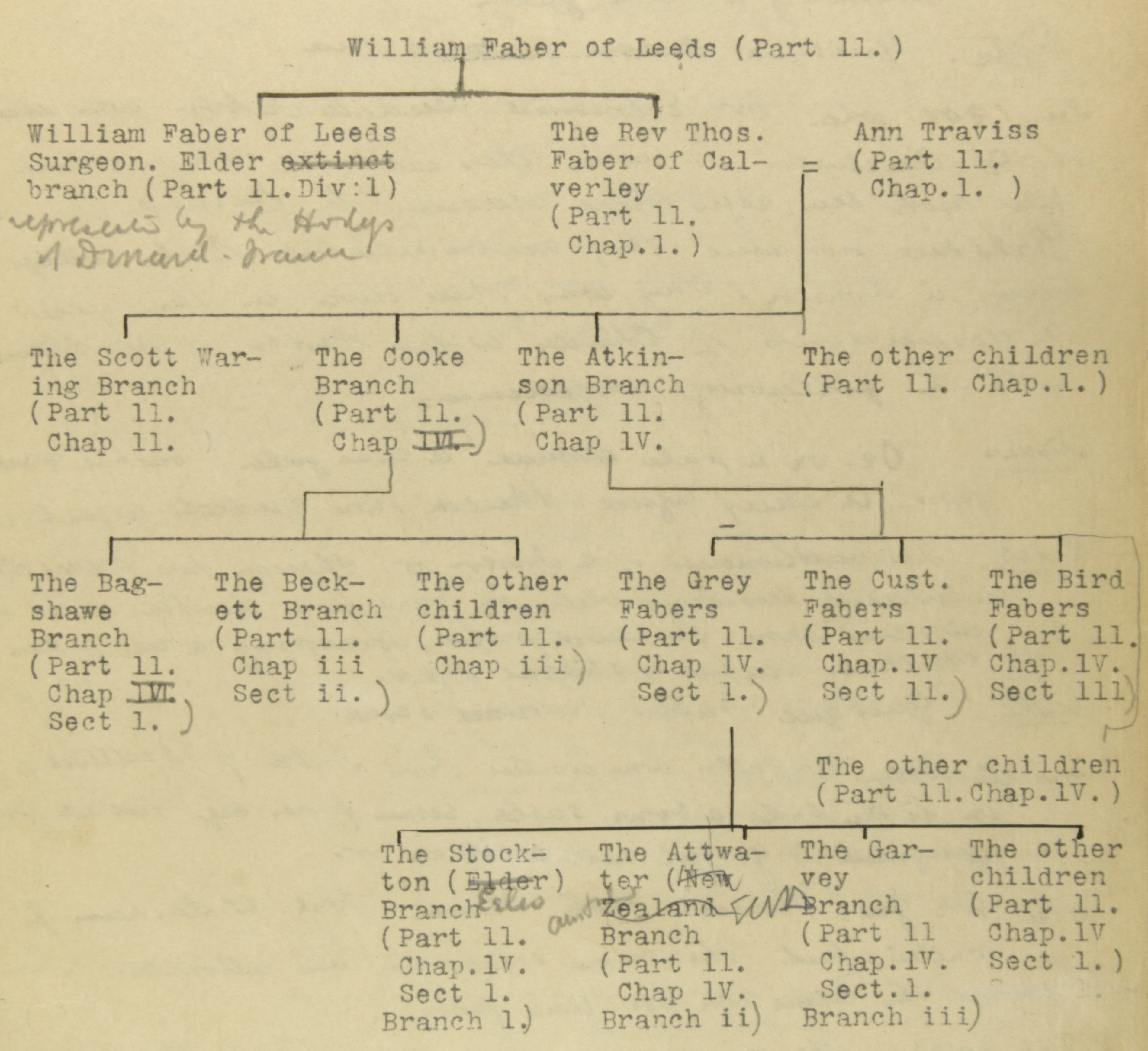
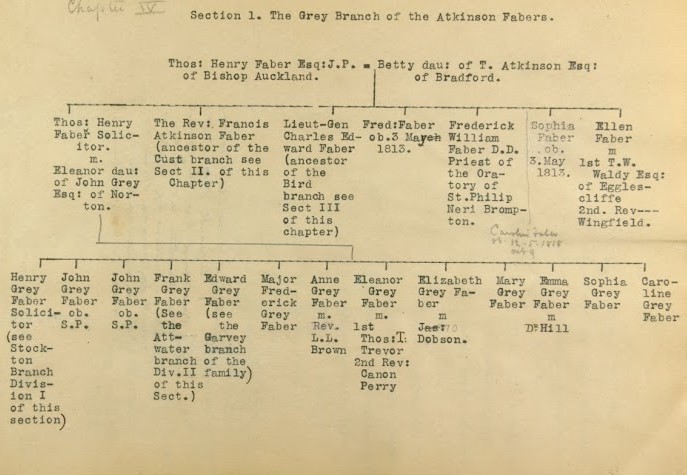
There was another branch of the family, which had rather different arms. This branch of the family included two peers, the first and last Lord Faber and the first and last Lord Wittenham. The pedigree recorded at the College of Arms is headed by William Faber of Leeds (d.1775). He had a son, Rev. Thomas Faber (1729-1821), Vicar of Calverley, Yorkshire, who is shown as having four sons. Henry Grey Faber was descended from the third son, Thomas Henry Faber of Bishop Auckland. This Thomas Henry Faber was the father of the Thomas Henry Faber to whom I referred earlier. Lords Faber and Wittenham were descended from Rev. Thomas Faber’s second son, Charles David Faber.
Family tree showing the Faber family from William Faber of Leeds.
Family tree showing Henry Grey Faber was descended from Thomas Henry Faber of Bishop Auckland.
Pedigrees for the family can be found in the 1952 and 1972 editions of Burke’s Landed Gentry, but I think that these entries will still be in copyright. Your great aunt appears in the entry in the 1972 edition.
Frederick William Faber (1814-1863), the hymn writer, was the fourth son of the elder Thomas Henry Faber.
The sword of Captain H G Faber of the 5th Battalion
While searching for information about Henry Grey Faber I found images online showing a sword described as ‘The sword of Captain H G Faber of the 5th Battalion, who departed for France in 1915. He was present at the Second Battle of Ypres in 1915, The Somme 1916, Arras and Passchendaele in 1917. Became a Major in 1918. Blade of 32 1/4 inches engraved with Family Crest and H.G.F., Royal Arms, Crowned ER VII, foliage and retailer – Samuel Brothers, and back edge with – London Made and numbered 1115. Plated hilt with Crowned ER VII and wire bound fishskin grip complete. Sword bag marked with H.G. Faber, Norton-On-Tees, 10th Oct 1906.’
The seller of the sword explained the reference to 1897 is the pattern of the sword, which is when this style of sword and hilt started to be used and is still used today. The images of the sword on this website, are used with the permission of Jemswords. I have also located an image on the My Family Silver website, which shows the same crest that appears on the sword. Written under the image it says ‘Hamilton S., Esquire, M.R.C.S., L.R.C.S., of St. George’s Hospital, Hyde Park Corner, London, S.W.’
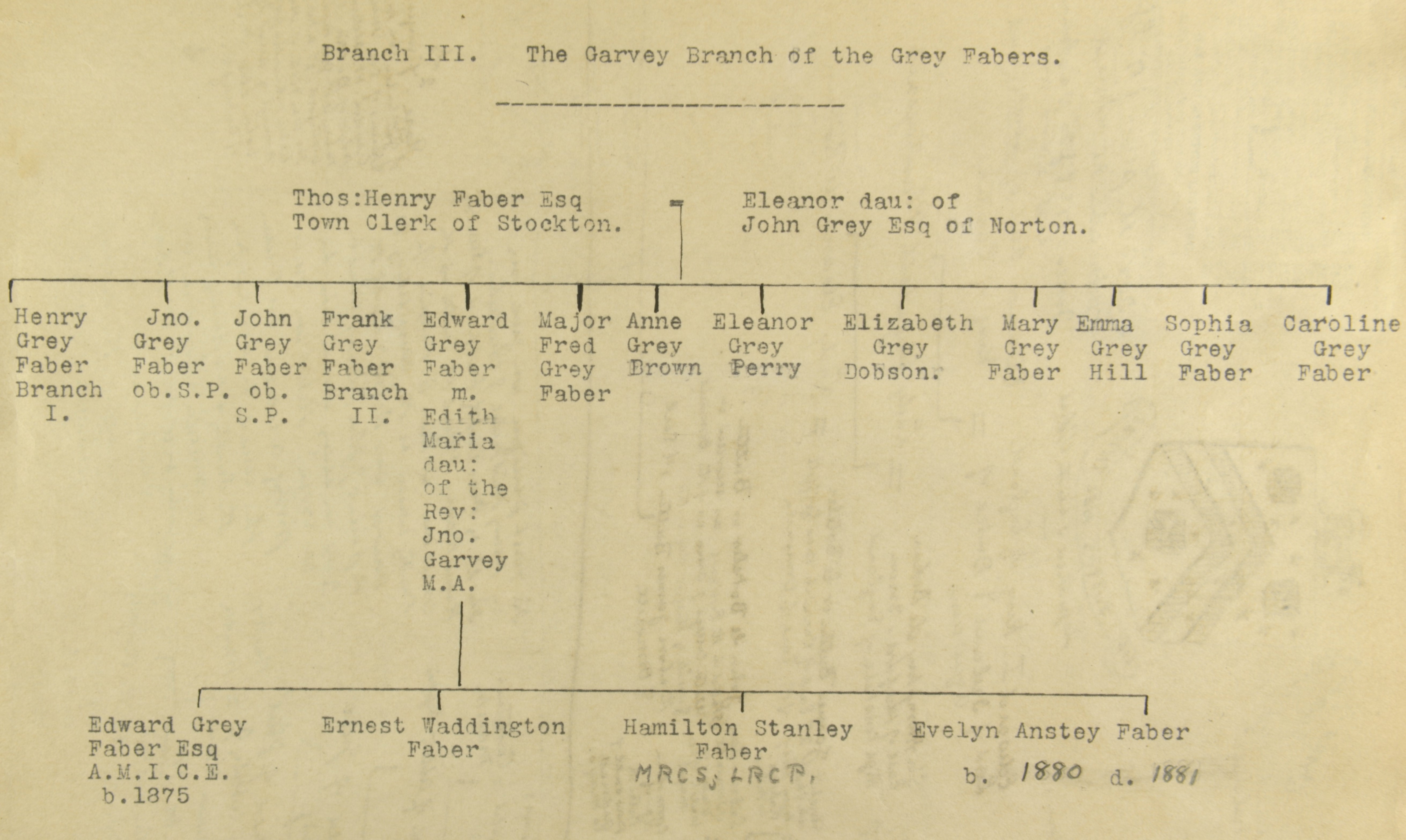
I learned about Hamilton Stanley Faber from The College of Arms when researching the Faber family. They advised me they held an extensive pedigree for the Faber family, recorded in 1902 by Hamilton S Faber, who was the first cousin of Henry Grey Faber’s father. I subsequently found that Hamilton’s work had been posted online and a link is posted below.
Family tree showing the Garvey branch of the Grey Fabers including Hamilton Stanley Faber.
The information I have learned about Hamilton Stanley Faber and his family is as follows.
1881: Hamilton Stanley Faber, aged 2, is recorded at living at 1, Esplanade, Teignmouth East, Newton Abbot, Devon, England, with his parents Edward G Faber (a wine merchant) aged 45, Edith M Faber aged 30 and Edward G Faber, Ernest M Faber and Evelyn A Faber. Also, a governess and two nurses.
1901: Hamilton S Faber, aged 22, is a medical student, living at 95, Fordwych Road, Hampstead, London & Middlesex, England, living with parents Edward G Faber (retired from owning ironworks), Edith M Faber and Ernest W Faber aged 24 (member of the London Stock Exchange).
1911: Hamilton Stanley Faber, aged 32, is working as Doctor Mp Mrcs Lrcp and living at 28 Chichele Road Cricklewood NW, Willesden, Middlesex, England with his mother Edith Maria Faber (now a widow), Edward Jocy Faber and Ernest Waddington Faber. Also two servants.
1939: Hamilton S Faber is working as a medical practioner and living at 25 Chichele Road , Willesden M.B., Middlesex, England with Jean (Caslow) Faber and three others.
Edward G Faber
Hamilton’s father Edward G Faber was born in 1836 and can be found on 1841 census. A marriage of Edward Grey Faber to Edith Maria Garvey is also recorded at Christ Church With St Paul, Forest Hill, Lewisham, England on 9 April 1874. The fathers names are given as Thomas Henry Faber and John Garvey, a Clerk in Holy Orders.
The 1841 census records Edward, aged 5 (born in Durham 1836) as living at High Street, Stockton, Durham, England with parents Thomas Henry Faber aged 55 (born 1786) and Eleanor Faber aged 36 (born 1805 in Durham). Also siblings Ann, Eleanor, Frank, Edward, Elizabeth and Mary.
My great aunt Dorothy (my grandmother’s sister) married Henry Grey Faber in 1960. Dorothy was his second wife. This page covers the research I have done on Dorothy and Henry Grey Faber and the extended research I have done on the Faber and Grey families.
Henry Grey Faber served in the 5th Durham Light Infantry. He appears to have started army life in the Volunteer Forces in 1905 before becoming a Colonel in later life. I have been fortunate to learn much about his time in the army and have a number of wonderful photos too.
Jo Faulkner who worked for a time at Preston Hall Museum in Stockton on Tees advised me that ‘Colonel Faber was a senior officer in the Durham Light Infantry. Colonel G O Spence who is also in the photograph was a prolific collector of arms and armor and bequeathed his collection to Stockton Council, it is in the Preston Hall Museum collection. I also remember that Colonel Faber donated a few objects, one of them being a Georgian sedan chair. I did look after the collections at this museum but no longer work there so I am unable to check the details for you. After WW1 Spence lived in a house built at Far End Farm near Yarm and Faber lived at Worsall Grove, which was just a little further along the road towards Worsall, so I think they remained friends. My great grandparents lived on the neighbouring farm ‘Morley Carr’. My great uncle (born 1931) says that when he was a small boy at Worsall school Colonel Faber would have all the children doing drill outside. Yes, I believe Faber was a partner in a solicitors practice, I’ve come across his name in local history studies from time to time.’
Christopher Young at Preston Park Museum and Grounds also provided help and very generously allowed me to display the photos he sent me on this website.
The document below shows Henry’s official posting as an Officer and appears to have been signed by the King.
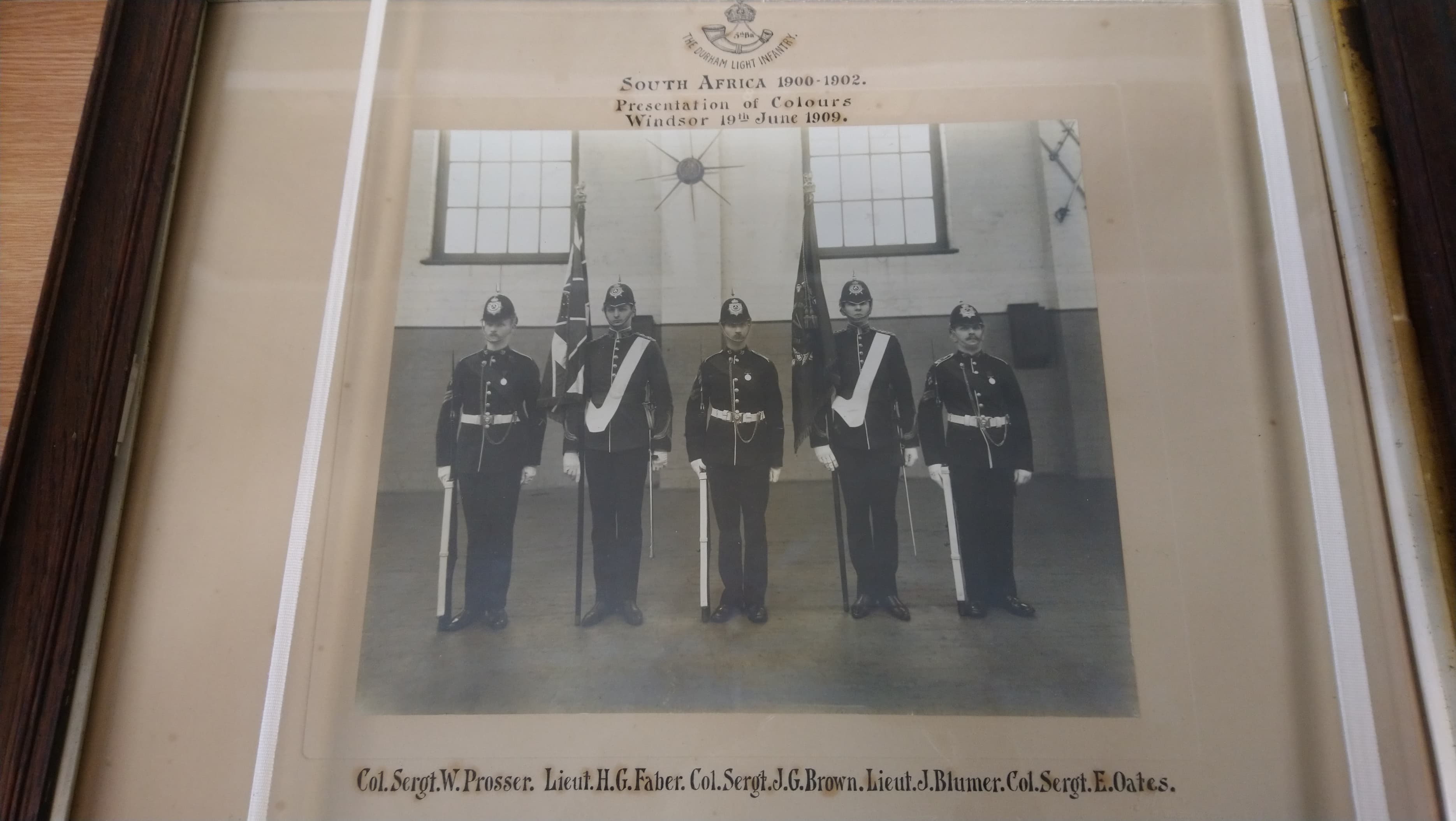
Henry can be seen in the photo below, taken at Windsor in 1909. He would have been 22 at the time.
Further information about Presentation of Colours can be found below.
I subsequently learned that The Royal Collection Trust displays a painting on its website by Jean Baptiste Édouard Detaille of the above event. The painting marked the culmination of significant army reforms that had been taking place, instigated by the Secretary of State for War, Richard Haldane (1856-1928). They grew out of the Territorial and Reserve Forces Act of 1907, which saw the abolition of existing Volunteers and Yeomanry and the establishment of a Territorial Force of fourteen infantry divisions, fourteen cavalry brigades all financed by local organisations, but liable for service under War Office command. The reforms were an attempt to prepare England for a possible attack by Germany and the King played active part in the discussions.
The painting depicts a moment, towards the end of the ceremony, when the two hundred newly blessed colours were drooped in salutation as the National Anthem was played. The King then stepped forward into the square and gracefully acknowledged the homage of his Territorial Army.
The painting and further information about this can be found on The Royal Collection Trust website below.
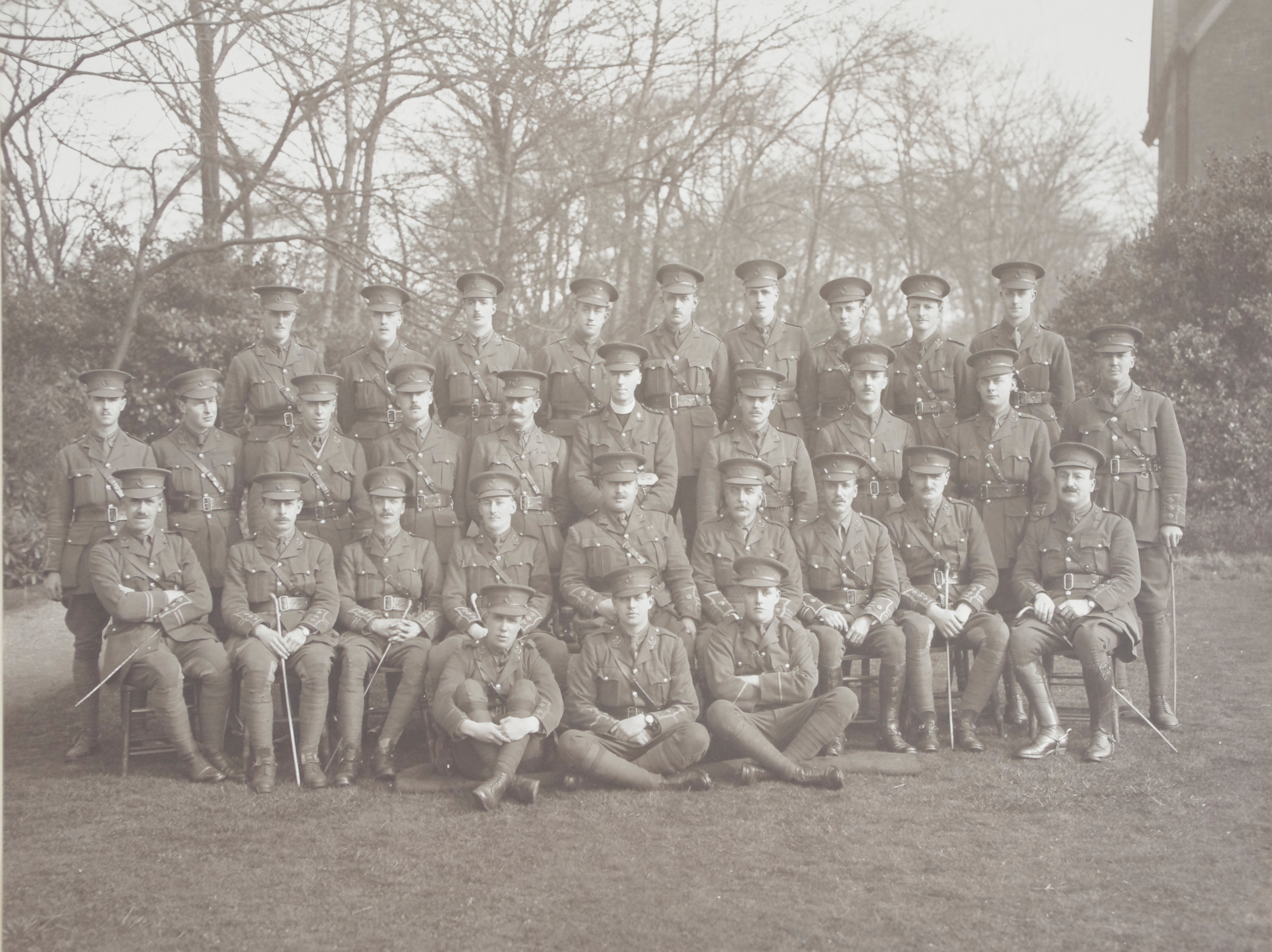
Henry is also pictured on the front row of the photo below, second from the right, which shows Officers of the 5th Battalion of The Durham Light Infantry, taken on the eve of the battalion’s departure for France in April 1915.
I first came across the photo on the Flickr page of Steve Heimerle who also has an interest in the 5th Battalion.
Interestingly, on the ground, far right, a second man, Second-Lieutenant E W Faber is named. I believe Henry and Edward were cousins, sharing a grandfather, also called Henry Grey Faber. On checking the 1901 census on the Find My Past website, I located an Edward W Faber, aged 6, born in Eaglescliife, Durham in 1895 – he is recorded as being the son of Charles (a solicitor born in Stockton) and Edith Faber. On the 1911 census, I again located a Edward W Faber, aged 16 living with Charles and Edith and a brother, aged nine called Charles, with the middle name of Grey, the same as Henry.
Durham County Record Office hold information about both Henry, Edward and the Durham Light Infantry, including:
a copy letter from Second Lieutenant H. [sic] Faber, The Cottage, Eaglescliffe, describing how he was wounded in Belgium and how his life was saved by a cigarette case
a newspaper cutting concerning a silver cigarette box and hair brushes, formerly belonging to Lieutenant Faber of The Durham Light Infantry
notes compiled by the son of Lieutenant E W Faber, concerning his late father’s military career, and his connection with Corporal Pennock, and Colonel H Faber.
letter from ‘Hal’ [Lieutenant-Colonel H.G. Faber] to his mother describing a trip to Windsor, Berkshire, June 1909
battalion orders by Major H.G. Faber, officer commanding the 13th Battalion, The Durham Light Infantry, 2 November
newspaper cutting concerning the annual sports day of the 5th Battalion, The Durham Light Infantry, at Hipswell Camp, Catterick, Yorkshire, 1922
group photograph of officers of the 5th Battalion, The Durham Light Infantry, in service dress, at Ripon Summer Camp, Yorkshire, 1924
The above information can be found on the Durham County Record Office website.
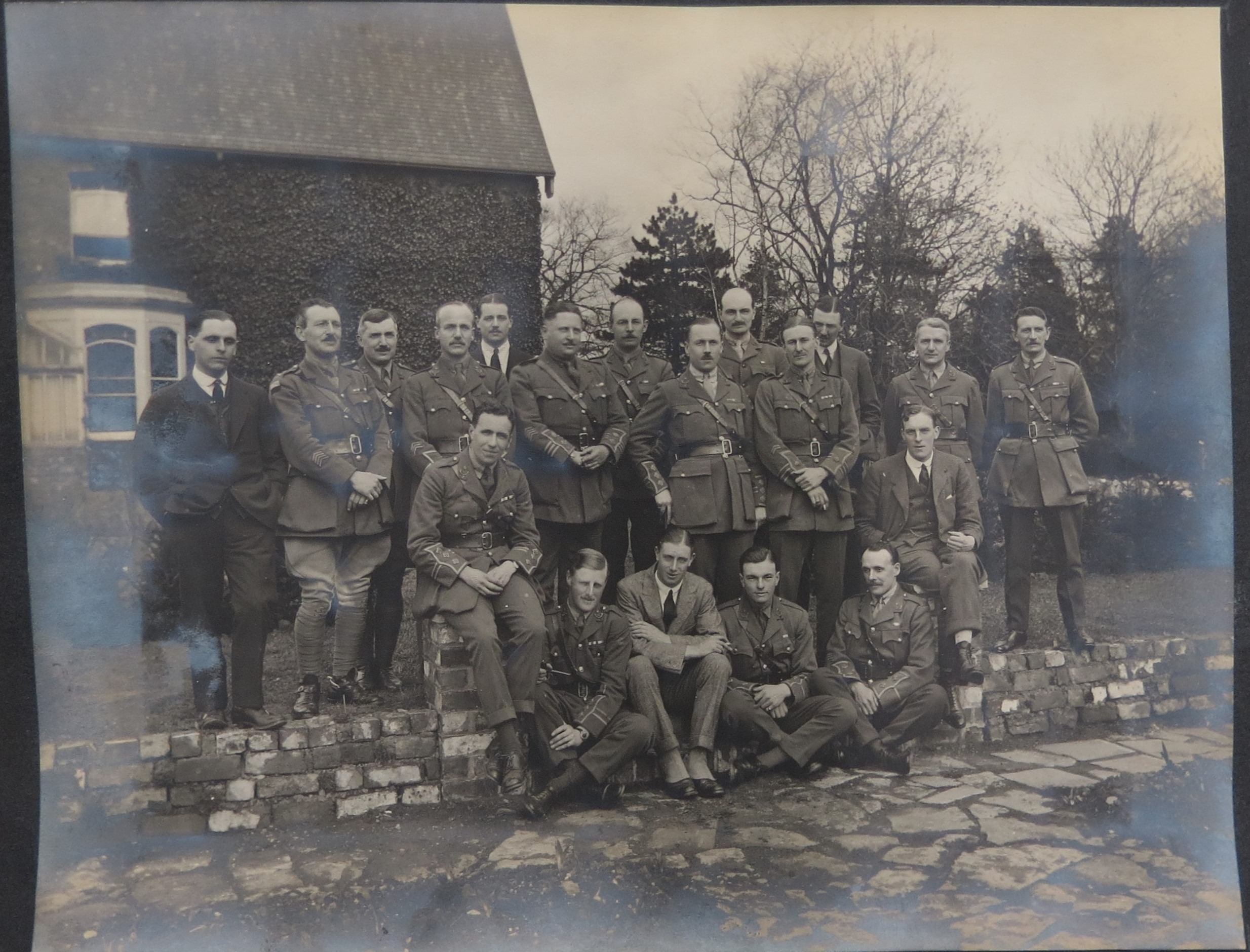
The photo below is dated 1919 (Henry is thought to appear on the top row, fourth from the right). Again the photo is used with permission of Preston Park Museum and Grounds, who also guided me to references of H G Faber and E W Faber which appear in a book about the Durham Light Infantry.
Further information
Further information about the Durham Light Infantry and about Durham during the war can be found below.
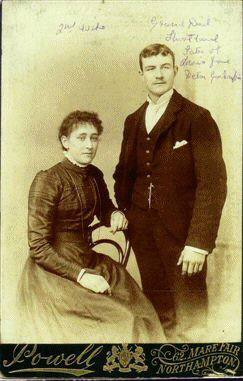
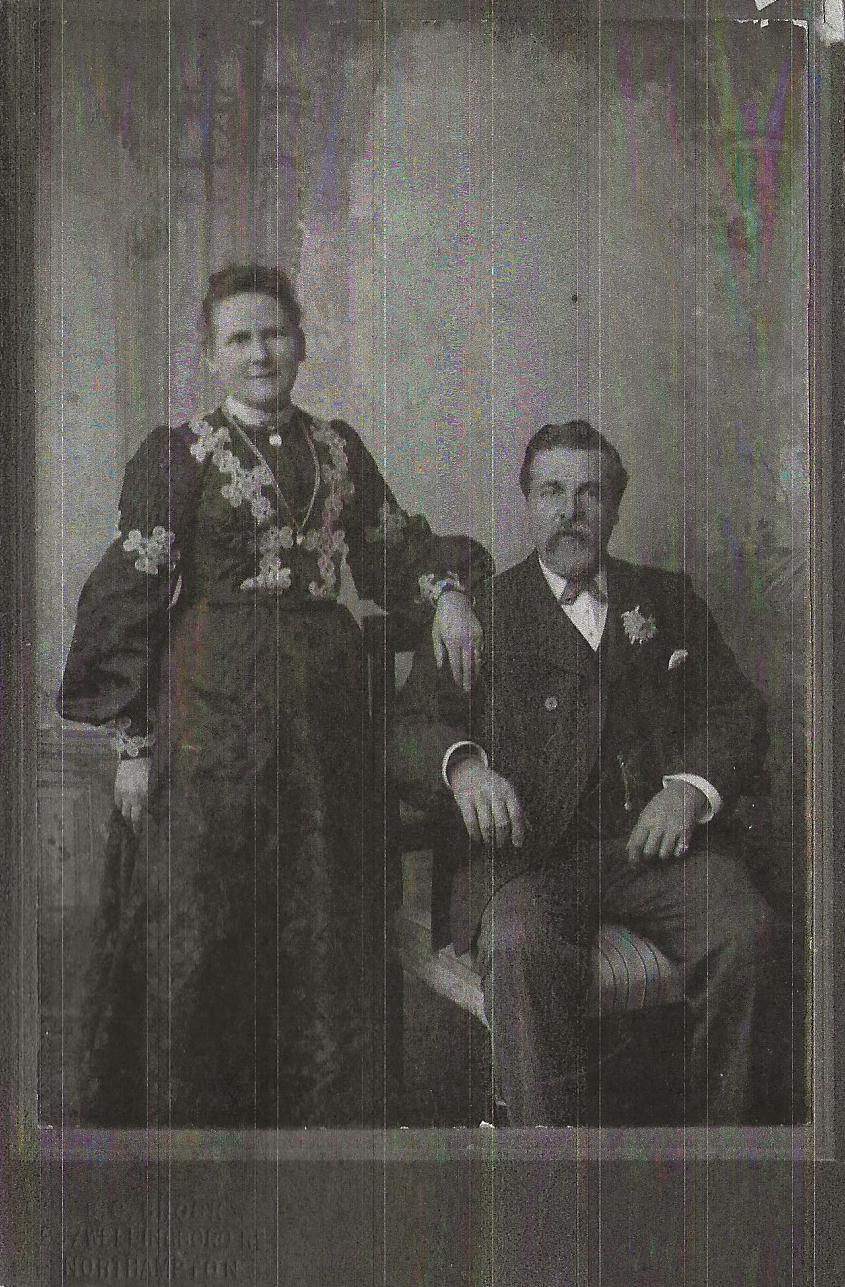
The photo on this page was given to me by my relative Keith Shortland. The man and woman make a striking couple but neither of us know who they are, the only clue is the name and address of the photographer which appears in the bottom right of the photo – B G Brock, 23 Wellingboro Road, Northampton.
Northampton is known for shoe making and I know some of my ancestors were shoe makers in Northamptonshire (one is recorded as being a journeyman shoemaker meaning he traveled around the country to work).
A search of the National Archives has found two entries which reference the photographer.
In February 2018, Paul Boniface who was researching Victorian and Edwardian photographers in Northamptonshire got in touch and advised:
Benjamin George Brock ran a studio at 237 Wellingborough Road, Northampton between 1903 and 1907. In 1901 the census shows him as a lodger at 235 Wellingborough Road – occupation photographer and on 1 March 1903 he married Ida Blanche Allen. The 1911 census shows him living at 25 Beaconsfield Terrace, Northampton – occupation Foreign Correspondent.
The photo is a studio photo and the style of dress is in keeping with early Edwardian attire. Paul thought the emblem on the gentleman’s jacket was a flower (maybe a dahlia) and advised that a journeyman is the stage after an apprenticeship – there was five to seven years worked as an apprentice and then three years as a journeyman.
If you check the size of the photo it will also give you an indication of the date. 2.5″ x 4″ (CdV) would point to the early years of Benjamin and 4″ x 6.5″ would be the latter say 1905-7.
Shoemaker or veteran, I don’t have the answers right now – whether I can learn more about the people on the photograph remains to be seen but I intend to try.
Ernest Henry Shortland was the brother of my great grandmother Louisa Jane. Born in Weedon, Northamptonshire in 1876, for most of his life he worked as a wheelwright.
As a young man, Ernest joined the local section of the First Battalion, the Northamptonshire Volunteers and would travel with his colleagues on Penny Farthing bicycles to Daventry weekly, to take part in combined company drill and exercises. On arriving in Daventry, the cycling soldiers were greeted with shouts of ‘here come the mounted infantry’.
At the outbreak of war, Ernest volunteered for service but because of his age was advised to join the County Police and this is how he came to Braefield. As a war time police officer, he had many experiences, including chasing German prisoners of war who had escaped Pattishall Camp. who were located hiding in a a wood and escorted back to Northampton.
Ernest died in Braefield aged 91 and at that time was the villages oldest man.
The photo below was sent to me by my relative Keith Shortland – Keith is the great grandson of Ernest Shortland and I am the great grand daughter of Ernest’s sister Louisa Jane. Our family comes from Northamptonshire but we are aware of Shortland’s in other places too.
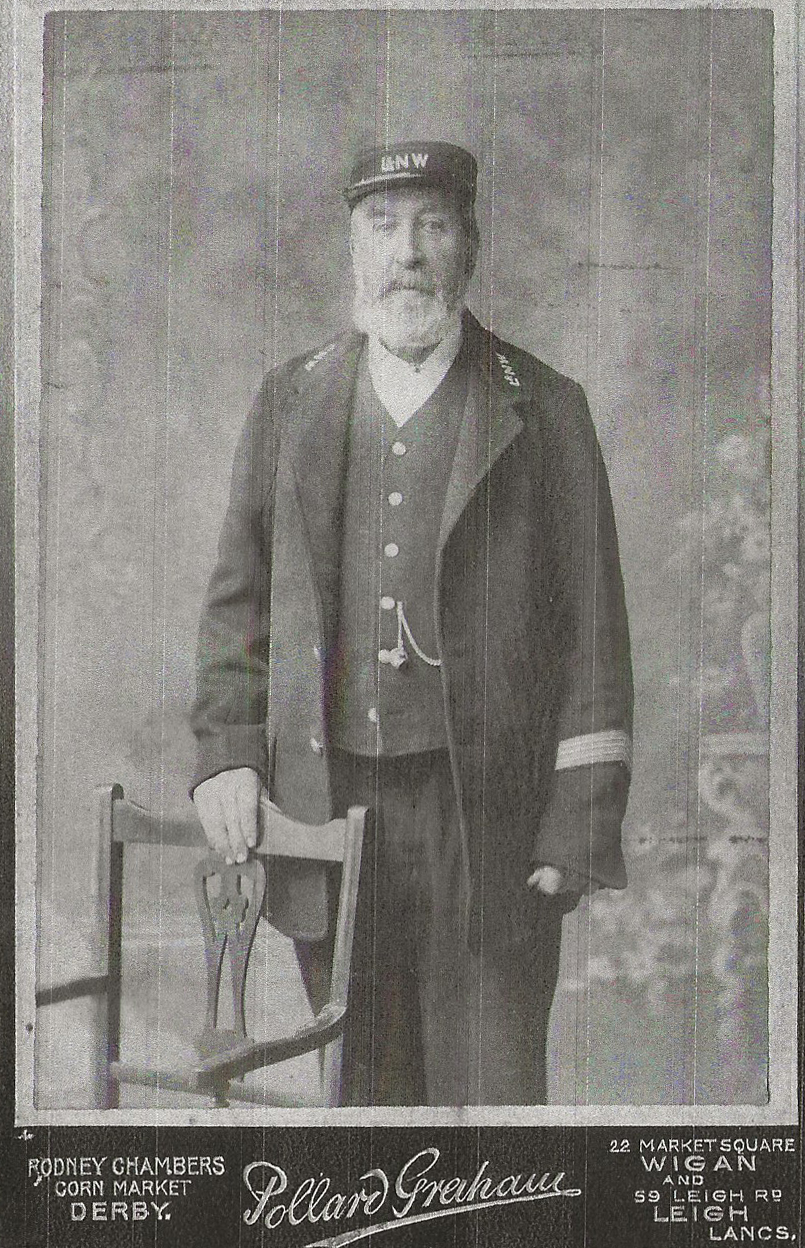
Neither of us know anything about the man in the photo but there are a number of clues that in time may help us discover who he is.
The man is wearing a uniform and his hat and jacket both read ‘L&NW’. I have learned this is the uniform of the London and North Western Railway (L&NWR). It has been possible to date the photo as 1922 or earlier. This is because L&NWR was absorbed into the London Midland and Scottish railway (LMS) on 1 January 1922.
The chevrons on the man’s jacket are interesting too but looking at photos online, these don’t appear to have been part of the standard uniform and to date I have been unable to find out anything about these.
On his waistcoat the man appears to be wearing a pocket watch and I have found photos of pocket watches online, with L&NWR showing on the watch face. These were made by John Walker of London and I wondered if this is the same watch the man in the photo is wearing and whether the watch could have been a long service award. I contacted Simon Turner at G.W. Railwayana Auctions about the pocket watches that are displayed on his website. Simon advised ‘none were given out as awards, some members of staff provided their own and some were issued official company marked watches ie. Guards.’
I have also learned that leaving the bottom waistcoat button undone was custom, because of Prince/King Edward being quite rotund and being unable to do it up, so everyone else followed suit and this is still the norm today.
The photo was taken by Pollard Graham and gives addresses in Derby, Wigan and Leigh. A history of this photographer can be found below.
The company appears to have started business in Derby in 1878. The Photo-Sleuth website states that a portrait business was operated from premises at Rodney Chambers, Corn Market in August 1890 and that from 1903 until 1910, Pollard Graham also operated in other Midland towns, including Peterborough, Burnley, Leigh and Wigan. All photos from these branches were styled ‘Pollard Graham,’ with no suffix’ (as is the photo shown on this website), so it would seem likely that the photo was taken during this period, although Pollard Graham, continued to take portraits at Rodney Chambers, Corn Market from 1926 until his death in 1932.


 A little bit of this ~ A little bit of that