- Albert and Louisa Jane (nee Shortland) (my great grandparents)
- Stephen and Mary (my great great grandparents)
Category: Uncategorized
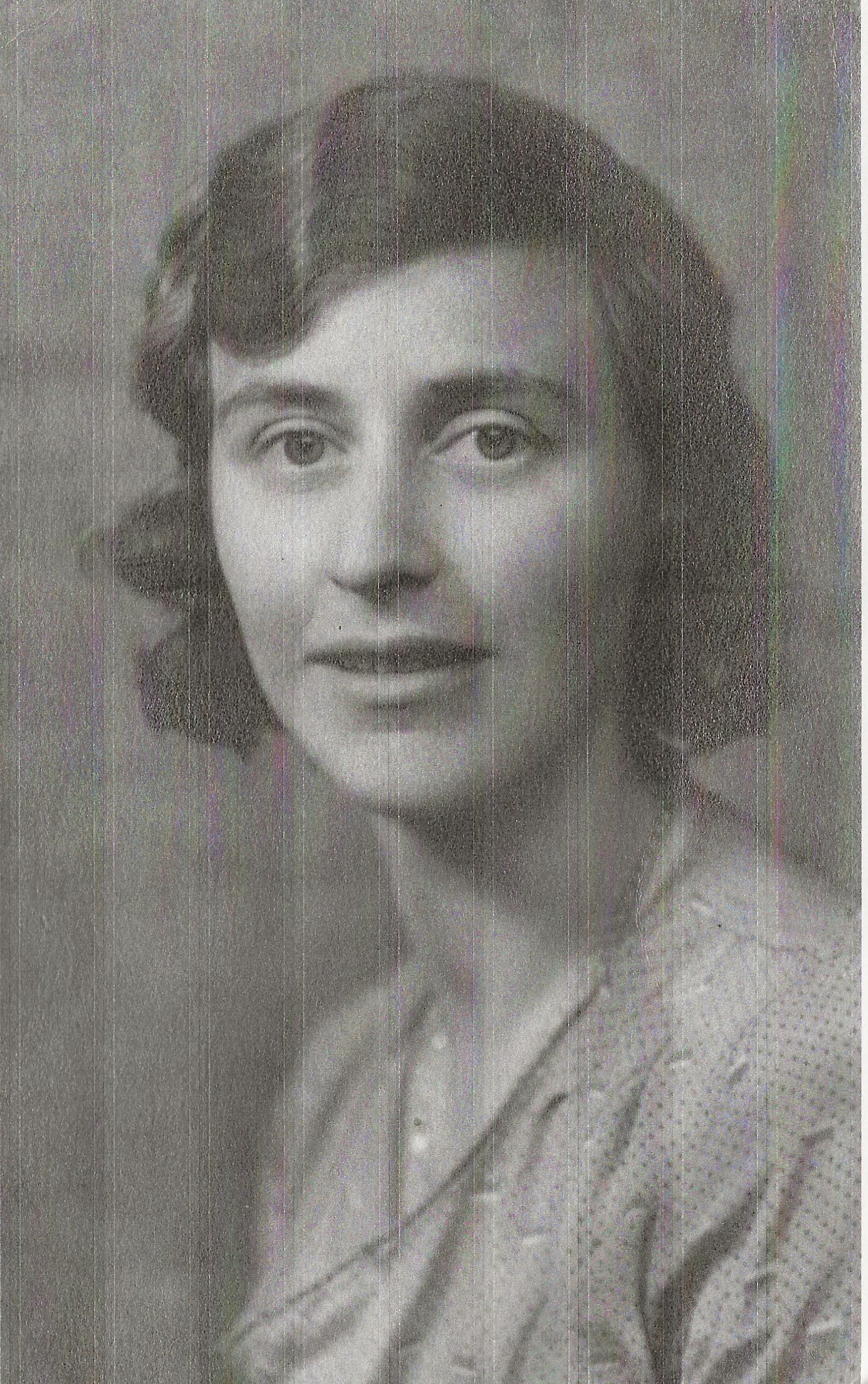
Orphan photos
The purpose of the Family Album pages is to try and document my family – to ensure my family stories live on and the people are not forgotten. Sadly though, I do have photos that I know nothing about and these are displayed here, in the the hope that maybe someone will recognise the people in them be able to tell me something about them.
The people shown are likely from Bedfordshire and Northamptonshire as this is where my ancestors were from.
See also:
Henry Grey Faber
Henry Grey Faber was the husband of my great aunt Dorothy (my grandmother’s sister). Dorothy was Henry’s second wife and the couple were married at Holy Trinity Church, Micklegate, York in 1960. Although Henry is not a direct ancestor, I was interested to learn about him, as I have a very clear memory of being told by my great aunt that his family appeared in Burke’s Peerage and I wanted to learn more about this.
My dad tells me Henry was known as Hal and that he worked as a solicitor. I have confirmed this to be correct by looking at census returns and have also found mentions of Henry’s legal career in the Gazette newspaper.
The 1891 census shows a Henry G Faber was born in Durham in 1887, to Thomas Faber, aged 30 (born 1861 in Durham) and Ada Faber aged 29 (born 1862 in Wimbledon, Surrey). A younger brother and sister, Frank S and Ada L are recorded too. Aged 14 in 1901, Henry appears to have been a boarder at a school in Harrogate and in 1911, aged 24, he is recorded as being a solicitor, living again with his parents Thomas and Ada and with more sisters and a brother.
I have also located information about Henry on the 1939 register, working as a solicitor and living with Ellen G Faber and Elizabeth H F Faber. I believe Henry married Ellen Holberton in Totnes, Devon in 1916. Their daughter Elizabeth was born in Knaresborough in 1917 and in 1939 her occupation is shown as VAD, which I have learned stands for Voluntary Aid Detachment, a voluntary unit of civilians providing nursing care for military personnel in the United Kingdom and various other countries in the British Empire.
It would be another 20 years before Henry would marry Dorothy, who was working as a school teacher at the time, living in the Morrison household at Faceby Manor Faceby, Stokesley R.D., Yorkshire (North Riding), England.
Searching for Henry Grey Faber on the Find My past website, I found details of his service, medals and awards and his first world war record. Ellen it seems also served in the army as a staff nurse.
Henry’s father Thomas, born 1861, can be found on the 1871 census residing at Middleton One Row, Middleton St George, Darlington, Durham, England, with his parents Henry Grey Faber, aged 41 (born 1830 in Durham) and Elizabeth Faber, aged 38 (born 1833 in Durham). Also four brothers and two sisters. The Faber family are all recorded as visitors to Sarah Moore aged 75 and her daughter Mary A Moore aged 37.
I believe that Henry’s grandfather, also called Henry Grey Faber, was the first son of Thomas Henry and Eleanor Faber and that he was baptised on 1 December 1829 in Durham. Henry can be found on the 1841 census, aged 11, at Shincliffe, St Oswald, Durham and Lanchester, Durham, England which appears to be a school. In 1851 aged 21 Henry can be found lodging in the household of George and Hannah Harrision at Church Street, Guisborough, Yorkshire & Yorkshire (North Riding), England and employed as a Solicitor’s Articled Clerk. In 1871 he can be found aged 41 residing with the Moore family as described above.
Origin of the names Faber and Grey
Information about the origin of the Faber and Grey surnames can be found on the Ancestry.co.uk website.
I am interested to learn more about the surnames Faber and Grey, as the name Grey appears to have been used as a middle name by many people with the surname Faber, both male and female, including Henry and Edward, largely in Stockton on Tees. However, I have also found the name connected to Dorset, London, Middlesex and Essex and would very much like to know more about this. See footnote about the family of Hamilton S Faber and in particular his grandparents Thomas Henry Faber and Eleanor Faber (nee Grey).
Unknown soldiers
The photo on this page was given to me by my relative Keith Shortland and as such, I am presuming, for now at least, that one of the men shown is a Shortland ancestor. I know that one of my Shortland ancestors, Richard, served in the 51st regiment, traveling to Australia with them around 1841. The photo isn’t clear enough to make out any badges but the uniform has an interesting design on the sleeves, so I hope in time to learn more about the men pictured.

In papers given to me by my great aunt Dorothy, I learned that a Richard Shortland traveled to Australia with the 51st regiment of the British army (I believe the regiment was later re-named the King’s Own Yorks Light Infantry) around 1841, living there until he died in Sydney in 1887.
I believe I have located Richard on the British Army, Worldwide Index 1841 which shows he was serving in the State of Tasmania and includes his service number (1456) and rank and regiment (51st foot) and a National Archives reference number (WO 12/6203) which National Archives advised refers to the muster roll or pay list for the 1st battalion of the 51st regiment in 1841 – 1842, one of a series of muster rolls for the battalion.
Further research into the 51st regiment has uncovered the following information.
The State Library and Archive Service advised:
‘According to a Correspondence File on the 51st Regiment (King’s Own Yorkshire Light Infantry) the 51st Regiment ‘was put under orders for Australia in 1837, to relieve the 21st Regiment in Van Diemen’s Land. They came out, according to custom, as guards on convict transports. Detachments arrived direct from England, via New South Wales between February 1838 and 1843. The regiment served in the colony under Lieutenant Colonel Elliott. The Returns of 1839 give the strength as 29 officers and 629 men. A detachment was stationed at Port Arthur in July of 1838; another was detailed for South Australia and left Hobart on 5 October 1841 per the ship Endora. The Regiment was put under orders for India, and part of the regiment left Sydney on 17 April 1841 per the ship Virtue but it was wrecked on the Great Barrier Reef. All were rescued with the exception of one woman. The Head Quarters staff together with four Companies under Lt Colonel Elliott, left Hobart on 8 August 1846 per the ships Agincourt and China. Three companies remained to reinforce the 96th Regiment and Lieut Colonel St Maur, until 27 January 1847 when they sailed per the ship Javato India via West Australia.’
‘Please be aware that Regiments took their records with them when they traveled. To find more specific information out about Richard Shortland contact the National Archives in England: http://www.nationalarchives.gov.uk/ Our office also has copies of pay lists and some British regiment muster rolls (as part of the War Office records in the Australian Joint Copying Project) Unfortunately, searching through this series is extremely time consuming and owing to the limited resources of this office I regret I am unable to conduct an extended search on your behalf. A Tasmanian Private Researcher, however, may be able to assist you and a list of researchers has been attached for your reference.’
‘There are also many references to the 51st Regiment’s time in VDL in the National Library of Australia’s TROVE website (digitised newspaper section).’
National Archives advised:
‘The main source of information for soliders in the British Army during the 19th century is the pension records in WO 97. These have been indexed by name, both on our catalogue, and on Find My Past, so as the name you’re looking for does not turn up, you can assume that he left the army without becoming eligible for a pension.’
A query sent to the State Library of South Australia resulted in a search of the Tasmanian Archives and name index online but did not provide any relevant information. The library subsequently looked to New South Wales as that is where he lived and died and advised ‘‘State Records (of New South Wales) holds very few records relating to the early regiments stationed in the colony because, as they were British troops, the records remained with the Imperial Government. Hence, surviving records relating to those regiments are held by the Public Record Office, London. However, most State Libraries in Australia hold microform copies of the Muster Books and Pay Lists, which were copied as part of the Australian Joint Copying Project.’
A response to a question about army uniforms advised:
‘The uniforms are British and are worn by men of a Rifle Volunteer regiment. This regiment were part time soldiers, like the modern day Territorial Army.’
The uniforms I was advised were ‘light grey and have coloured collars and cuffs, either red, blue or green, depending on which regiment they were in. The Rifle Volunteers would assemble regularly for drill and training and spend a few weeks in camp in the summer for proper tactical training.’
Army Museums advised:
‘The ‘uniforms in the photograph certainly appear to be the Colonial Service pattern worn in Australia’. They also advised that they had located 1456 Private Richard Shortland on the nominal roll of personnel from 51st Regiment of Foot stationed in Van Diemens Land, Tasmania in 1841.
In addition, they advised that the 51st Regiment of Foot, later re-titled the King’s Own Yorkshire Light Infantry (KOYLI) served in Australia from 1838 until 1846 when they moved to India. Their principle tasks I was told were typical garrison tasks – guarding convict settlements, hunting down bushrangers, suppressing armed resistance by Indigenous Australians, providing security on the goldfields, assisting local police to maintain public order, undertaking ceremonial duties and developing the nation’s military defenses.
The State Library and Archive Service in Australia advised as follows:
According to a Correspondence File on the 51st Regiment (King’s Own Yorkshire Light Infantry) the 51st Regiment ‘was put under orders for Australia in 1837, to relieve the 21st Regiment in Van Diemen’s Land. They came out, according to custom, as guards on convict transports. Detachments arrived direct from England, via New South Wales between February 1838 and 1843. The regiment served in the colony under Lieutenant Colonel Elliott.
The Returns of 1839 give the strength as 29 officers and 629 men. A detachment was stationed at Port Arthur in July of 1838; another was detailed for South Australia and left Hobart on 5 October 1841 per the ship Endora.
The Regiment was put under orders for India, and part of the regiment left Sydney on 17 April 1841 per the ship Virtue but it was wrecked on the Great Barrier Reef. All were rescued with the exception of one woman.
The Head Quarters staff together with four Companies under Lt Colonel Elliott, left Hobart on 8 August 1846 per the ships Agincourt and China. Three companies remained to reinforce the 96th Regiment and Lieut Colonel St Maur, until 27 January 1847 when they sailed per the ship Java to India via West Australia.
Shortland shoemakers
In papers given to me by my great aunt Dorothy, she noted that John Shortland (the brother of my great great grandfather William Shortland) had started a shoe firm in Irthinglingborough, Northamptonshire, so I set out to investigate.
I had always known that Northamptonshire was famous for making shoes and boots and that it was likely my ancestors had been involved but I never expected to find them involved to the extent I did.
Information about the firm Dorothy referred to was initially located on The Rushden Heritage website which indicated the firm was actually started by John’s father, also called William.
In 1875 the late Mr. William Shortland left his native Harrowden to seek work in the trade at Irthling-borough where he soon established himself and was one of the first to install a sewing and stitching machine. In 1891 he built the Tower factory where he and his sons, John and James, made shoes for the wholesale market. Eventually, John Shortland started business on his own account and in 1899 founded the Express Works, which during the past 59 years have been extended many times. On his death in 1934 the management passed into the hands of his son, Mr. Hugh Shortland. The development of the well-known “Wearra” fitting system, covering slim, medium and broad fittings in men’s, women’s and youths’, started in 1936.
Information about John Shortland Ltd was located on the National Archives website and about information about William and John Shortland on the Grace’s guide website where I discovered a large selection of adverts for William Shortland, John Shortland and Wearra Shoes.
- John Shortland Ltd, shoe manufacturers: financial, sales and wages books, stock books and inventories, status books, reports and papers, 1915 – 1978
- Grace’s Guide: William Shortland
- Grace’s Guide: John Shortland and Wearra Shoes
I subsequently contacted the Irthlingborough History Society and Roy York and Philip Watts told me about Wearra shoes and the Express Works factory where the shoes were made.
The Shortland family I was told were ‘very important in the town employing many local people and Hugh Shortland’s name appears on the foundation stone of the local Methodist church. The hall, coincidentally, is where the history society holds it’s meetings. A reproduction of the giant plaque, on the now demolished Express Shoe factory, is being placed on the buildings of the new development being built at the moment on the large site in the centre of the town next to St. Peter’s church.’
The society also kindly sent me the photos that appear below which show William and John, photo three is believed to be James (John’s brother) and Hugh Shortland.


They also told me about a book titled ‘Clicking to Closing’ which contains information and memories about the work of my ancestors and it was lovely to read about the contribution they had made to the town and also to read they didn’t just run a successful business but appeared to care about the welfare of their staff too, boasting the axiom ‘The best use you can make of surplus profits is to invest them in the welfare of your employees’. In a strange coincidence, the book was printed and bound in the premises formally occupied by John Shortland Ltd – The Express Works in Church Street.
Sadly, the firm, which had become known as David Scott Shoes and was one of Irthlingborough’s largest employers, closed in 1982 with the loss of 320 jobs and today not one shoe manufacturer remains in Irthlingborough – in October 2002 R Griggs Ltd announced that production of Dr Martens in the town would cease, bringing to end, an industry with which the town had been associated for many hundreds of years. I feel incredibly fortunate however to have discovered such a wealth of information about my ancestors and the work they did and to be have been able to gather it here for my family and others to learn about them too.
Richard Shortland
I learned about Richard and his wife Eliza after reading through papers given to me by my great aunt Dorothy. Richard it seemed was born in Northamptonshire around 1824 and Dorothy had noted that he had traveled to Australia with the 51st regiment of the British army around 1841, living there until he died in Sydney in 1887. Further information about the regiment can be found below.
I wanted to learn about Richard and Eliza as it seemed learning about them, may lead me to learn more about the story I have been told, that my family is descended from Lieutenant John Shortland. I have now amassed quite a bit of information which is published here, however, to date, I have only found contrary reports about Richard’s relationship to Lieutenant John.
Dorothy’s papers seem to indicate that Richard was the brother of my great great great grandfather John Shortland, along with three other brothers, named Thomas, William and Henry. The papers included a birth certificate from 1858 for Richard’s son Joseph (on this Richard is shown to be a Dray Proprietor) and a note, handwritten by Dorothy, which detailed a memorial, showing that Richard died aged 64 in 1887 leaving a wife and 12 children:
- William Henry
(born Armidale, New South Wales 1849, married in Camden 17/9/1872 at St. Johns Church, occupation – Writing Clerk - Mary A. (1850)
- Richard (1852)
- John (1854)
- Eliza (1855)
- Joseph B (1858)
- George T (1860)
- Robert A. (1862)
- Alice (1864)
- Arthur (1867)
- Emily (1869)
- Martha L. (1873)
I believe that prior to marrying Eliza, Richard was married to Anne. A search of the Find My Past website has found that Richard Shortland married Anne Keenan on 2 September 1844 in Sydney, Australia.
Searching for further information, I found the hand written note matched an entry on the Ancestry UK website and this enabled me to locate both the death index, (which names Richard’s parents as Richard and Mary) and details of the grave in Rookwood Cemetery, New South Wales.
Grant Skinner at the cemetery kindly sent me the photos that appear here – these not only showed the grave that Dorothy wrote about but also that other family members were buried in the same place.
Grant advised ‘The rear of the memorial (photo 0348) is all blank with the three x other faces having multiple inscriptions and the plots appear to be over four or five sites wide. It appears that a wrought iron fence of some description has been removed from the kerb set of the memorial some time ago based on the patches in the sandstone, but the memorial itself is in rather good condition given its age with a bit of the kerb set sunk into a slight depression towards the front of the site, but nothing of any great concern’. Death notices for Richard can be found below.
- Death notice for Richard Shortland: The Sydney Morning Herald, 22 April 1887
- Death notice for Richard Shortland: The Sydney Morning Herald, 23 April 1887
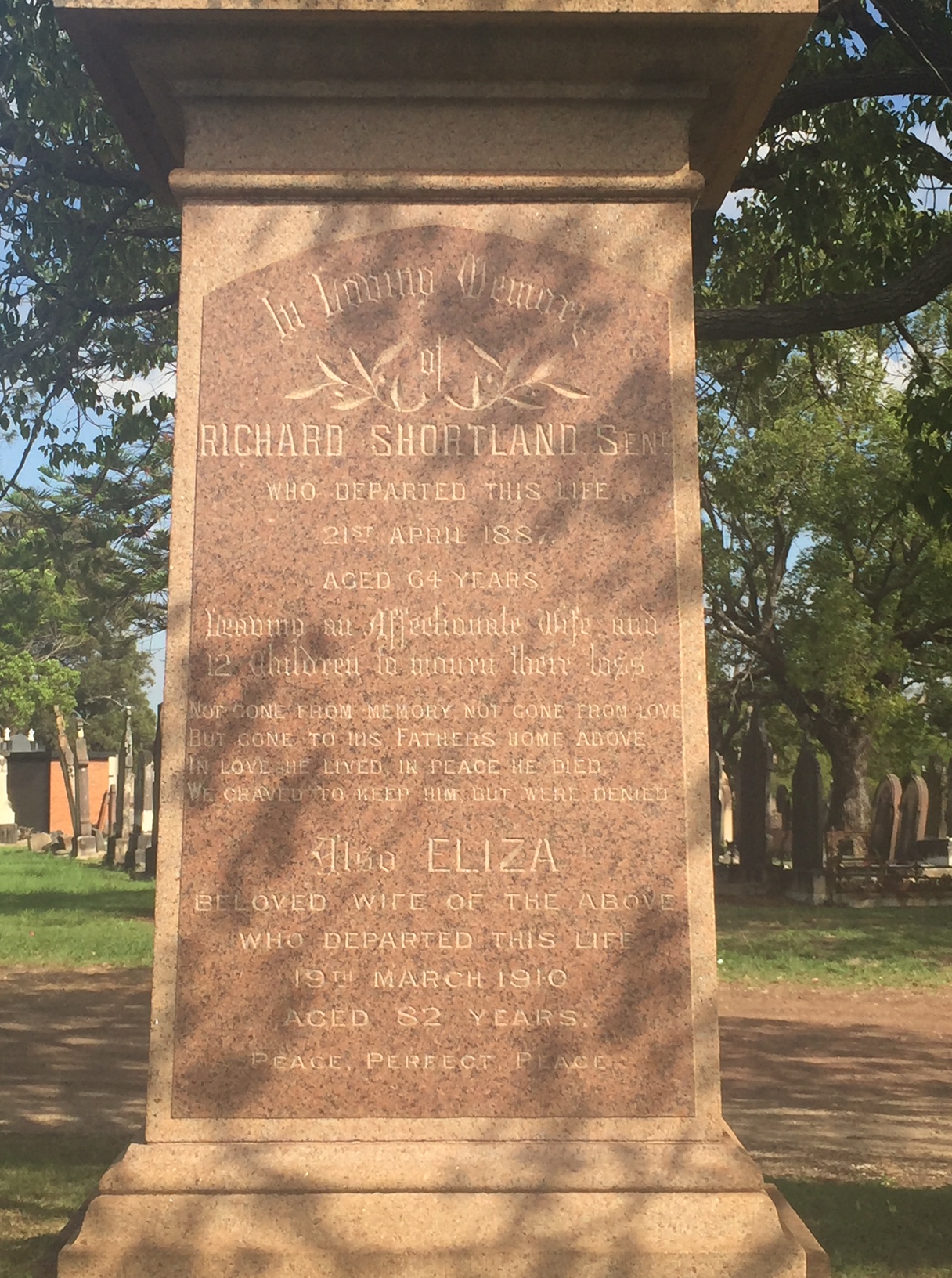
However, on studying the photos, I noted that another Richard is recorded. The younger Richard died 24 April 1933 aged 80 years.
I searched the National Library of Australia website and have I believe found newspaper articles relating to the latter and his wife. The articles about Richard state he was a descendant of Lieutenant Shortland and a grand or great grand nephew of Rear-Admiral Shortland, of the Imperial Navy. The articles also provide detail of the work he did, stating ‘He was principal of the firm of Shortland and Sons who, in the early days of Sydney, were contract carriers for most of the city firms; he retired from business at the outbreak of war in 1914.’
Richard
- Newcastle Morning Herald, 26 April 1933
- The Sydney Morning Herald: Wednesday 26 April 1933
- Daily Advertiser: Thursday 27 April 1933
- The Sydney Morning Herald: Thursday 27 April 1933
Martha
- The Sydney Morning Herald: Saturday 20 September 1879
- The Sydney Morning Herald: Friday 19 September 1884
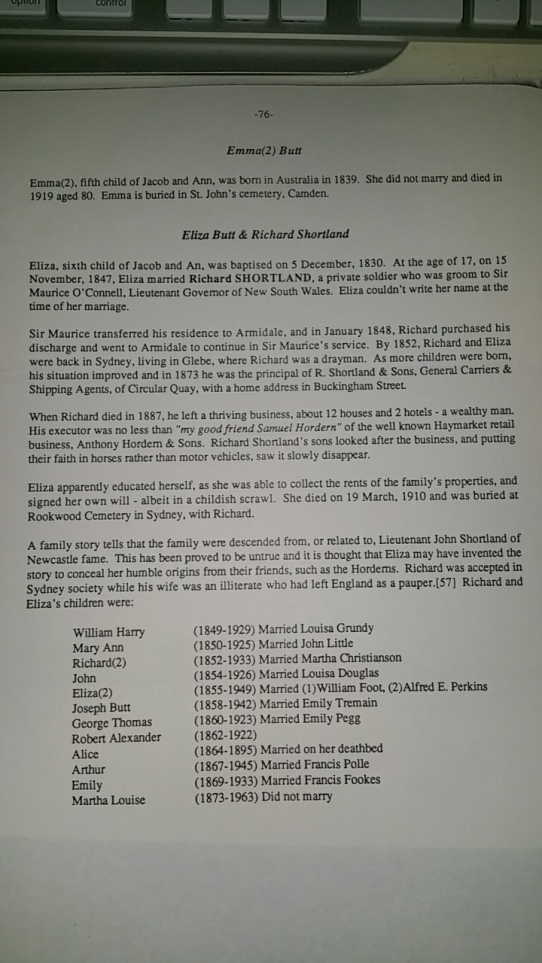
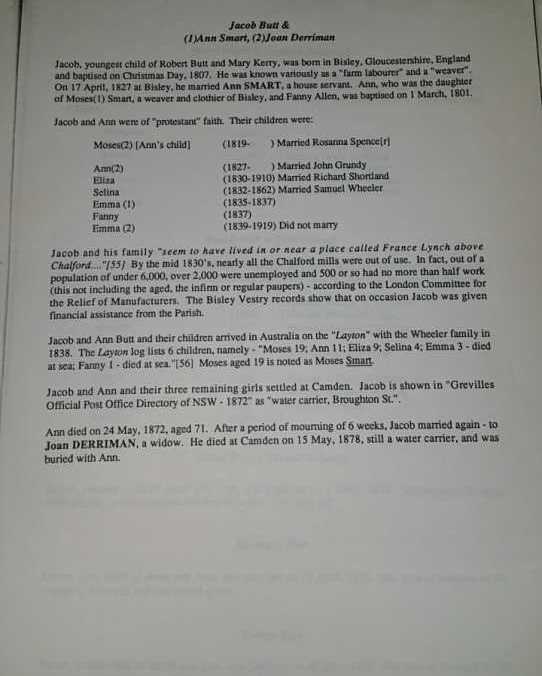
However, I am also in possession of a document, re-produced below, which states the relationship to Lieutenant John has been proved to be untrue and that Eliza invented the story. Could Eliza have made the story up? I am keeping an open mind but for my money, in light of the newspaper articles, I would like to know how the story has been disproved before reaching my conclusion.
The naval Shortlands
Shortland is the surname of a British naval family, members of which served in Australia and New Zealand during the eighteenth and nineteenth centuries. Since I was young, I remember being told that my family are descendants of Lieutenant John Shortland, who discovered the first coal in Australia whilst taking prisoners to Botany Bay and also discovered and named the Hunter River.
I have a collection of photographs, cuttings and notes about the Shortland family from by great aunt Dorothy, both my direct ancestors and the naval Shortlands. Slowly I am gathering my own collection of information which seems to point to there being some truth in the story I have been told.
The photo below was given to me by my great aunt Dorothy. It was taken in 1947 and shows the re-enactment of the landing of Lieutenant John Shortland in New South Wales in 1797.

The re-enactment was part of two months of celebrations which included a special issue of stamps, however the stamps showed the image of the wrong Lieutenant John Shortland.
Further information
- A naval family
- Shortland naval family
- Lieutenant John Shortland – Hunter’s River 1797
- Saw Shortland landing in 1897
Army Life
My great grandfather Joseph Charles Abram enlisted in the British Army on 22 January 1901 aged 19 years and five months and served until 1922. He worked as a Farrier Staff Sergeant (a blacksmith specialising in shoeing horses, a skill that requires not only the ability to shape and fit horseshoes, but also the ability to clean, trim, and shape a horse’s hooves) in the Army Service Corps. During his time in the army he served in South Africa, Egypt and Palestine.
The 1901 census records Joseph, aged 19, as a soldier in barrack rooms at Woolwich, London and Kent. The 1911 census records Joseph aged 29 and single at Bulford Camp Salisbury, Bulford, Wiltshire. The same document records Harry Bowers, a Wheeler Staff Sergeant. Harry introduced Joseph to his sister Milly May while on leave — Milly May Bowers later became Milly May Abram. The 1921 census records Joseph aged 39 and married in the Armed Forces Overseas at P G H Ludd, Palestine.
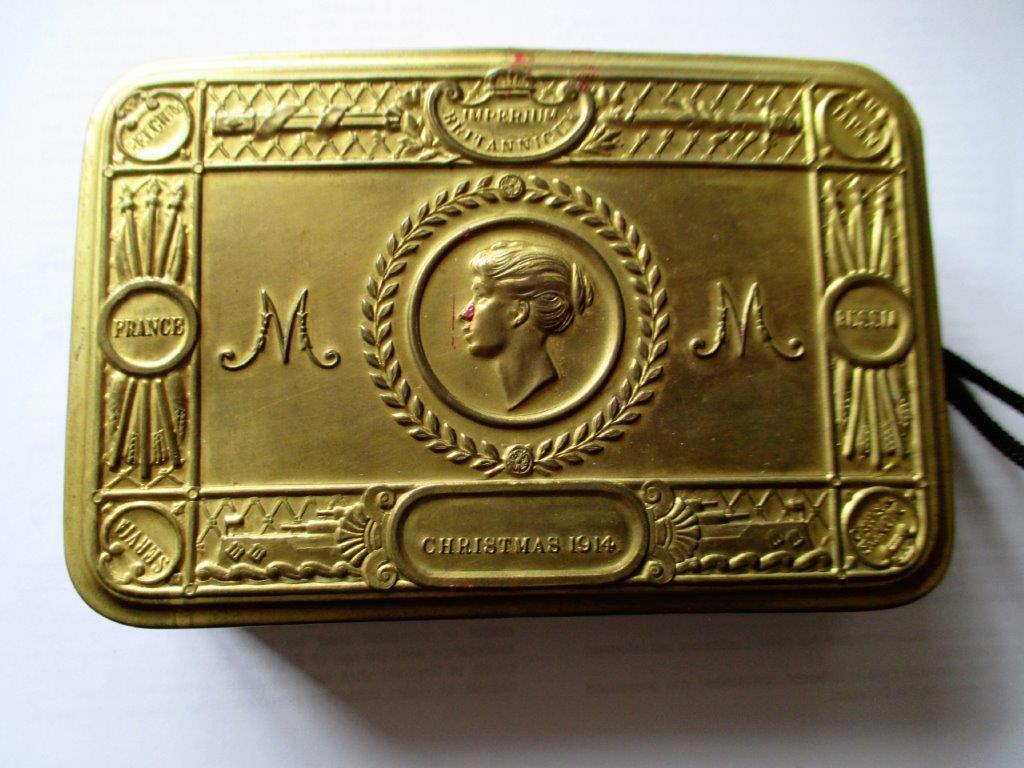
My family is fortunate to have a copy of his service record together with other mementos of his time in the army, including a brass tin (a Christmas gift from Princess Mary to those serving in the armed forces in 1914) and the Christmas card that came with this.
We have his war medals, the 1914 Star, British War Medal and Victory Medal, which were also known as Pip, Squeak and Wilfred and the Oak Leaf emblems which he received for having been mentioned in despatches on 30 December 1913 (a member of the armed forces mentioned in despatches is one whose name appears in an official report written by a superior officer, in which gallant or meritorious action in the face of the enemy is described).
Further information
- Museums Victoria Collection: Princess Mary Christmas tin
- The Great War: A Guide to British Campaign Medals of WW1
RAF serviceman
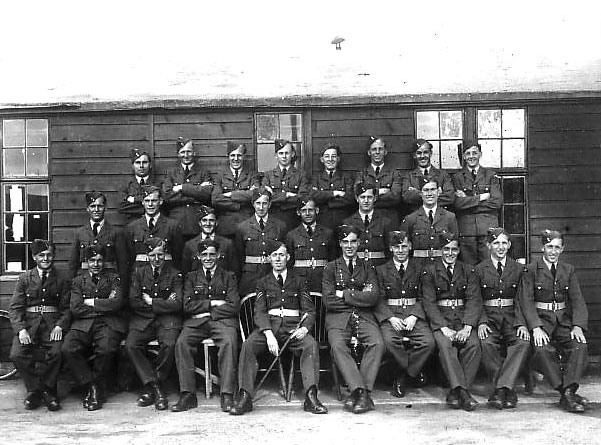
My grandfather Louis Bowers Abram served in the Royal Air Force. I know little about his time in the RAF other than he was a Corporal and learnt to fly in a Tiger Moth at Sywell but war broke out on the day he was due to take his test, so he never saw active combat.
I do however have the wonderful photo below (Louis is stood at the back on the far left), badges from his uniform and his service and release book.
The best things in life are free?
In 2011 I established The Big Sunflower Project. The project raises awareness of the rare neuromuscular conditions known as centronuclear myopathy by giving away sunflower seeds. You can read more about the project and how I came to start it below.
2018 is the eighth year of the project and for three of these, the project has been targeted by freebie websites, causing seed distribution to stop. As I write this, I don’t know if the project will continue past the end of this year.
The promotions appear on the freebie websites, their social media pages and in their newsletters which are emailed to their subscribers. I have never been consulted in advance about the promotions and they result in complete chaos. When this happened earlier this year I received in the region of 800 emails over two days.
To date I have been unable to find out who regulates the online activities of these industries. I have tried contacting groups such as the Internet Watch Foundation and Get Safe Online, also Advertising Standards, the Direct Marketing Association, the Information Commissioners Office, Trading Standards and Facebook. Mostly my queries have gone unanswered or it has taken months for people to get back to me. One organisation advised the internet was like the ‘wild west’ and there was no help available to me, another that as the adverts had been taken down in the time it took them to reply, there was nothing they could do. I have also tried doing a ‘Who Is’ search to find out who hosts the websites but the website hosts do nothing either.
I have emailed the freebie organisations direct and asked that they remove the information from their websites and social media pages but only ever heard back from two. One advised they saw my project on another freebie website and only copied the information. Another quickly sent a £20 donation which they stated was ‘a gesture of goodwill and by no means any admittance of error on our part’. I contacted a third of the websites via their Facebook page, as they had no way of making contact via their website, only to find a message I had sent them the previous year, asking them to remove their promotions, staring me in the face.
The issues caused by the freebie websites include the huge number of requests for seeds that are generated. It is like the worst spam email. Watching an inbox fill up with emails before your eyes, knowing that you are going to be unable to fulfill most of the requests, is the most hopeless feeling. Many of the requests refer to ‘your recent promotion’ or ‘the promotion on your website’ but the promotions are nothing to do with me and many of the people requesting seeds don’t seem to understand this. The disappointment caused to the people who had hoped to receive free seeds, generates horrid emails from some and begging emails from others. This is incredibly distressing. One email arrived from a man who advised he worked with deprived children who were used to knock backs and I had added to the problem. Another person emailed saying they were on benefits and went on to list the benefits they received. Someone else wanted seeds but couldn’t pay for them because they had to pay for a funeral and another couldn’t make a donation for seeds because they got their food from a food bank. There are many other examples I could list.
The aim of The Big Sunflower Project is to raise awareness – it does this by sending seeds to people who have never heard of the conditions and requesting photos in return. The photos are posted online which again raises awareness of the conditions. If I am fortunate, some of the participants make a donation for their seeds, which secures the project for future years.
Funding and donations are crucial for the project and I am unable to run it without them. There is no team or large organisation behind the project, it is just me and the level of work that is generated by these freebie promotions is unbearable but the freebie websites couldn’t seem to care less.
I am so very proud of what I have achieved with the project but I am just one person. I always refer to the project as a voluntary organisation with charitable aims but the project doesn’t have charitable status and I certainly don’t have the finances to take legal action. It feels as if each time the freebie websites promote the project I just have to take it, while they break what I have created, doing nothing to help fix it and I am left to pick up the pieces.
So what am I hoping to achieve by writing about what has gone on? I guess, this is me trying to not give up without fight and doing the one thing I feel able to do right now and that is to write about it, in order to put my thoughts in order and see if I can navigate my way through the chaos that has been caused for another year.
I am also trying to focus on all the lovely things the project has achieved, growing from an idea eight years ago, to now sending seeds to people in the UK and Europe and having participants around the world, both those affected by centronuclear and myotubular myopathy and those who have never heard of the conditions. The project set out to raise awareness of centronuclear and myotubular myopathy but now sends seeds to community groups, good causes and education establishments, so helps their work too.
Finally, I am hoping that in time my post may reach someone who can help or advise on the situation and stop the people who are causing so much trouble to something that only ever wanted to do good.
April 2019
It is now over a year since I wrote about my experience of freebie websites. Once my world stopped turning, I made a number of changes to the way the project operated. It had become clear that many people were bypassing the website entirely, having been given only an email address to apply for seeds, so were not reading about the aims of project. The email address was removed from the website and replaced with an online form, which forced people to apply for seeds via the website. I also learned how to exclude people finding the website using particular search terms such as ‘freebies’, ‘free samples’ and ‘free seeds’. A note was added to the application form, advising that the project relies on funding and donations to keep going and was not associated with any freebie websites. And now when an application form is submitted, an automatic response is generated, so that people receive an acknowledgement advising their application has been received. Finally, when an application is accepted, I send an email with further information, so there can be no doubt what the project is all about.
This year seed distribution has been calm and organised but the freebie websites are still behaving badly, as I discovered when I found the post below, created by someone who did not receive seeds and was unhappy with the email I sent apologising for any disappointment she may have been caused.
There is no thought about who is paying for their freebie. The comments, without exception, are from people who want a freebie, they want it now and they don’t care about the cost or how they get it.
One freebie hunter wrote she was tired of receiving ‘passive/aggressive emails blaming other websites for sharing when really I think these companies ought to take a bit of personal responsibility when putting up pages saying ‘free samples’, then backtracking’.
The Big Sunflower Project is a voluntary non profit group which I run in my spare time and the only people who ever advertised what I do as ‘free samples’ were freebie websites. Throughout every year of the project, seeds have been of a limited number and intended primarily for those affected by centronuclear and myotubular myopathy and those wanting to raise awareness of the conditions, as well as community groups, educational establishments and good causes.
The same person also complained she only requested three sunflower seeds but sending three seeds costs as much postage as sending 60 seeds. She makes no mention of having offered to made a donation for her seeds, only of her great unhappiness at not receiving any.
Another person wrote ‘If it was me, I’d clearly state ‘this item is available for a small donation’. However, if she had taken the time to read the website, she would have seen it states ‘There is no charge for seeds or for the cost of postage, we do however, welcome donations to ensure the future of the project and to enable seeds to be sent to as many people as possible each year.’ She would also have seen there is a facility which allows participants to make a donation.
And hearing the project described as collecting data/a publicity drive/a con was just distressing.
I posted my own comment on this page and also sent a direct email to Latest Deals asking that my details be removed. They removed my comment almost immediately and went on to block me from making further comments. At the time of writing this update, information about The Big Sunflower Project is still published on their website.
My project has now been promoted by numerous freebie websites without my knowledge. It has been promoted for an entirely different purpose than the one I intended, turning it from an initiative that raises awareness of rare medical conditions, into a cheap giveaway. The behaviour of these websites, to my mind, amounts to fraud. They advertise what I do as ‘freebies’ and ‘free samples’, something I have never done, advertising on a large scale and displaying messages on their websites that allow me to take the blame for their actions.
So, one year on, I find myself once again trying to focus on all the lovely things the project has achieved. 2019 is the ninth year of the project and in stark contrast to all the freebie hunters demanding something for nothing, the project has received seed donations this year, from people who grew sunflowers in 2018 and harvested the seeds. Monetary donations have also been made to the project and a donation of stamps was received too. And next year will be the 10th anniversary year of the project, something of which I am incredibly proud. So while the freebie hunters throw rocks, safely sat in front of their computer screens, I intend to focus on the kindness of strangers and look forward to another summer growing sunflowers.
December 2020
In 2020, along with sunflower seeds, the project received a large donation of vegetable seeds too. Seed distribution began as normal and anyone who applied advising their sunflowers were to be grown on an allotment, received vegetable seeds also. Then coronavirus took hold around the world and turned everyone’s lives upside down. Feeling rather helpless and desperately wanting to do something positive, I began to leave seeds and small plants in a box outside of my house with a notice saying ‘please take one’, together with business cards and flyers, which explained about the project.
I know the gesture was appreciated, some neighbours thanked me when they saw me, thank you cards arrived from others. Sadly however, the project was again taken advantage of, with a neighbour brazenly stocking her garden, which went onto become a sunflower paradise from August until early December.
I had always been aware there were people who applied for seeds, successfully grew their sunflowers and didn’t submit photos and it was always disappointing but watching this happen on such a scale and at such close quarters was heartbreaking, particularly in a year like 2020, when charities and charitable projects struggled so much. The project was stitched together with kindness, generosity and goodwill and only ever asked for photos to raise awareness of rare diseases, so in 2020, a year like no other I have ever known, the tenth year of the project, also became the final year of the project.
Further information about the work of The Information Point and The Big Sunflower Project can be found below.
The Rag Trade
My mum has always been good with a needle and thread and when she left school, her first jobs were in the textile industries.
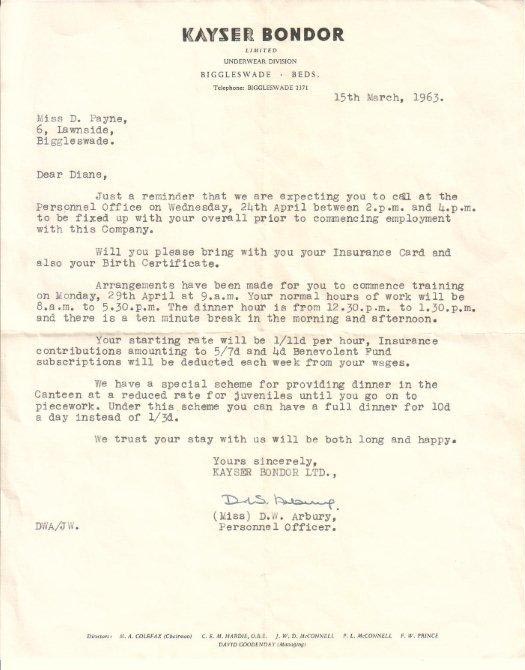
Mum first worked for a company called Kayser Bonder in Biggleswade. The underwear made by the company, was known throughout the world during the 1950’s and 1960’s and Biggleswade was home to one of its factories for 53 years. The letter shown below was sent to my mum prior to her starting work at Kayser Bondor. She was fifteen years old at the time.
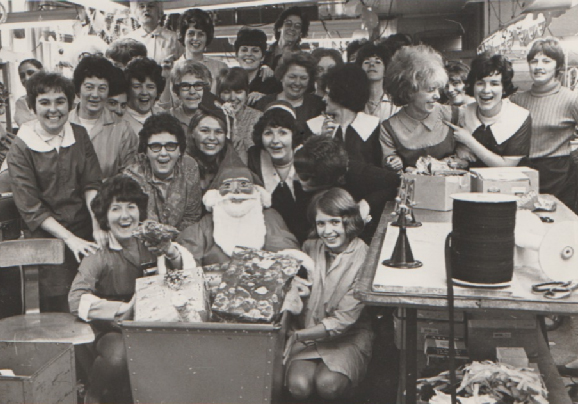
Mum also worked as a sewing machinist for Skirtex undertaking piece work (a type of work which pays a fixed rate for each unit produced or action performed regardless of time) and at Electrolux as an armature winder, both in Luton.
The photo below was taken at Skirtex. Mum is stood directly behind Father Christmas, to the right of a woman wearing glasses, who I know was called Connie, because I met her once. Mum tells me the women had a radio and would sing while they worked and I can imagine them singing along loudly and giving hell to any man who walked across their factory floor.
Later, mum made clothes for my sister and I and also for my dolls – I still have a bag full of them, seemingly unable to throw them away, even though I am now much too old for such things.
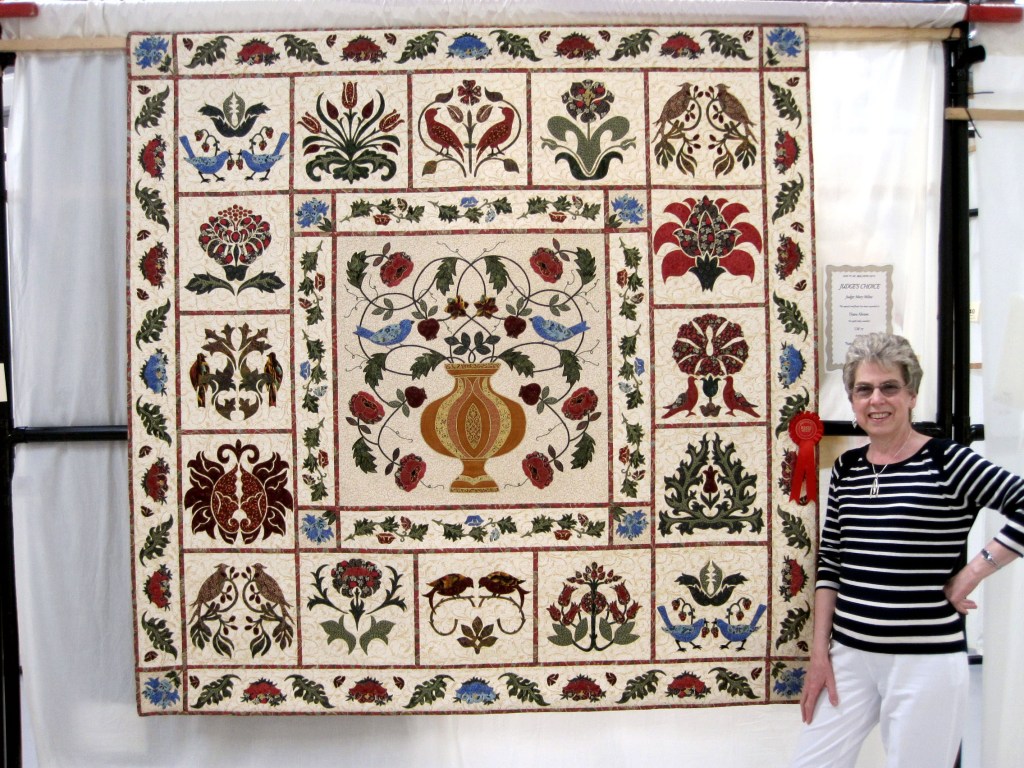
Then, almost forty years after mum began work with Kayser Bondor, she took early retirement and began making quilts. Turns out she is pretty amazing at it too and has won awards for her work. Mum’s quilts are displayed on her website below.
The Shortland family
- Keith Shortland
- Pam Taylor (nee Shortland)
- He rode to war on a penny farthing
- Richard Shortland and Eliza Shortland (nee Butts)
- The naval Shortlands
Further information
Information about the name Shortland can be found on the Find My Past website below.
 A little bit of this ~ A little bit of that
