The Oxford English Dictionary describes menopause as ‘the ceasing of menstruation’ and menstruation as ‘the process in a woman of discharging blood and other material from the lining of the uterus at intervals of about one lunar month from puberty until menopause, except during pregnancy.’

Over 60% of women going through the menopause experience symptoms resulting in behaviour changes which can last up to fifteen years and one in four women will experience severe debilitating symptoms. The Local Government Association estimate that over 13 million people in the UK are either menopausal or perimenopausal, yet until relatively recently no one really talked about it.
Menopause usually occurs between 45 and 55 years of age, as a woman’s oestrogen levels decline. In the UK, the average age for a woman to reach the menopause is 51. Over 60% of women going through the menopause experience symptoms resulting in behaviour changes which can last up to fifteen years and one in four women will experience severe debilitating symptoms.
My experience
My periods have been erratic for a number of years now. I was fully aware of the reasons why but aside from the nuisance of going from having periods like clockwork to having, what I thought were an increased number of periods, that occurred really randomly, I felt I was managing well with ‘the change’. However, in late summer 2021, things took a turn for the worse. My periods stopped (a day I had looked forward to for almost 40 years) but soon afterwards I began to experience other symptoms. Definitely a case of be careful what you wish for and better the devil you know.
Following a heatwave, I was still feeling incredibly hot, even though the temperature had dropped. The heat I soon realised was hot flushes and night sweats. Initially, I thought I could manage these too. ‘Don’t be a baby, you’re just a bit hot’ I told myself. However, for six weeks I didn’t sleep through a single night without waking multiple times feeling that I needed to be wrung out, or have a single day without multiple hot flushes, which started as a tingling sensation around my eyes and cheek bones and quickly crept around my whole body, as if the heat was trying to escape, leaving me feeling so hot I felt as if was going to pass out. If that was not bad enough, I watched, as my hair, which had become incredibly dry, disappeared down the plug hole every time I washed it, pulled masses of it out of my hair brush and from the carpet — hair loss and hair thinning was not something I was at all prepared for. I felt anxious, couldn’t concentrate, got really forgetful, had horribly itchy skin, particularly an itchy scalp, generally feeling rather miserable and as if I was not coping well with anything,
Perimenopause
The symptoms I had been experiencing, I now know were the perimenopause, that is when a women experiences symptoms due to hormone changes but still has periods that are changing in nature or frequency. During perimenopause, because hormone levels are fluctuating, women may have a normal period one month, then it can be heavier or missed altogether, before going back to normal for a time and the odd excess periods that I experienced, I now know courtesy of a friend, are not periods at all, but ‘breakthrough bleeding’ that occurs when a woman starts having less periods. Essentially, she explained to me, when you ovulate, a follicle releases an egg, after which the follicle ‘collapses’ in on itself and becomes a gland. The gland releases progesterone, a hormone that stops the lining of the womb from thickening, preparing the womb to receive and implant the egg. However, without progesterone to stop the lining from thickening, the thickening keeps on going until it has to stop because it sort of ‘can’t take any more’ and this causes ‘breakthrough bleeding’, with the womb lining coming away in the absence of egg production and therefore not producing progesterone. So, rather than menopause being a short sharp event, it is actually the culmination of a gradual process which begins with perimenopause and ends with menopause, when a woman has not had a period for twelve months.
Hormones
Pre menopause the hormones oestrogen and progesterone work together to regulate menstrual cycles and the production of eggs, however a lack of oestrogen can trigger a range of symptoms and as humans have hormone receptors in cells all over our bodies, changes in hormones can affect many parts of our body, even those we wouldn’t expect. The Greene Climacteric Scale (GCS) tracks a list of twenty one symptoms that are often associated with the menopause, these are:
- Heart beating quickly or strongly
- Feeling tense or nervous
- Difficulty in sleeping
- Excitable
- Attacks or anxiety, panic
- Difficulty in concentrating
- Feeling tired or lacking energy
- Loss of interest in most things
- Feeling unhappy or depressed
- Crying spells
- Irritability
- Feeling dizzy or faint
- Pressure or tightness in the head
- Parts of the body feeling numb
- Headaches
- Muscle and joint pains
- Loss of feeling in hands or feet
- Breathing difficulties
- Hot flushes
- Sweating at night
- Loss of interest in sex
I have experienced many of the symptoms on the list but it is not exhaustive and there are many other symptoms too. It should also be noted that 25% of women will experience no symptoms. One thing I have learned about the menopause is there doesn’t seem to be a ‘normal’ at all, with women having both similar but also very individual menopause experiences. It should however be possible to diagnose the menopause on symptoms alone and before I saw my doctor, I completed a symptom checker document which can be downloaded from websites that provide information about menopause.
The importance of oestrogen
Oestrogen is important in various ways. Firstly, it provides lubrication for joints and prevents inflammation, it can also affect the texture of hair, with a lack of oestrogen leaving it prone to breaking. As oestrogen declines, androgens (a collective term for male hormones) sometimes become more prominent. This imbalance of hormones shrinks hair follicles making hair fine and it is also responsible for facial hair.
It also helps protect against osteoporosis. Around 10 per cent of a woman’s bone is lost in the first five years of the menopause and this increases the risk of osteoporosis which weakens bones and makes them more likely to break. Until we are around 30 we normally build more bone than we lose, however during menopause bone breakdown occurs at a faster rate than bone build up, resulting in a loss of bone mass. Oestrogen also protects against other long terms health issues such as cardiovascular disease, diabetes and dementia. While hot flushes are one of the most well known symptoms of the menopause, the reason for these is not really known. Some believe falling progesterone levels affect noradrenaline, another hormone that regulates our body temperature. Oestrogen also directly affects the thermoregulatory areas of our brain. There is no normal number, frequency or duration for these.
Here and now
At the time of writing this post I have been on HRT for around twelve months. I would not dream of telling anyone they should or should not take it, I know it will not be for everyone and I know there are some women who are unable to take it but I do think that education is important so that people can make their own informed decisions. Taking HRT was never something I thought I would do — I had expected to just muddle through but it quickly became apparent that muddling through was not going to be an option. I was anxious about starting the treatment but it has helped me feel more like me again. It hasn’t been a cure all but I feel more settled and as if am managing better than I was twelve months ago.
I feel very fortunate, that at the time I am going through this, people are beginning to talk about menopause openly, rather than it being a taboo subject. I am grateful for not going through this even ten years ago, to have friends who were happy to talk to me and signpost me to information when I was feeling at my worst. I am grateful also for an understanding doctor who did not for one minute make me feel as if I was making a fuss or wasting her time, telling me ‘it can be very challenging’ and ‘there is no point suffering if you don’t have too.’ I know that is not everyone’s experience.
However, although massive steps have been taken in the last few years there is still a long way to go. Women still feel embarrassed to discuss the menopause, fear going to their doctor, don’t know there is a wealth of information out there to help them and simply don’t know how to cope when menopause hits. I was one of those women, so writing this blog post has partly been about me trying to understand what is happening to my body but also wanting to raise awareness and encourage women to educate themselves about the menopause before it happens to them. Half the population will experience menopause and the other half will know someone going through menopause whether that be a mother, daughter, sister, cousin, niece, friend or colleague, so education is vital for everyone. It really only touches the surface of all things menopause but I hope it will help someone who needs it right now.
Further information
The Balance website and The Balance App have been an enormous help to me. The website has a fabulous search function so you can search for specific symptoms and find articles, factsheets and videos relating to these, while the app allows users to journal their symptoms. The book Preparing for the Perimenopause and Menopause was a big help to me too.
Since 2011, World Menopause Day has taken place in October each year and as a result of campaigning, from September 2020, menopause was added to the RSE curriculum in England. The Make Menopause Matter campaign is calling for all GPs to receive mandatory menopause training and for a mandatory menopause module to be taught at every medical school, meaning that women in the future will be much more informed than I was. From April 2023 a pre-payment scheme will begin to enable HRT to be issued through a paper prescription at the single cost of £18.70 for a year, a saving of £205 per year.
Books
Television
Websites
Treatment options
Campaign work
Training and education
National Institute for Healthcare Excellence
If you want to go on HRT but are struggling with getting this prescribed, guidelines to improve the consistency of support and information provided to women in menopause can be found on the National Institute for Healthcare Excellence website.
The Pharmaceutical Journal



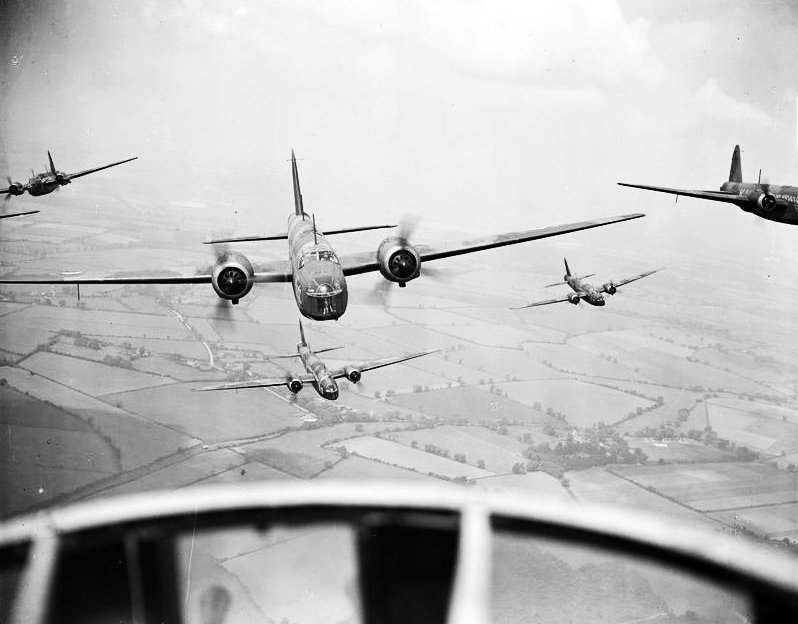 Wellington Bombers flying in formation.
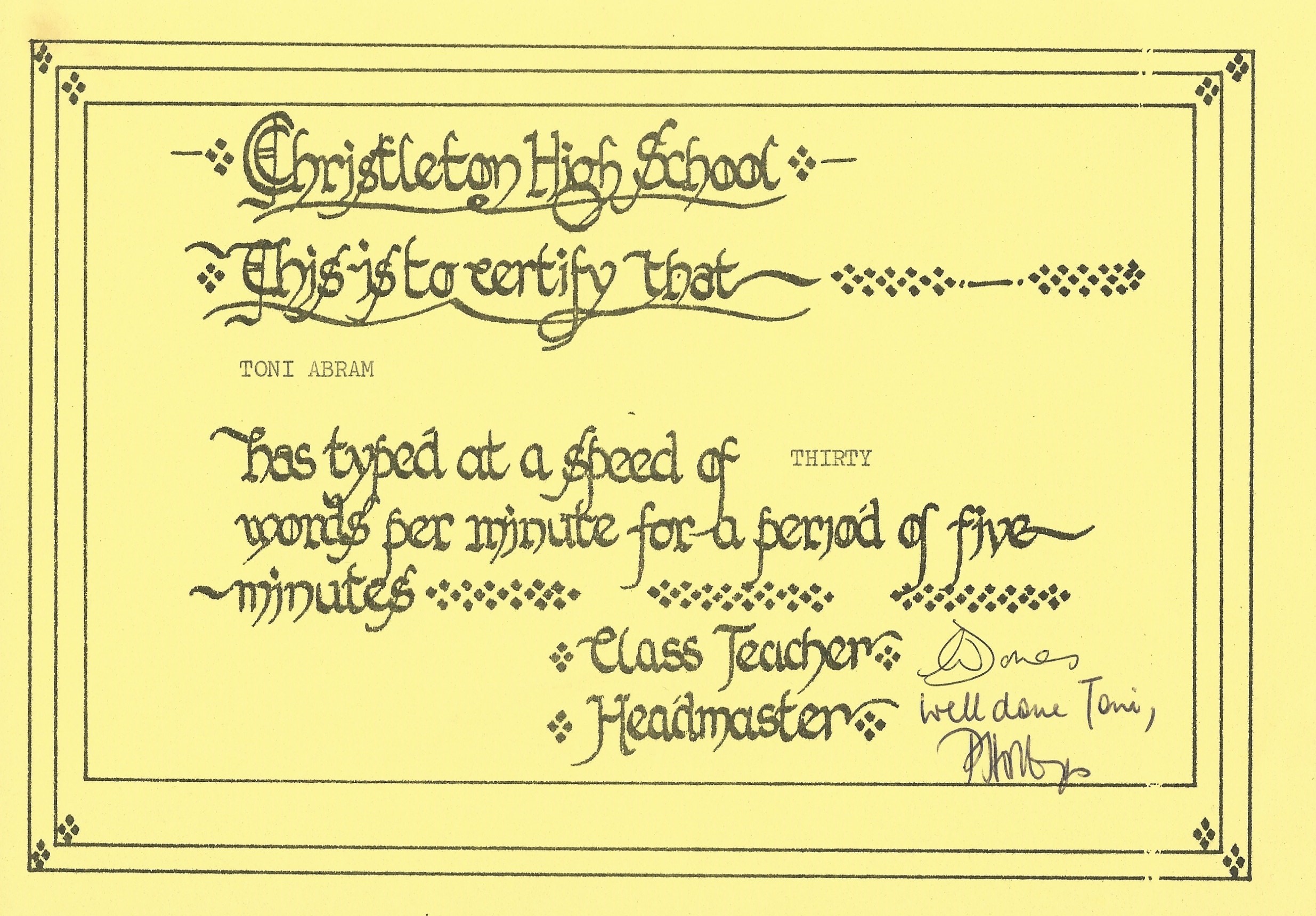 Speed test certificate.
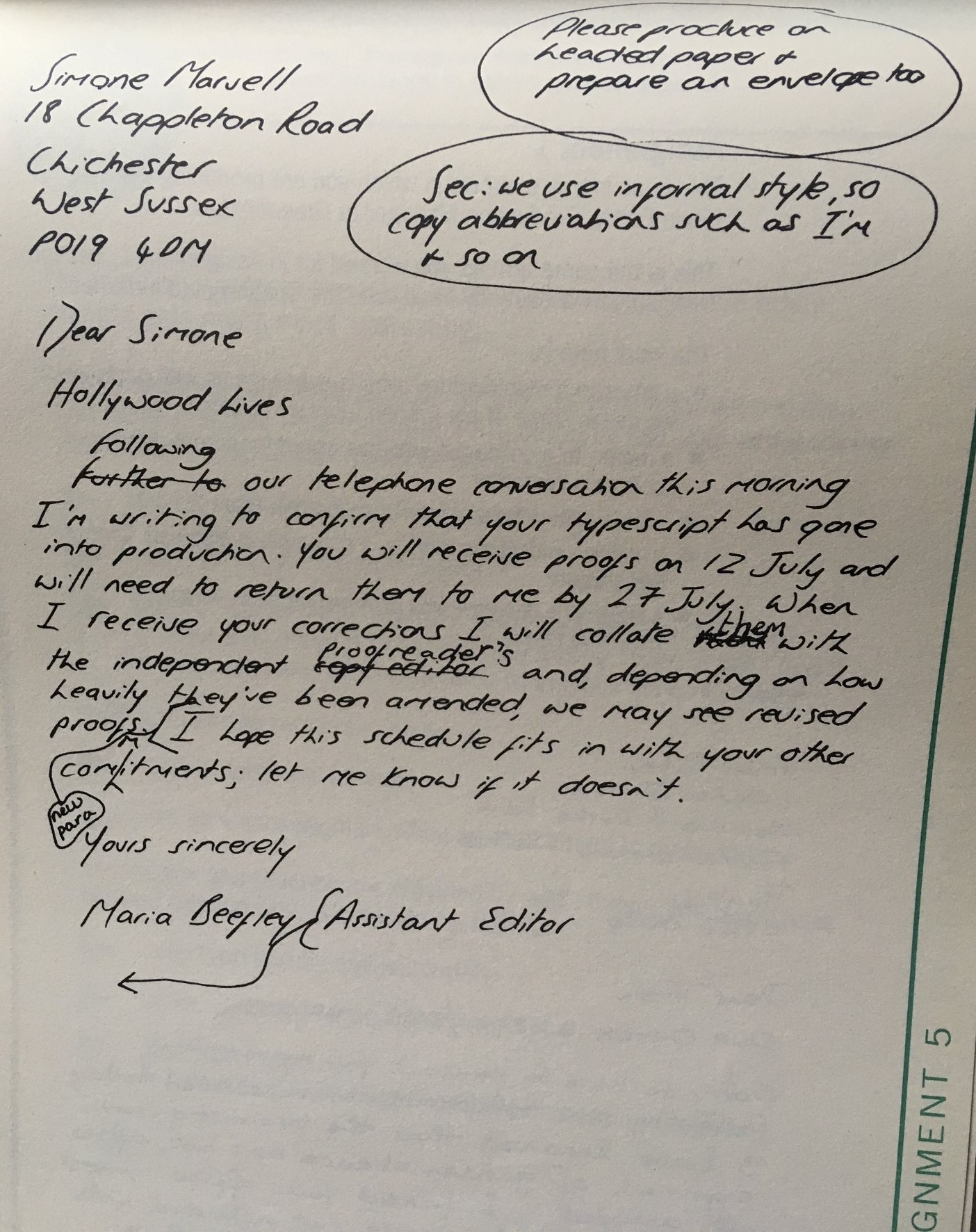 Example of an instruction to type a letter.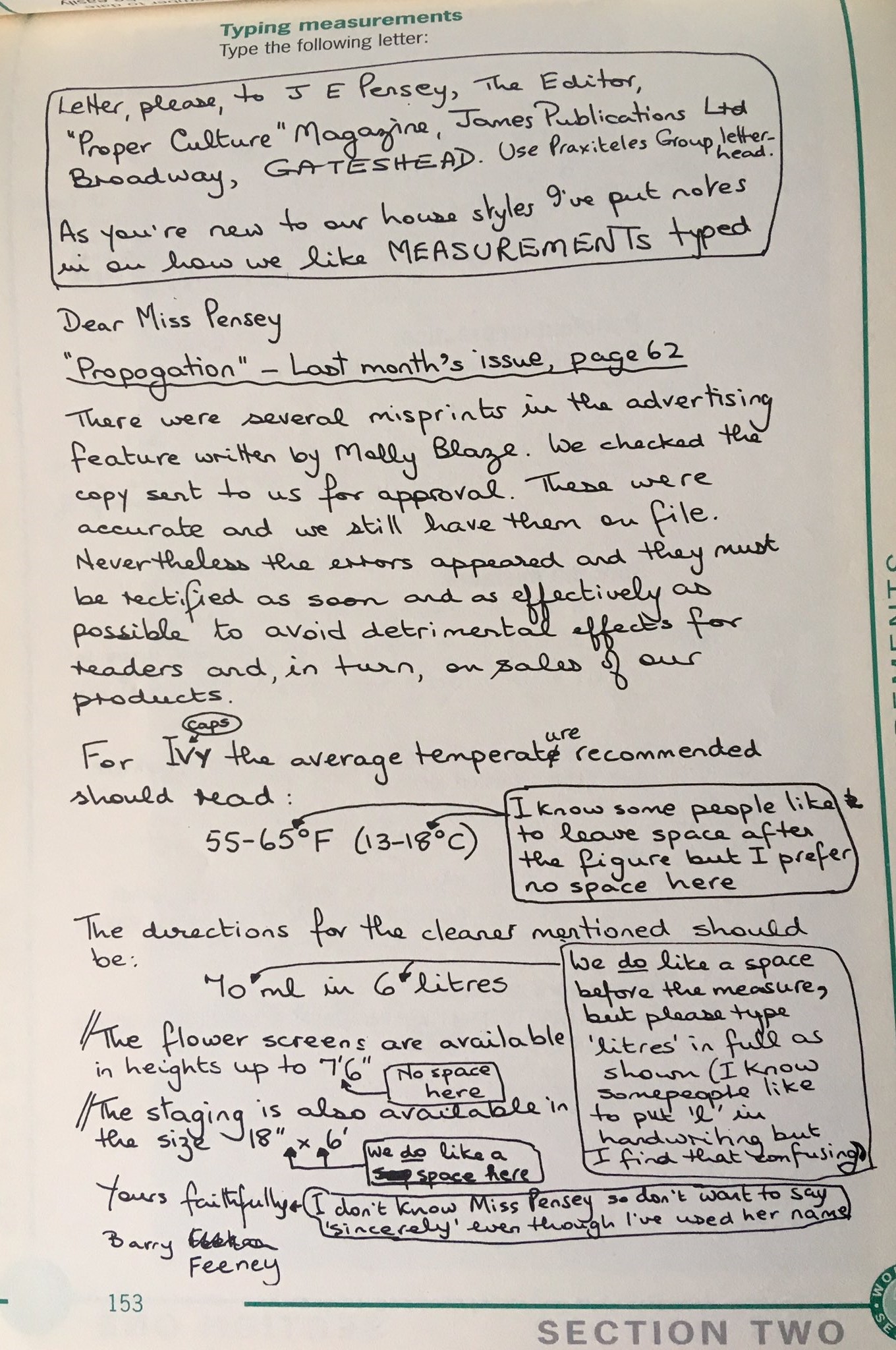

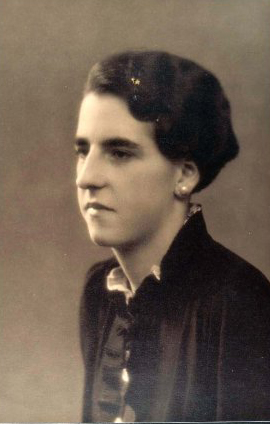
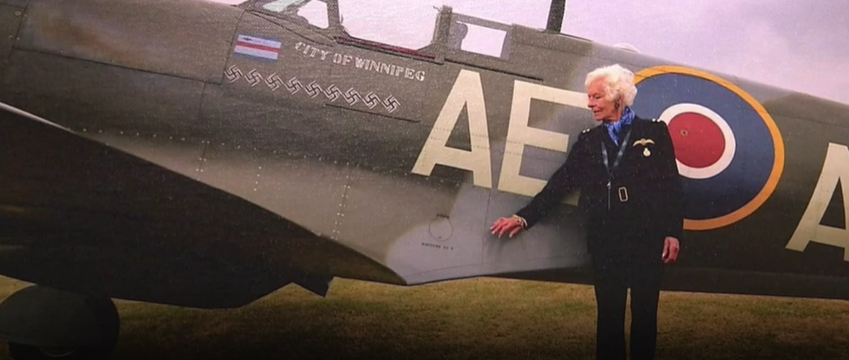 Mary Ellis



 A little bit of this ~ A little bit of that