Ellen Kefford

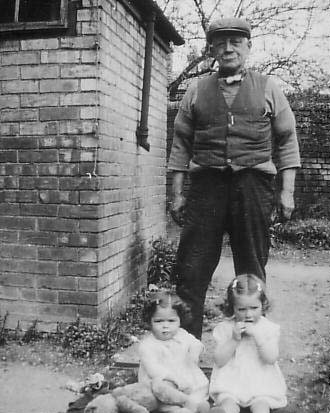
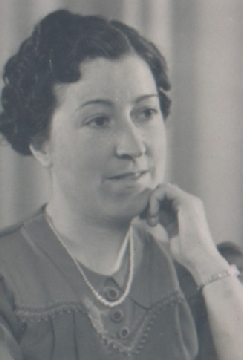
Ellen Kefford was born on 25 December 1880 in Sawston, Cambridgeshire. She was the daughter of James Kefford and Harriet Coleman.

The 1881 census shows Ellen, aged less than one year old, living in Sawston with her  father James, a shepherd, mother Harriet and four brothers and sisters – John, Rebecca, Thomas and Jane. 

Ellen married my great grandfather David Brooker in Biggleswade on 2 December 1903 and the 1911 census shows them living together in Wrestlingworth with a four year old son called David Arthur. 

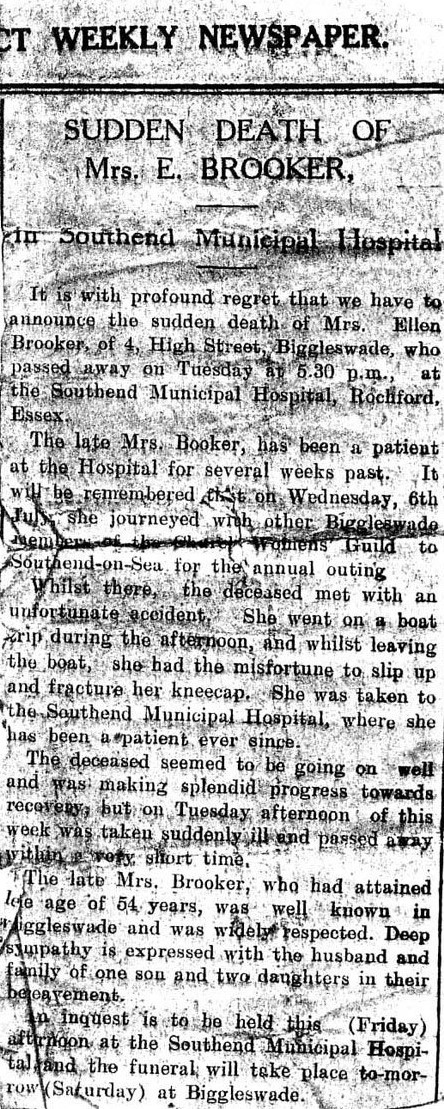
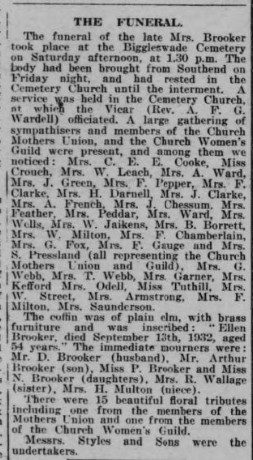
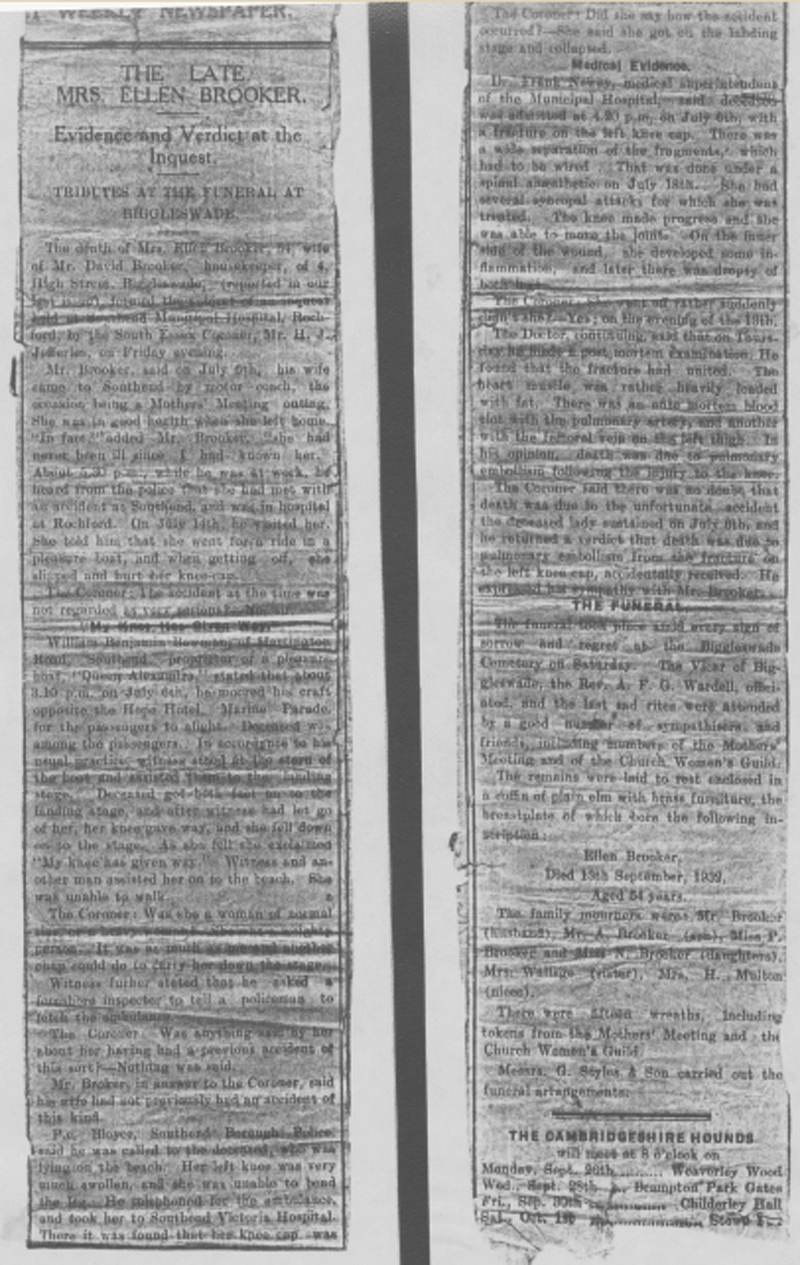
Ellen died suddenly in 1932 at the age of 54, at the Southend Municipal Hospital in Rochford, Essex following an accident. Her death and the inquest that followed was reported in newspapers at the time.ellen-brooker-death

funeral2

inquest2

ellen-brooker-inquest


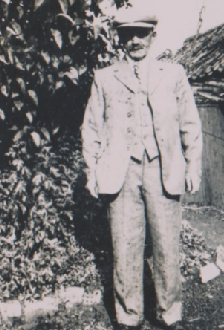
David Brooker

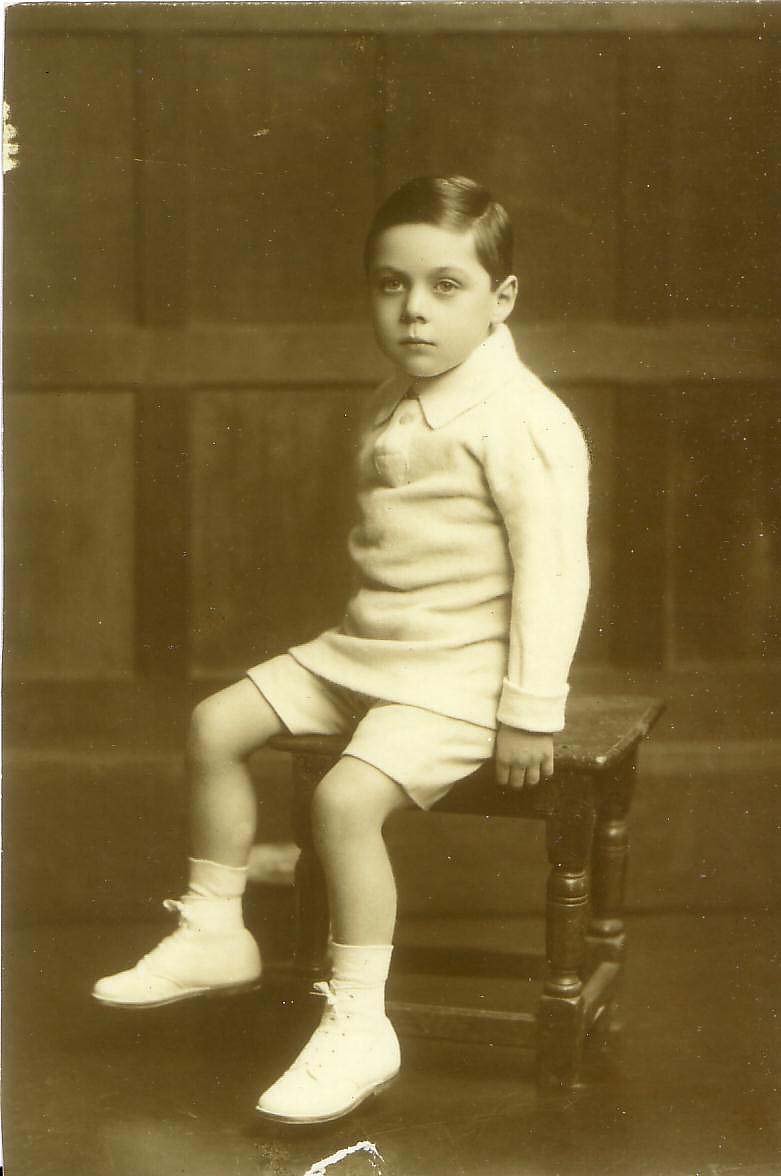
David Brooker was born on 16 January 1879 in Biggleswade. He was the son of George Brooker and Mary Ann Darts.

David Brooker

The 1881 census shows David aged two, living in Wrestlingworth with his parents and five brothers and sisters – Arthur, Alice, Jane, Harriet and Louisa.   In 1891, David aged 13 can  still be found living with his parents and working as an agricultural labourer and the same on the 1901 census, aged 22.

David Brooker

David married my great grandmother Ellen Kefford in Biggleswade on 2 December 1903 and the 1911 census shows them living together in Wrestlingworth with a four year old son called David Arthur.  The 1939 register shows David to be widowed, living in Biggleswade and working as a horseman on a farm.  Living with him are Arthur D Brooker and Ellen Brooker, my great grandmother.

David died in Biggleswade on 3 February 1957, my mum’s birthday.

Ellen Brooker

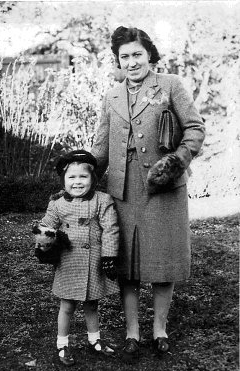
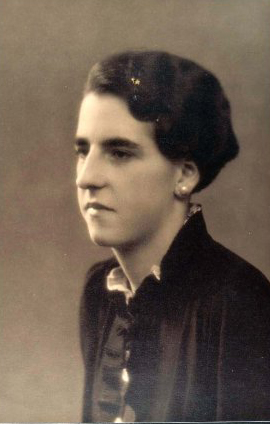
Ellen  Brooker (known as Nelly) was born in Biggleswade, Bedfordshire on 7 February 1916. Ellen was the daughter of David Brooker and Ellen Kefford.  She had a sister, Phil and a brother, Arthur.

ellen

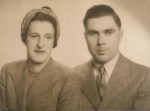
The 1939 register shows Ellen living at 16 The Baulk, Biggleswade, working as an unpaid housekeeper and living with David Brooker, a widower and Arthur Brooker. The following year, Ellen married my grandfather in Biggleswade, by special licence two days before Frederick had to report for military service.

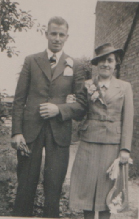
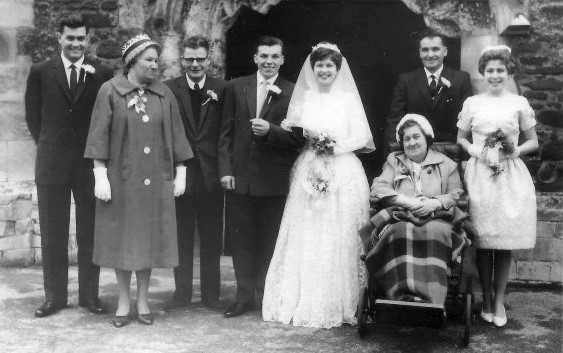
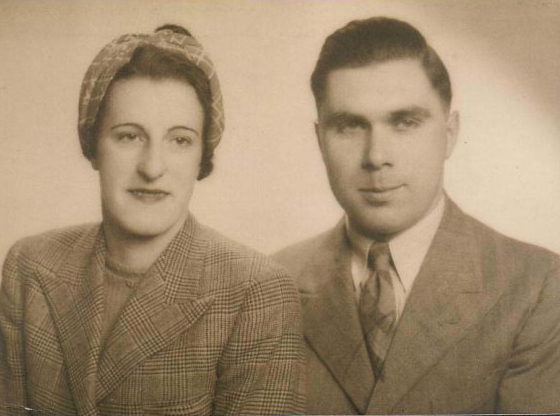
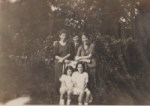
The wedding of Frederick and Ellen.

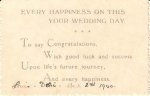
Wedding announcement for Mr F Payne and Miss E Brooker.

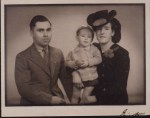
Frederick and Ellen had three children, Pamela Ann and Freda were twins born in 1940 but Freda only lived to be three days old – her death certificate states she was a premature twin born at seven months. My mum was born seven years later on 3 February 1948.

Ellen died aged 60 on 15 November 1976.

Frederick Charles William Payne

Frederick Charles William Payne was born on 25 September 1915.  The only son of Ellen Rose Payne. His father is unknown.

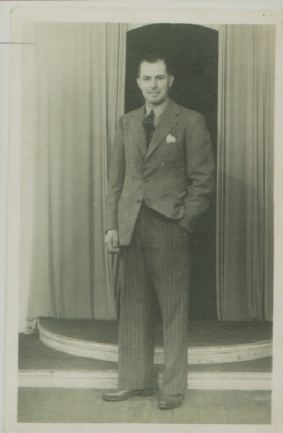
Frederick Charles William Payne.

He married my grandmother Ellen Brooker in Biggleswade in 1940. The couple were married by special licence two days before Frederick had to report for military service.

The wedding of Frederick and Ellen.

Wedding announcement for Mr F Payne and Miss E Brooker.

Frederick and Ellen had three children, Pamela Ann and Freda were twins born in 1940 but Freda only lived to be three days old – her death certificate states she was a premature twin born at seven months. My mum was born seven years later on 3 February 1948.

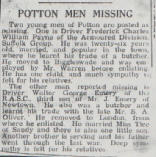
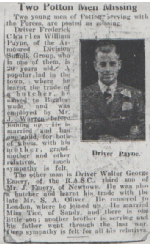
During his time in the military, Frederick was reported missing in action.

fcw-payne-missing-2

potton-men-missing

Frederick’s occupation at the time is given as Private Number 198808 Royal Army Service Corps (Butchers Assistant).

Ordinary women, extraordinary lives

For as long as I can remember, I have been fascinated by history but more recently I have become intrigued as to why women’s lives so often seem to go unrecorded, devaluing and silencing their achievements and why it is that as we get older, society so often dismisses us, when in fact there is a lifetime of achievements, experiences and stories to share. On this page, I share some of my favourite stories of ordinary women who led extraordinary lives and whose achievements should never be forgotten.


Hazel Hill

During the 1930’s, Hazel Hill, a 13 year old girl, figured out the precise mathematical calculations to enable improvements to be made to Spitfires, increasing the number of guns to eight from four and helping to win the war.  A 30 minute documentary about Hazel can be viewed below.

Hazel_Hill
Hazel Hill

Rosa Parks

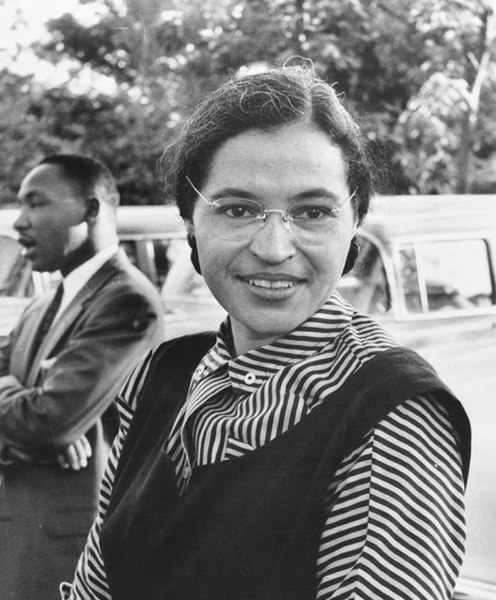
Rosa Parks helped initiate the civil rights movement in the United States when she refused to give up her seat to a white man on a Montgomery, Alabama bus in 1955.

rosa-parks
Rosa Parks

Mary Ellis

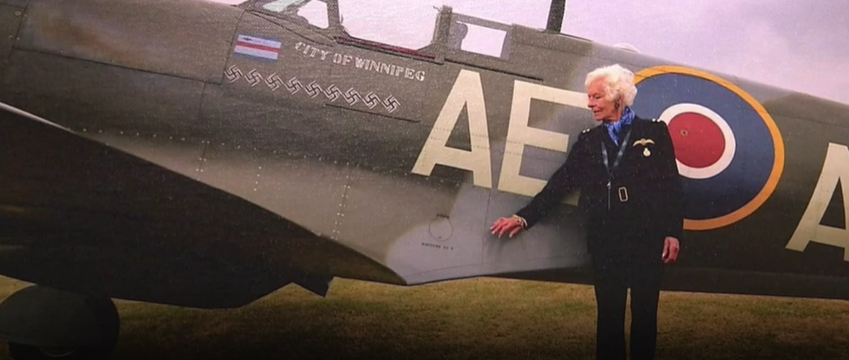
Mary Ellis joined the Air Transport Auxiliary after hearing an advertisement for women pilots on BBC radio and was responsible for delivering Spitfires and bombers to the front line.

mary-ellisMary Ellis

The women of NASA

In the 1940s, a group of female scientists were the human computers behind the biggest advances in aeronautics, breaking down gender and racial barriers at the same time.

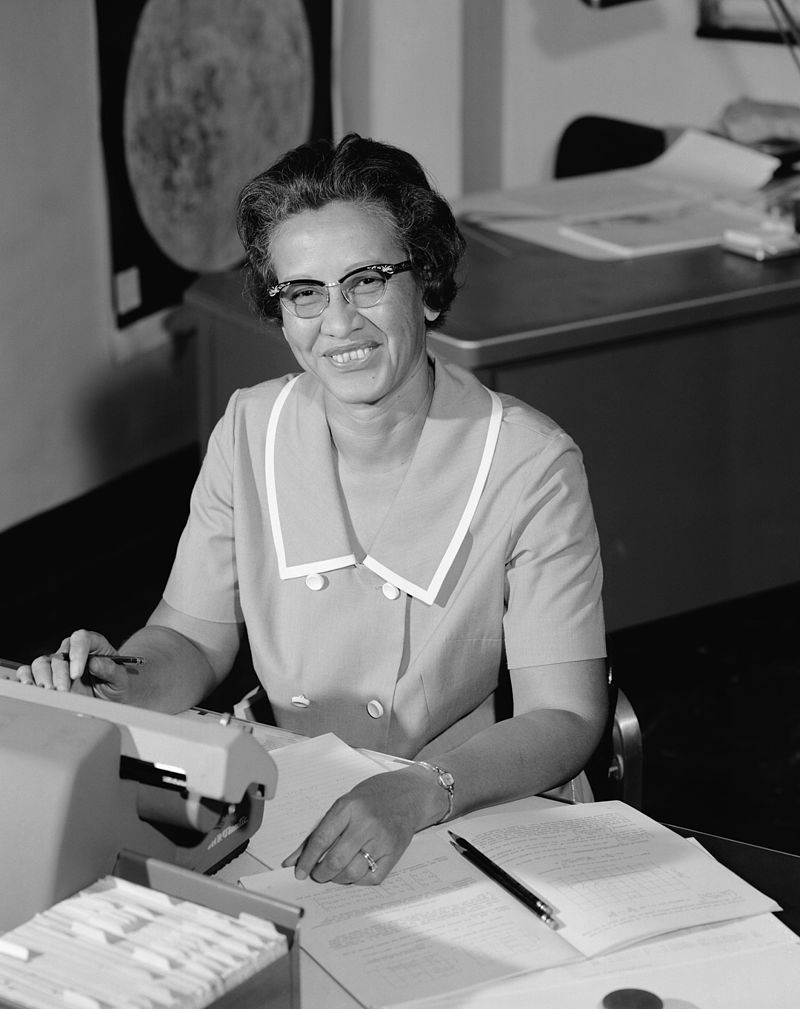
Katherine_Johnson_at_NASA,_in_1966
Katherine Johnson, whose calculations of at NASA
were critical to the success of the first and subsequent
US crewed spaceflights.

The Mercury 13

On 9 April 1959, NASA announced that seven men, who would become known as the Mercury 7, would go into space. At the same time,  thirteen women, enrolled on a privately funded program, successfully underwent the same physiological screening tests. The women never went to space.

mercury-13
From left to right Gene Nora Jessen, Wally Funk, Jerrie Cobb, Jerri Truhill, Sarah Ratley, Myrtle Cagle and Bernice Steadman, seven of the First Lady Astronaut Trainees (FLATS) photographed in 1995.


Hedy Lamarr

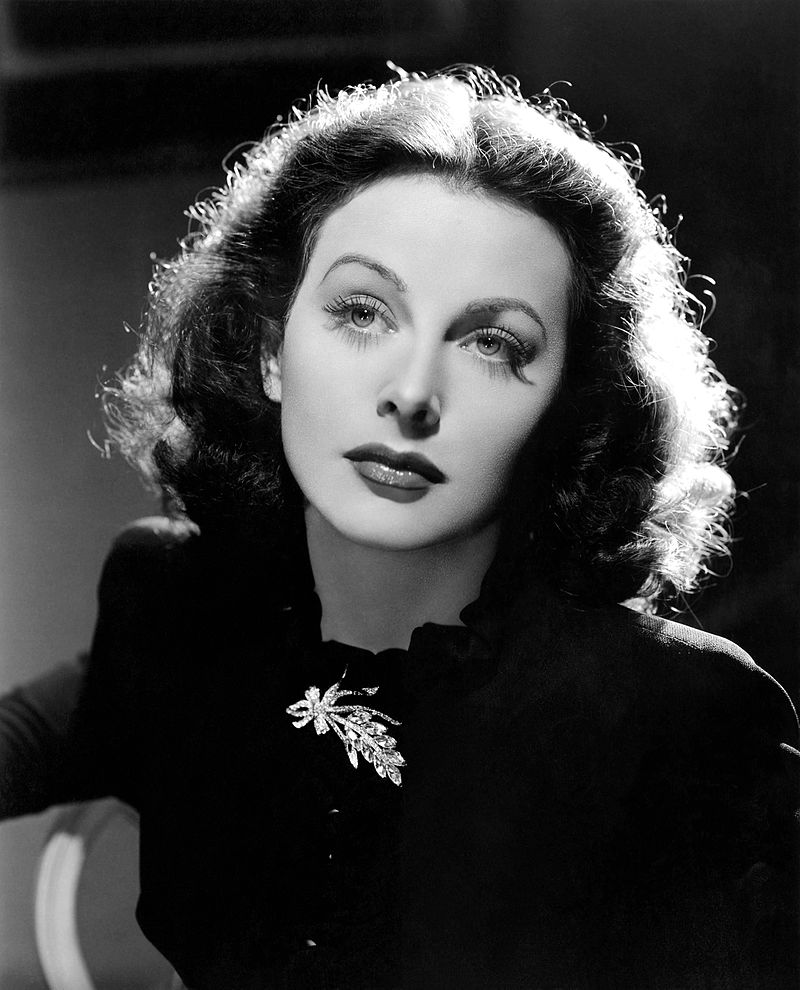
Hedy Lamarr was an  actress famous for films such as Samson abnd Delilah and White Cargo. She was also an inventor who pioneered the technology that would one day form the basis for today’s WiFi, GPS, and Bluetooth communication systems.

hedy
Hedy Lamarr

Striking female machinists at the Ford Motor company

On 29 May 1970, two years after going on strike, 187 women working at a factory in East London witnessed their hard work pay off when the Equal Pay Act received royal assent. Coming into force five years later, the Act sought to ‘prevent discrimination, as regards terms and conditions of employment, between men and women’. This meant that it was required for men and women ‘in the same employment to be treated equally, in terms of their pay and conditions of work.

Further information

William Barratt, Barratts Shoes and The Barratt Maternity Home

On 16 August 1944 my dad  was born at The Barratt Maternity Home in Northampton. World War two was still raging and it would be another eight  months until victory was declared in Europe. The photo below is said to have been taken the year dad was born. The title and description read ‘The front of the Barratt Maternity Home in Cheyne Walk, after nurses had covered it in flags. The American Stars and Stripes the most prominent, perhaps due to the number of US fathers who visited after American forces came to town, It was said at the time the American fathers outnumbered the ‘local dads’. 

Embed from Getty Images
The Barratt Maternity Home, 1944

The flags may also have been displayed to mark VE day, as described in the newspaper article below.

barratt-ve-day-news
An article from the Northampton Mercury newspaper
dated 11 May 1945
detailing the display of a large US flag.

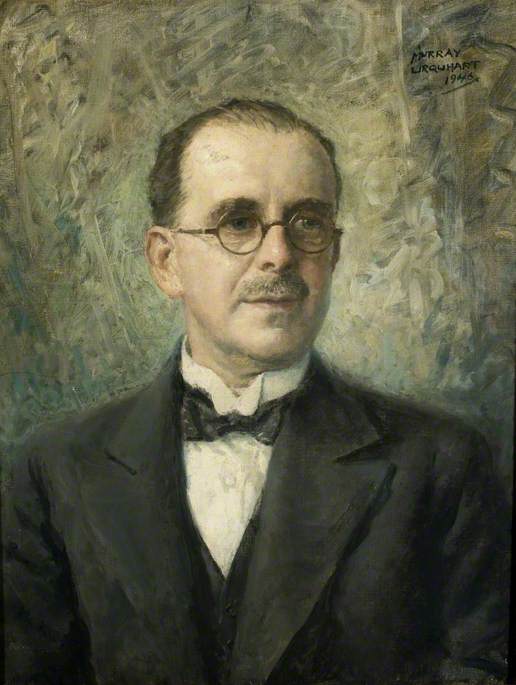
The Home was a separate building in the grounds of Northampton General Hospital and was built by William George H Barratt who was  born in Northampton in 1877, where he lived throughout his life. The son of a boot sewer, William and his brothers became shoe workers by their early teens and William managed one of Manfield’s shops in London, then his father’s boot shop in Gold Street, which later he bought. By 1902, he and his brother David had a boot shop in the Drapery. Their innovative idea of selling boots via the post (the first in the country) was resented by the manufacturers who cut off supplies of boots and shoes. However, in 1907, the brothers started a new company, W Barratt and Co, Ltd. to make their own shoes, with two of their other brothers, Albert and Richard, as nominal shareholders.

Urquhart, Murray McNeel Caird, 1880-1972; William Barratt, Benefactor to the Barratt Maternity HomeWilliam George H. Barratt
Photo credit: Northampton General Hospital NHS Trust

In 1913 they opened a new factory, the Footshape Boot Works an elaborate looking building with a brick and cream terracotta frontage and a pierced balustrade which reads Footshape Boot Works. The building was designed for the comfort of its workforce, with air conditioning and natural light through roof vents and widows with clear glass. An up to date conveyor reduced lifting and carrying. A canteen served tea free of charge and made hot meals available. Welfare services included a benevolent scheme and contribution free pensions.

footshape

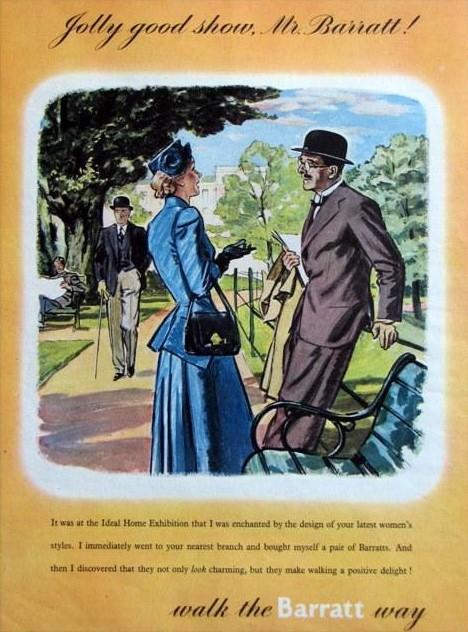
They added a chain of retail shops and advertised their wares with the slogan ‘Walk the Barratt way’, which became famous internationally. The first shop opened in London in 1914, and by 1939 there were 150.  A chain of retail shops followed and products were advertised with the slogan ‘Walk the Barratt way,’ which became famous internationally. The first shop opened in London in 1914, and by 1939 there were 150.


adverts
 
William Barratt was also active in politics. He and his brothers were fervent socialists. As a young man he was a prominent member of the Social Democratic Federation, one of the forerunners of the Labour party, and he was present at the foundation meeting of Northampton Independent Labour party in 1908. In 1904 he stood twice, unsuccessfully, for the town council. His second attempt came 25 years later in 1929, when he was elected as Labour councillor for Delapre ward.
 
In 1930 William contested Bethnal Green at the parliamentary election. He was narrowly defeated, but the incoming Labour Minister of Health appointed him to a committee inquiring into the law covering the composition and description of food. In 1935 he became a Northampton magistrate. He was a Director of Franklins Gardens Sports and Pleasure Company, and a Committee member and later President of the Saints Rugby Club.
 
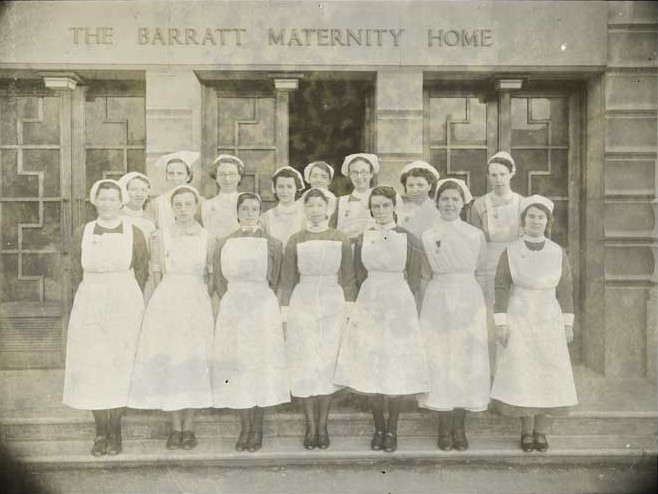
nurses-at-barratt-maternity-home-2
Sisters and pupil midwives
on the steps of The Barratt Maternity Home, 19 February 1941.

Photo used with permission of Historic England.
 
 
William and his wife, Alice, are best remembered however for financing the building of the Barratt Maternity Home with an initial gift of £20,000 in 1934. Alice laid the foundation stone in May 1935, and the Home was opened in July 1936. William explained they had desired to do something in their lifetime, of a lasting character, for the benefit of the town, and that the Home should be as bright and cheerful as possible for the benefit of the patients and staff alike.
 
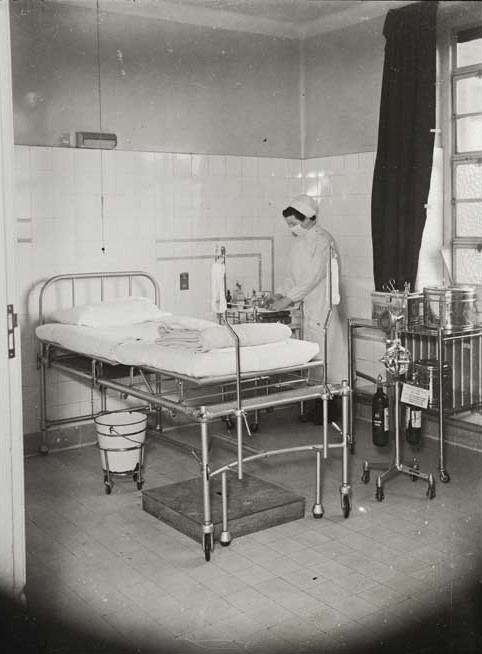
labour-ward
A view of the labour ward. with a nurse preparing equipment,
at The Barratt Maternity Home, 19 February 1941.

Photo used with permission of Historic England.


The following year the Barratt’s agreed to fund a gynaecological department, a maternity outpatients department, and an operating theatre. It was hoped that the provision of a maternity home would help to reduce maternal mortality in the town. William was a regular contributor to good causes, including a rest home for the unemployed, and the Mayor’s Fund for the Red Cross. He died in a Northampton nursing home in December 1939.

 
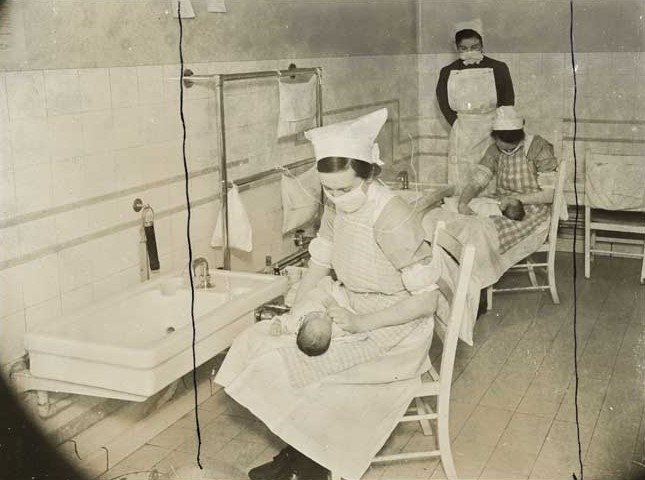
barratt-maternity-home-bathroom
Pupil midwives with babies on their laps, in the bathroom
at The Barratt Maternity Home, 19 February 1941.

Photo used with permission of Historic England.
 
The Historic England website records the Home at first provided 34 beds for ante- and post-natal patient, a nursery, and a labour ward. Located on the first floor, the labour ward and was separated from the gynaecology ward by doors which were opened to allow patients to be transferred to the gynaecological theatre for caesarean sections. It consisted of two delivery rooms, a first-stage room, staff changing room, sluice room, and admission room.
 

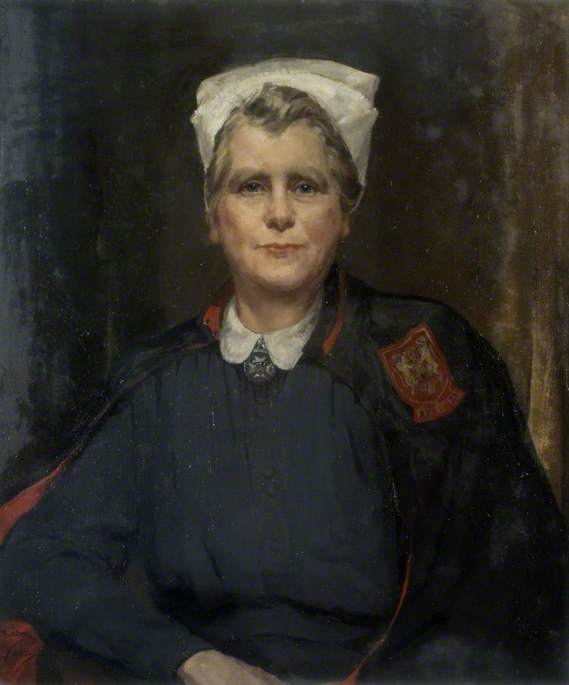
Burton, Alice Mary, 1893-1968; Miss C. E. Nelson (d.1954), Matron to Northampton General Hospital (1938-1954)

Miss C. E. Nelson, Matron to
Northampton General Hospital and The Barratt Maternity Home (1938 – 1954)
Photo credit: Northampton General Hospital NHS Trust
 
Midwifery training was divided into two parts in 1938, and establishments were approved to provide training in one or both: Part I was primarily theoretical, based in hospitals and was assessed by examinations; Part II was largely practical, and allowed pupils to demonstrate competence and to link theory with practice.  The same year, The Barratt Maternity Home was approved as a Midwifery Training School to provide Part I of the training. Miss Eleanor Hague, who had qualified as a midwife in 1933, was appointed by the Central Midwives’ Board as the Approved Teacher; in 1943 she received her Midwife’s Teacher’s Diploma. Later, Miss Hague became Matron of the Barratt Maternity Home and is regarded by some as the ‘Mother of Midwifery’ in Northamptonshire.  When my dad was born in 1944 the Matron was Miss C. E.Nelson.
 
home
The Barratt Maternity Home as it looked in 2020.

Pam and Dick

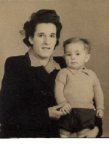
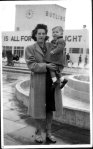
Pamela Ann Payne was born to my grandparents Frederick and Ellen in 1940. Pam was a twin but her sister Freda only lived to be three days old. Freda’s death certificate states she was a premature twin born at  seven months.

pam-and-ellen

Both from Bedfordshire, Pam married Richard Wade (known as Dick) in Biggleswade in 1962. My cousins, Steven and Paul were later both born in Luton, Steven in 1963 and Paul in 1965. Pan and Dick subsequently moved to Cheshire where they lived for the rest of their lives.

pam-dick-wedding-2

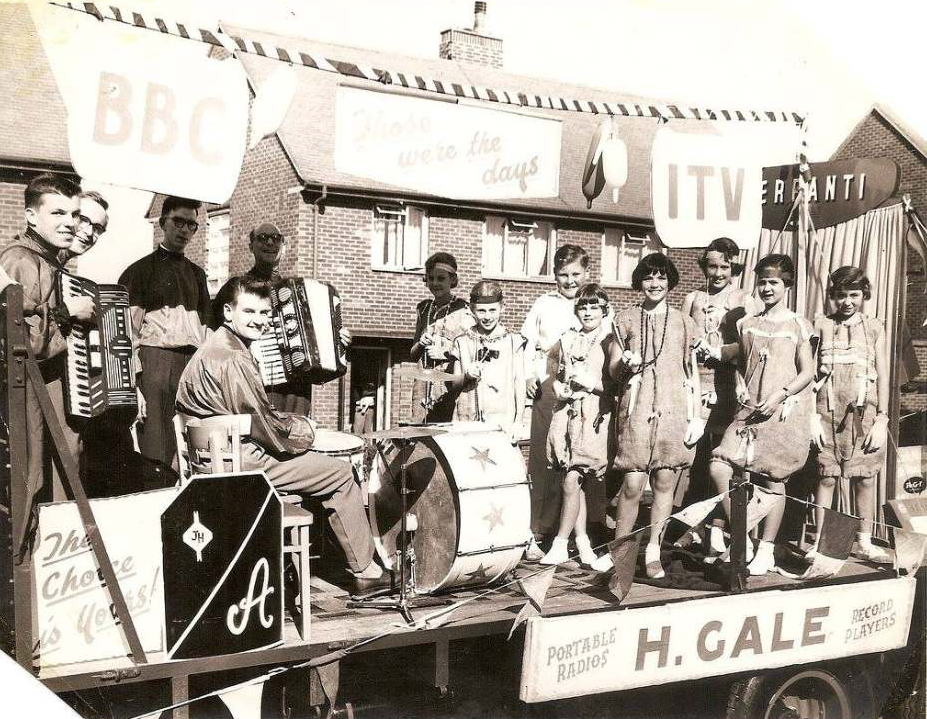
Dick played bass guitar in bands throughout is life but he played the accordion too and can be seen at the back of the float in the photo below taken at Biggleswade carnival. Bedfordshire late 50s. H. Gale was the local radio/record/ TV shop.

dick-accordian

More photos

Louis Bowers Abram

Louis Bowers Abram was my grandfather on my fathers side of the family.

grandad1

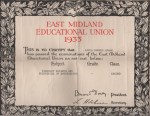
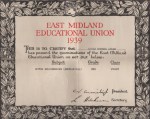
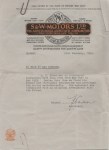
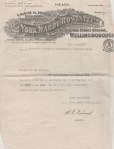
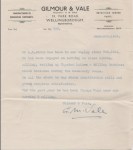
During the 1930’s Louis passed exams set by the East Midland Educational Union in Motor in Practical Mathematics, Workshop Science and Principles of Engineering and Engineering (Mechanical). He later worked at S and W Motors Limited where he was indentured as an apprentice from May 1931 to May 1933, as a Motor Engineer at York Ward and Rowlatt  from May 1933 to May 1934 and at Gilmour and Vale a company that manufactured engineering components.  Grandad in the RAF

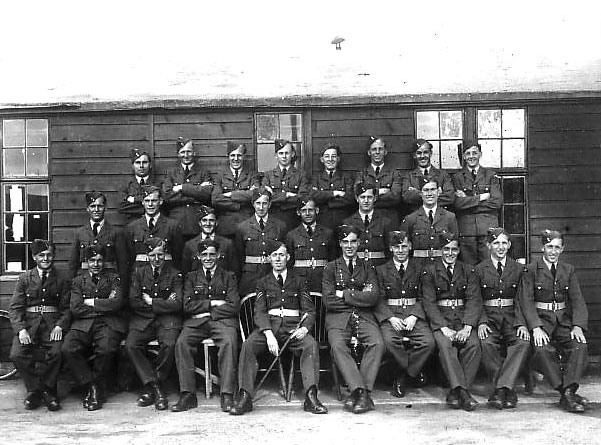
He was a Corporal in the Royal Air Force and learnt to fly in a Tiger Moth at Sywell but war broke out on the day he was due to take his test, so he never saw active combat. (Louis is stood at the back on the far left), 

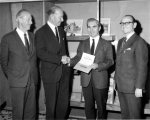
He also worked at Vauxhall Motors in Luton, retiring in 1970 after 25 years service having established ‘an excellent reputation in respect of loyalty, conscientiousness and timekeeping’.


grandad-7

I remember visiting my grandparents at their homes in Luton and Chester. My grandad grew tomatoes in a greenhouse and to this day, I can’t smell tomatoes without thinking about him.

More photos

Delia Eileen Clarke

My grandmother Deilia Eileen Clarke was the daughter of Albert Edward William Clarke, a Northamptonshire Police Sergeant and Louisa Jane Shortland.

nan-2

Delia (known as Dids), born in 1916, was one of  five children, having four sisters – Dorothy, born 1904, Cecily Mary Clarke (known as Molly) born 1914,  Kitty (known as Kitten), born 1920 and one brother Edward Alexander (Teddy), who was born in 1906 and died, aged four, in 1910.  However my dad believes that Louisa Jane had a number of miscarriages and if these had not occurred, there may have been 11 or 12 children.

grandad-5

My grandmother married Louis Bowers Abram in 1940 and my father Michael was born in 1944. Oldest sister Dorothy married Henry Grey Faber in 1960. Born in 1914, Cecily Mary Clarke, known as Molly, was the second oldest sister. She suffered with epilepsy and did not marry. Kitty Alexandra was born  in 1920 and married Reginald William Jeffery, known as Bill. Together they ran a hairdressers shop in Brackley, Northamptonshire.

I remember visiting my grandparents at their homes in Luton and Chester. My nan I remember would wear more than one pair of glasses at a time and also, back when we had paper money, would use the money as writing paper to work out how much she owed someone or who much they owed her. In writing this, I am surprised at how many photos of my nan I have found where she is standing, as I only really ever remember her with mobility issues  – firstly using sticks to get around and later being confined to a wheelchair. Nan’s condition went un-diagnosed during her lifetime but today it seems likely that she may have had centronuclear myopathy like dad and I.

Lucy Thompson

Lucy Thompson was the first wife of my great grandfather Joseph Charles Abram, a Corporal in the Army Service Corps. Married on 16 April 1906 in Northampton, at the time of her wedding, Lucy was living at 35 Burns Street, Northampton and the witnesses were Lucy’s sister Alice Thompson and Joseph’s brother Frederick George Abram.

Born in Northampton in 1880, Lucy was the daughter of William and Harriett. On the 1881 census, Lucy can be found aged one, living with her parents and sisters Emily, Annie and Alice.  Living in the same house is Lucy Munns (described as mother in law).* In 1891, Lucy, aged 11,  can again be found living with her parents and sisters at Great Russell Street.  Her father William is now recorded as working as a Gentleman’s Gardener. Finally, in 1901, Lucy, aged 21, is no longer at home with her parents but is working as a servant for a widow, Elizabeth Peach, at 25 Margaret Street, Northampton.

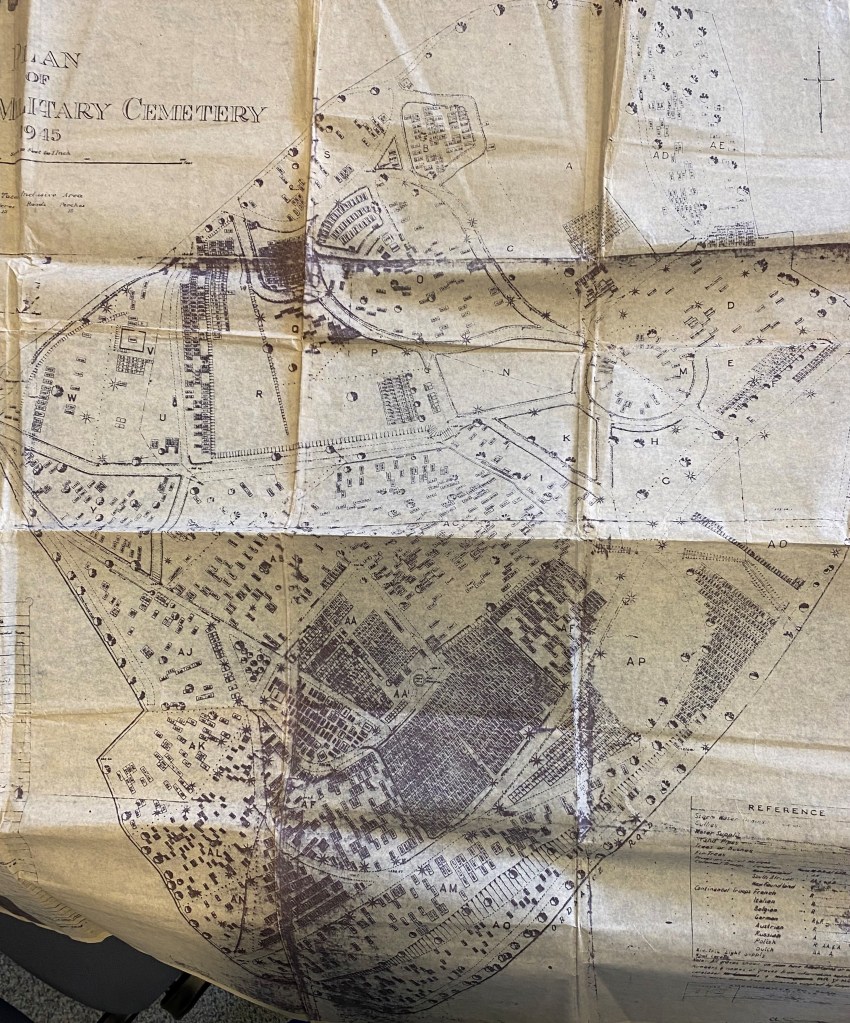
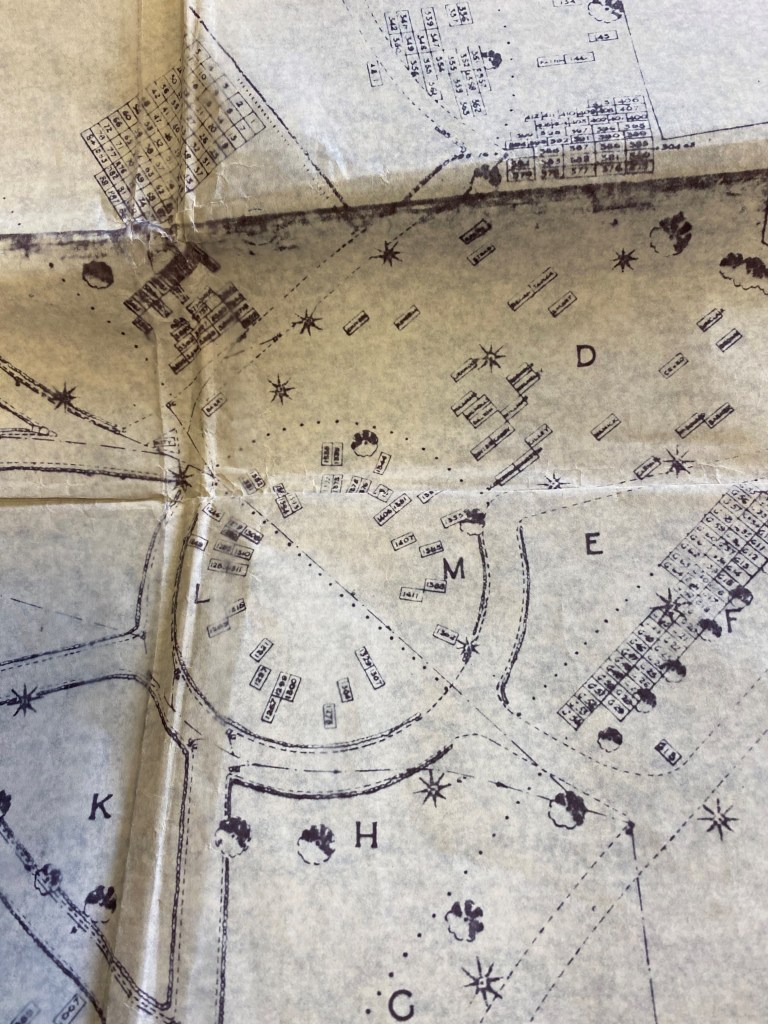
Lucy died aged 26, at 4 Ferndale Villas, Holly Road, Aldershot on 12 October in 1907 with the reason for death being instrumental labour and pulmonary embolism. The death was registered by Joseph Charles and Lucy was buried four days later on 16 October 1907 at the Aldershot Military Burial Ground, Hampshire. John Greenfield at the Aldershot Garrison has kindly helped me identify Lucy’s burial place in the cemetery, as plot number 1406, in site M.  Sadly there doesn’t appear to be a record of a burial for Joseph and Lucy’s child.

Map of Aldershot Military Cemetery.

I am interested to learn more about Lucy and her family, as she has been described to me as ‘a dark skinned lady’ and I have discovered that Northamptonshire has a significant black history, with people of Asian, African and Caribbean origin, residing in the county over many centuries.

Further information

* I have located a Lucy Munns on the 1851 and 1861 census returns. She is recorded as having been born in Riseley in Bedfordshire and is married to George Munns.  The couple have a daughter called Harriett.

Jeremiah Maloney

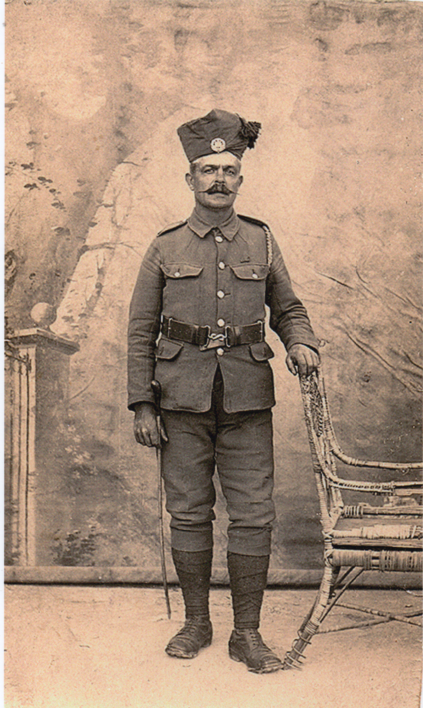
Jeremiah Maloney was the son of my great great great grandmother Ann Abram (nee Cox).  On the 1861 census, I have been able to locate Ann, living with my great great great grandfather, where Joseph, a shoemaker aged 23 and Ann aged 21 were living at 4 Lower River Terrace, St Sepulchre in Northamptonshire with three children, Emma, Charles (my great great grandfather aged 1) and Harriett. The photo below was given to me by my relative Margaret Creighton in Australia. Jeremiah is shown wearing a British army uniform but also a turban which appears to have a Northamptonshire Regiment badge on it.
jeremiah-maloney

Sadly, it appears that Joseph died aged just 28.  The death certificate shows he had been suffering from Phthisis Pulmonalis (Tuberculosis) for 13 months. In 1869 Ann appears to have married William Maloney and her story continues on the 1871 census, where, aged 31, she is living at St George Square in Northampton but now with William Maloney of Ireland, Charles (aged 11 and recorded as Charles Abram Maloney) and three other children, George, Emma and John W Maloney.

In 1881 William and Ann can be found living at 12 Alpha Street, Northampton, with four children, Jeremiah (aged 9), Eugene, William and John Maloney.  Finally, in 1891, Ann can be found at 50 Adelaide Street, Northampton.  She is a widow and working as a laundress. Eugene, William and John are still living with her.

Jeremiah Maloney does not appear on the 1891 census with his mother and siblings but I believe I have located him, aged 19, living as a boarder at Luther Street, Leceister in the home of William and Sarah Abrams (both recorded as being born in Northamptonshire) and their children Herbert and Amy, along with two other boarders,  Ellen Maloney aged 24 and and Eva M aged 1.  (I believe that Jeremiah Maloney married Ellen Frost in 1889).

Jeremiah’s army service records are detailed below.

  • First name(s) Jeremiah
  • Last name Maloney
  • Birth year 1871
  • Birth parish St Sepulchres
  • Birth town Northampton
  • Birth county Northamptonshire
  • Birth country England
  • Service number 6568
  • Regiment Northamptonshire
  • Regiment Year 1902
  • Attestation date 12 Mar 1902
  • Attestation age years 31
  • Attestation corps 3rd Northamptonshire
  • Document type Attestation
  • Series Wo 96 – Militia Service Records 1806-1915
  • Archive The National Archives
  • Archive reference WO 96 Box851
  • Box record number 286
  • Record set British Army Service Records
  • Category Military, armed forces & conflict
  • Subcategory Regimental & Service Records
  • Collections from Great Britain, England

The South Africa 1900-1902 Medal Roll, 3rd Militia Battalion records a Private J Maloney,  was awarded the Queens South Africa Medal with Claps for Cape Colony and South Africa 1902.
Joseph Charles Abram

Joseph Charles Abram was my great grandfather.  Married to Millicent May Bowers, the couple had three children – my grandfather Louis Bowers Abram, Betty and Joseph Bowers Abram, their first son, born in Tempe, Pretoria, South Africa, in 1913, where Joseph Charles was stationed on army service.  The child lived for two short months – he died of enteritis and heart failure and is buried in South Africa.
joseph-charles-mears-ashby

Joseph served in the army from January 1901 to March 1922, receiving the 1914 Star, the British War Medal 1914 – 1918 and the Victory Medal 1914 – 1918 as well as being mentioned in Despatches on 30 December 1918.

On discharge, Joseph Charles Abram was involved in a number of projects.  He is believed to have run two pubs – the Red Lion in Stambourne, Essex (around 1924 when his daughter Betty May Abram was born) and the Kings Arms in Woodbridge,  Suffolk.

He built two houses at Mears Ashby Road in Earls Barton. Choosing to live in one of these, the second property he sold. Newspaper articles from local newspapers in 1939 advertised a semi detached house with six rooms (three being bedrooms),  central heating, bath, electricity, gas and main water. The houses still stand today.  

joseph-abram-bus

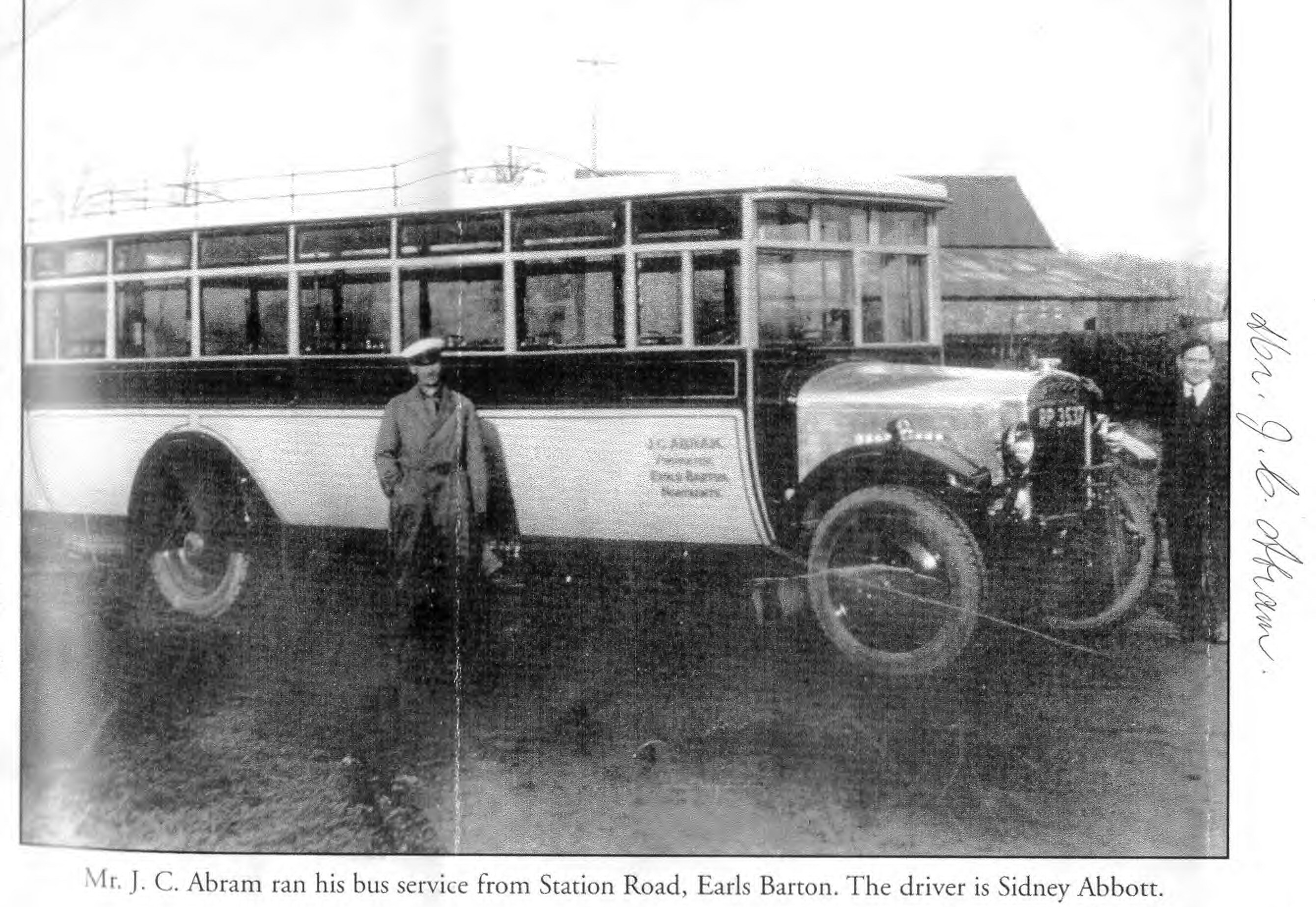
He also ran Earls Barton Motors (known locally as Abram’s garage), from which he sold vehicles and ran a bus service in the early 1930’s.  operating a small local service with trips to Wellingborough and back at weekends costing four pennies return. During the war the garage was used for repairing aircraft parts for Sywell aerodrome and in March 1943 the garage sustained a broken window when two Air Force Bombers collided and crashed.

Further information about Joseph